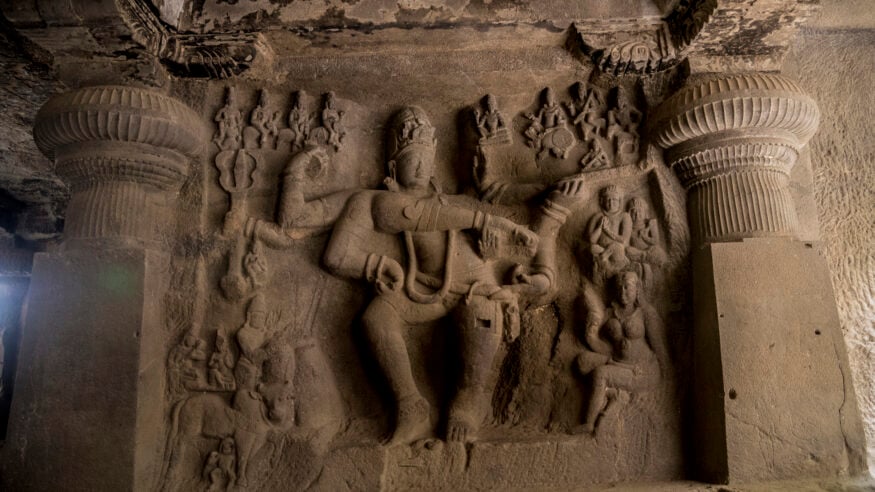
Ugra, Raudra, or Samhara Murti represents Lord Shiva in a ferocious and protective state, a sacred mode in which cosmic justice is administered and disorder is dissolved. In Shaivism, this fierce manifestation is not malevolent; it is the concentrated force that arrests rampant adharma and safeguards the moral order. The ferocity described in temple lore is extraordinaryterrific in intensity and yet fundamentally aligned with compassion and restoration.
Etymologically, “Ugra” and “Raudra” convey the sense of the “Terrible,” while “Samhara’ means to kill,” pointing to the decisive cessation of forces that obstruct dharma. Within the traditional framework of Shiva’s five cosmic acts (panchakritya)creation, preservation, dissolution, concealment, and gracethis aspect embodies dissolution (samhara), clearing the field for renewal. In this light, the ferocious form is ethically purposeful: it ends what must end so that life, balance, and truth can flourish.
Devotional practice reflects this meaning. Many devotees approach this murti when inner obstacles feel immovableanger, arrogance, fear, or entrenched injustice in the world. Lived experiences often combine awe and reassurance: the fierce gaze, the trishula, and the damaru signal the urgency of transformation, while the very presence of Shiva assures protection. The encounter invites disciplined self-examination and the courage to relinquish harmful patterns.
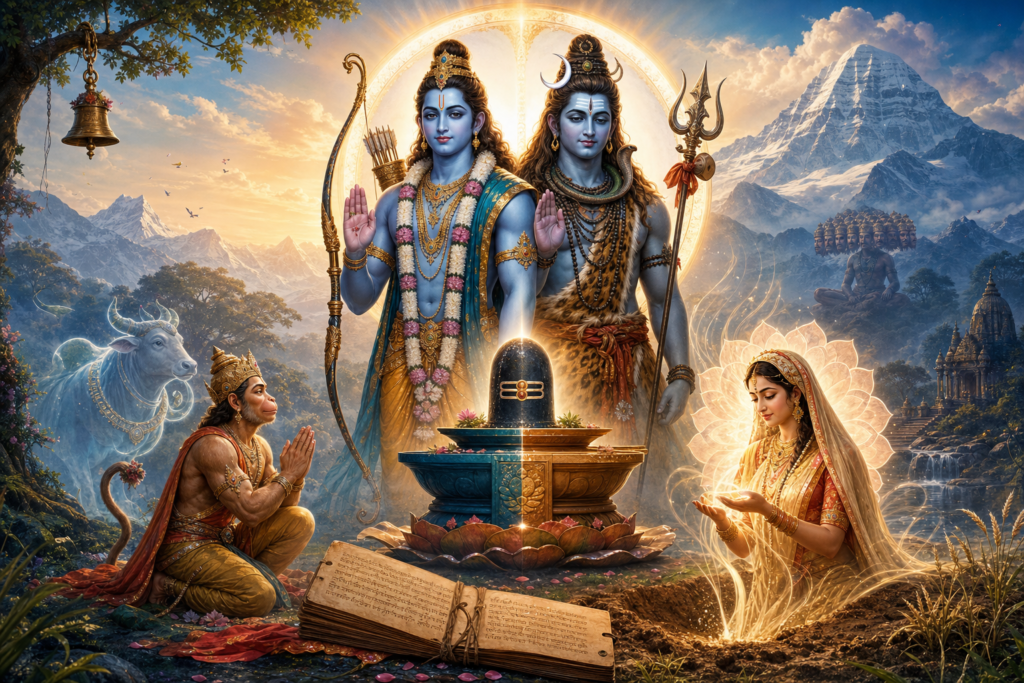
Iconographically, depictions may include blazing eyes, matted locks, tiger skin, and sometimes a garland of skulls, each element symbolizing impermanence and the transmutation of ego. These symbols communicate that destruction in the sacred sense is not annihilation for its own sake; it is the removal of impediments to truth. Thus, Ugra, Raudra, Samhara Murti functions as fierce compassionsevere in appearance, beneficent in purpose.
Comparative dharmic perspectives illuminate a shared insight. Vajrayana Buddhism reveres wrathful protectors who subdue ignorance to preserve wisdom; Sikh thought honors the sant–sipahi ideal, uniting devotion with righteous courage; Jain commitments to ahimsa redirect ferocity inward as rigorous self-restraint and ethical discipline. Across these traditions, a common thread appears: fierce energy, rightly directed, serves to reduce suffering and restore harmony.
Ethically, the ferocious aspect is invoked only when gentler remedies prove insufficient. It affirms the primacy of proportion, justice, and responsibility: power must be exercised with discernment, and only to the extent necessary to reestablish balance. In spiritual practice, this becomes a call to disciplined will, careful speech, and courageous actionvirtues that heal communities and strengthen social trust.
Viewed through this lens, the reverence for Ugra, Raudra, Samhara Murti becomes a contemplative discipline as much as a devotional one. It reminds seekers that renewal requires the end of what no longer serveswithin oneself and within society. In honoring this form of Lord Shiva, diverse dharmic paths converge on a unifying insight: the transformative power that appears fierce is, at its core, a guardian of truth, a purifier of intention, and a catalyst for compassionate order.
Inspired by this post on Hindu Pad.