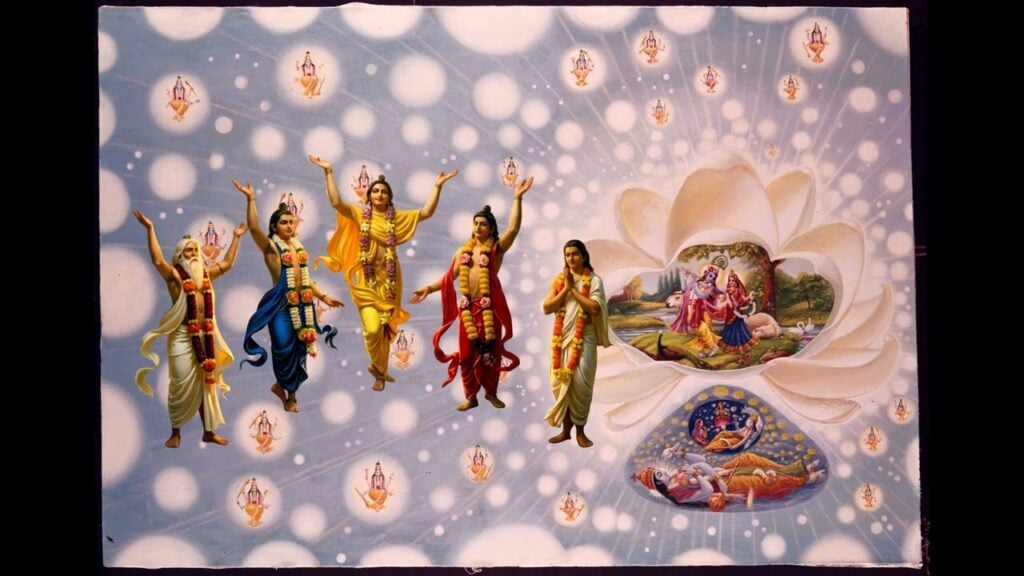
Devotional literature describes a confidential truth central to Gaudiya Vaishnava theology: to swiftly uplift beings in Kali-yuga, the Supreme first sent exalted devoteesSathhakopa (Nammalvar), Ramanuja, Vishnusvami, Madhvacarya, and Nimbaditya. Desiring to reveal the supreme secret of conjugal devotion, the Divine then appeared as the devotee Sri Krishna Caitanya, descending with Golokadhama in the sacred pilgrimage land of Gauda-bhumi. Within this sacred arc, Sri Ramanujacharya’s magnificence stands out for articulating a path of devotion that is both philosophically rigorous and deeply compassionate.
Viewed in an academic light, these ācāryas collectively advanced the Bhakti Tradition and Vedic Tradition, synthesizing scriptural fidelity with an inclusive spiritual ethos within Hindu Dharma. Sri Ramanujacharya’s Visishtadvaita offered a theistic metaphysics grounded in grace and participation, bridging devotional sentiment with disciplined practice. Their shared contributions demonstrate how classical theology can serve contemporary spiritual needs without diminishing diversity across sampradāyas.
Practitioners frequently report that studying these teachers transforms devotion into ethical actionreshaping daily life through humility, service, and inner clarity. Pilgrims to Gauda-bhumi (Gauda-Desha) and other sacred geographies describe an affective resonance that connects text, temple, and lived experience. Such accounts, while personal, illustrate how disciplined remembrance of these lineages ignites resilience, hope, and a sense of belonging within a plural devotional landscape.
Within the Gaudiya lineage, including ISKCON (International Society For Krishna Consciousness), Sri Krishna Caitanya is honored as embodying the devotee’s mood in full. This view complements, rather than competes with, the pathways illumined by Sathhakopa (Nammalvar), Ramanuja, Vishnusvami, Madhvacarya, and Nimbaditya. Read broadly, these teachings encourage respect for multiple sādhanasbhakti, dhyana, seva, dana, and ahiṁsasupporting harmony among Hinduism, Buddhism, Jainism, and Sikhism. The unifying thread is a commitment to compassion, truth-seeking, and service.
In this synthesis, Sri Ramanujacharya’s legacy becomes a bridge between metaphysical depth and social uplift, inviting communities to cultivate devotion that naturally expresses itself as inclusion and care. Engaging these teachings today can deepen spiritual insight, strengthen inter-tradition unity, and inspire practical virtueshumility, empathy, and steadfast serviceessential for a resilient, plural dharmic society.
Inspired by this post on Dandavats.