The narrative of Daksha Yajna, preserved across the Puranas, stands as a seminal episode in Hindu mythology and symbolism. Daksha Prajapati, renowned for order and authority, disapproved of Sati’s marriage to Lord Shiva, whose ascetic and unconventional presence defied normative expectations. When Daksha convened a grand yajna and excluded Shiva, Sati confronted humiliation at her father’s assembly and immolated herself in anguish. In the aftermath, Shiva’s grief manifested as righteous fury; Veerabhadra and Bhadrakali disrupted the sacrifice and Daksha was beheaded. Moved by the supplications of the devas, Shiva then restored cosmic balance by reviving Daksha with a goat’s head, allowing the rite to conclude in peace.
As a Hindu symbol, the severed head of Daksha is not a literal endorsement of violence but an allegory of inner transformation. The head represents ego (ahankara), intellectual pride, and rigid identity. Its removal signifies the cutting away of arrogance that blinds discernment. The goat’s head, often associated with instinct and tamas, depicts a humbled and reoriented intellectno longer domineering, but re‑dedicated to dharma and humility. Through this striking image, Hindu teachings emphasize that wisdom flowers when pride is relinquished.
The episode also illustrates a core principle in Hindu philosophy: ritual without reverence and inclusivity can devolve into conflict. Daksha’s yajna, though meticulously organized, lacked honor for a form of divinity that he did not prefer. The resolutionShiva’s eventual compassion and restorationreaffirms that the essence of practice lies in intention (bhava), devotion (bhakti), and respect for diverse manifestations of the sacred. This insight resonates with the broader dharmic ethos: Jainism’s Anekantavada esteems many-sided truth, Buddhism underscores the relinquishment of ego and clinging, and Sikh teachings elevate humility (nimrata) and seva. Across these traditions, unity arises from honoring plurality and the primacy of inner transformation over external form.
Veerabhadra’s emergence is often interpreted as the activation of protective energy when dharma is insulted. Yet the narrative’s conclusion places forgiveness and reconciliation above wrath. Shiva’s act of restoring Daksha, despite profound offense, models the higher path: transform, then heal. In practical terms, many readers recognize moments when pride fractures relationships; the story offers a template for confronting ego, taking responsibility, and repairing bonds with humility.
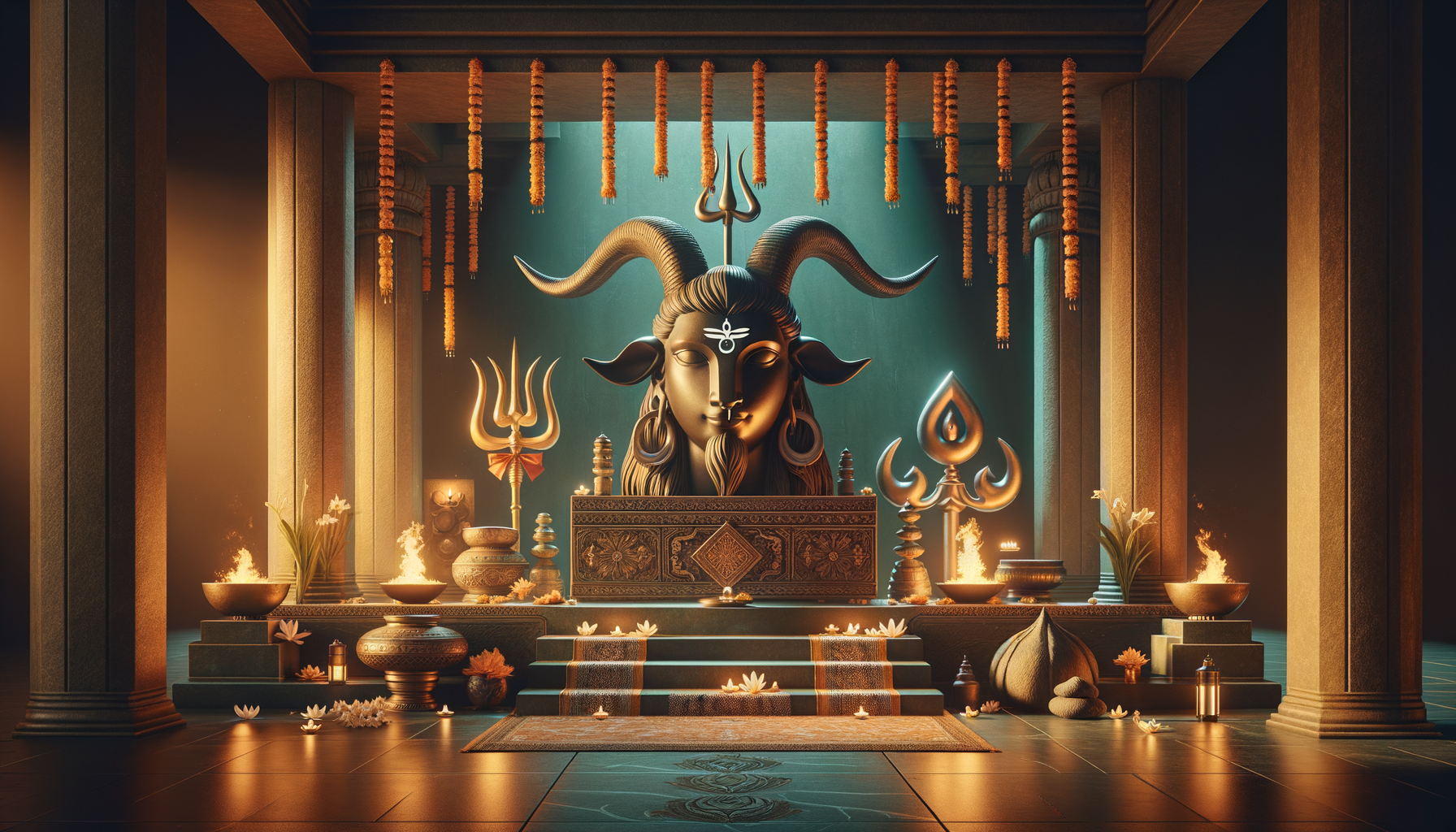
Iconographically, temple panels and classical retellings portray Daksha with a goat’s head to memorialize this transformation. The image instructs seekers to align intellect with compassion, convert instinct into disciplined service, and balance austerity with tenderness. Such symbolism deepens during observances like Mahashivaratri, when reflection on Shiva’s paradoxical graceterrible in justice, boundless in mercyinvites renewed commitment to ethical living, self-restraint, and reverence for all paths.
For contemporary life, the severed head of Daksha functions as a meditative mirror. In workplaces, families, and community forums, rigid certainty can be tempered by listening, pluralism, and shared purpose. The narrative suggests that when the “head” of conceit is surrendered, the “heart” of empathy awakens. In this way, Hindu symbolism bridges scriptural insight and daily practice, advancing unity not only within Hindu traditions but also alongside Buddhist, Jain, and Sikh wisdom streams that collectively affirm humility, non-harm, and restorative reconciliation.
Ultimately, the story affirms a timeless message in Hindu scriptures and Puranas: dharma is safeguarded when self-importance yields to devotion, when ritual serves realization, and when justice culminates in compassion. The severed head of Daksha endures as a vivid emblem of that passagefrom pride to humility, from rupture to harmony, and from exclusion to a capacious embrace of the sacred in many forms.
Inspired by this post on Hindu Blog.