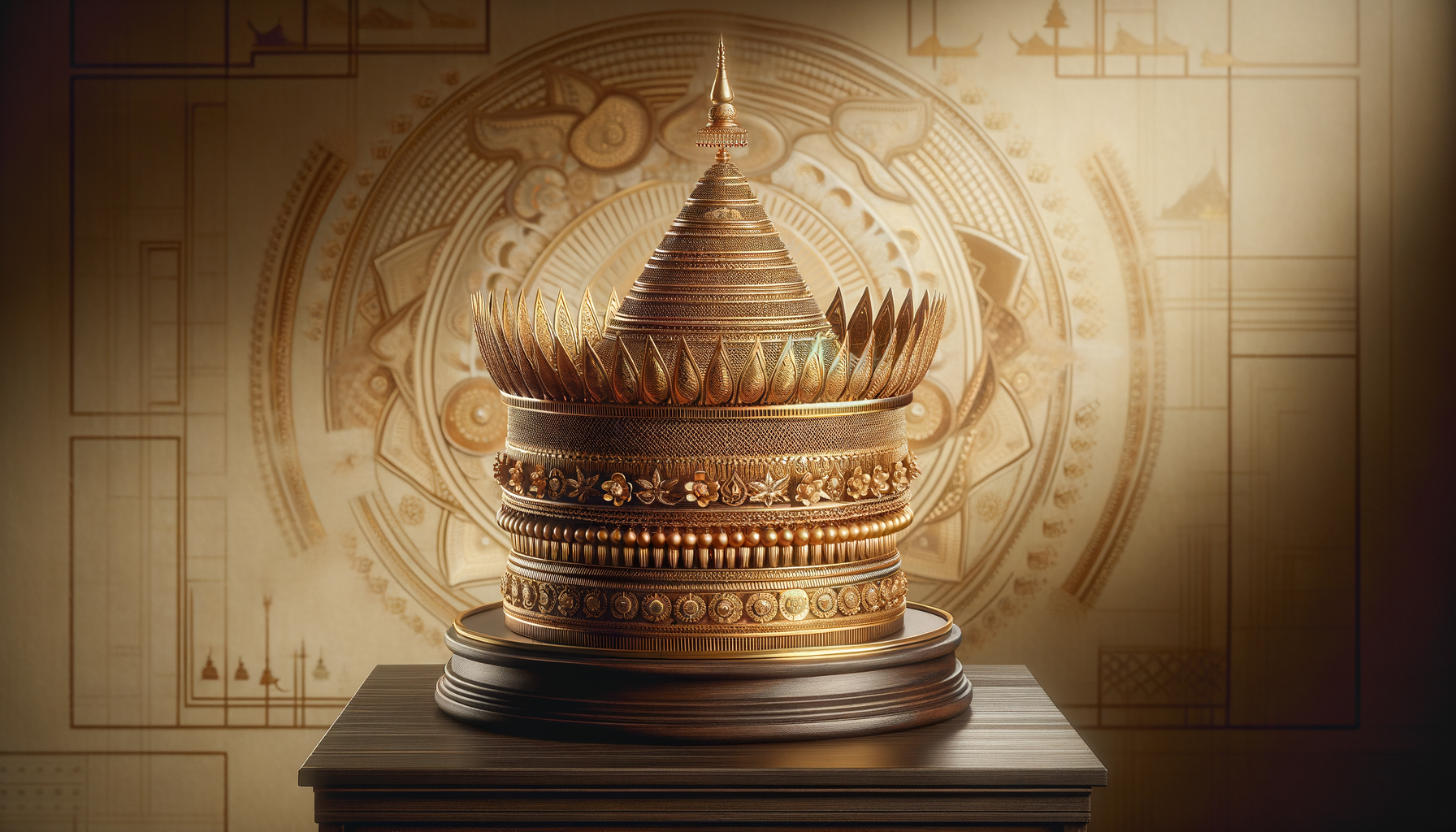
The karaṇḍa-mukuṭa, often called the Karanda Mukuta, occupies a distinctive place in Hindu iconography as a basket-shaped, tiered crown that conveys divine authority, auspiciousness, and spiritual ascent. Within the broader vocabulary of mukutas (crowns) that mark deities in temple sculpture and liturgical art, this form stands out for its conical profile and symbolic resonance, bridging aesthetics, scripture-guided craft traditions, and devotional experience.
Characterized by a gently tapering, multi-tiered structure that recalls a karaṇḍa (basket), the crown typically culminates in a finial reminiscent of a kalaśa (auspicious pot). Artisans fashion it in gold, gilded copper, silver, wood, or mixed media, following proportions found in the Śilpa-śāstra tradition. Beaded or ribbed bands may articulate the tiers, while floral, gem-set, or granulated motifs accentuate the vertical rhythm, signaling both craftsmanship and sacred geometry.
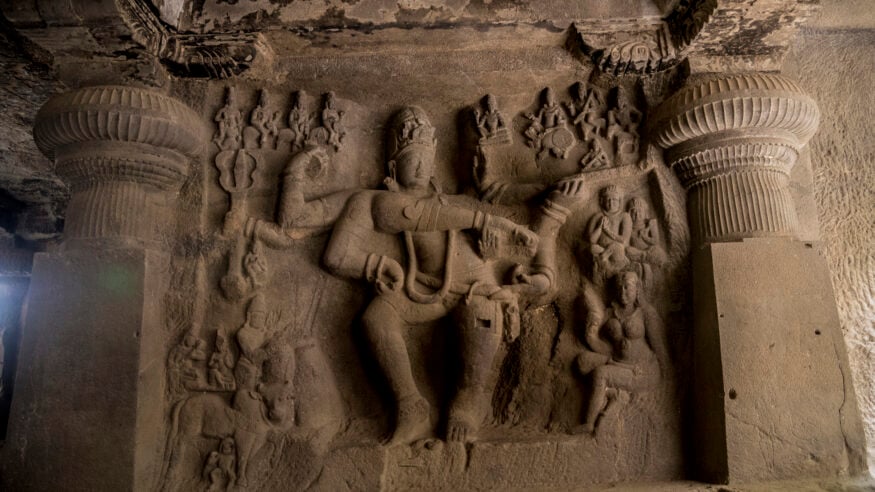
In temple bronzes and stone carvings, the Karanda Mukuta frequently adorns goddesses such as Lakshmi and Parvati, and appears in select regional representations of Vishnu and certain forms of Skanda/Subrahmanya. Related conical crowns are also found in Buddhist and Jain artespecially on yakshi figures and bodhisattvas in South and Southeast Asiademonstrating a shared visual idiom across dharmic traditions. This continuity underscores a common civilizational language that values harmony, reverence, and the pursuit of inner excellence.
Symbolically, the basket-shaped form evokes abundance and offering, suggesting that divine sovereignty is inseparable from nurturing protection and the provisioning of well-being. The ascending tiers can be read as a visual metaphor for spiritual elevation: from worldly order to refined awareness, culminating in the fullness symbolized by the finial. In this sense, the Karanda Mukuta synthesizes royal authority (kṣatra) with auspicious prosperity (śrī), presenting divinity as both guardian and giver.
Historical evidence across Indiaspanning early-medieval to late-medieval periodsattests to the crown’s popularity in regions known for refined metalwork and temple bronze traditions. South Indian Chola bronzes, Pallava and later Dravidian idioms, as well as sculptural programs in eastern regions, reveal variations that maintain the core conical logic of the Karanda Mukuta. Parallel developments in Khmer and Javanese sculpture further attest to a wider Indic sphere of aesthetic exchange, where the conical, tiered crown became a recognizable emblem of sacred presence.
Ritually, the crown’s presence is more than ornamental. During festivals and daily alankara (adornment), temple attendants carefully place and secure such crowns, reinforcing the living relationship between deity and community. Observers often describe a felt sense of order and reassurance in the symmetry of the tiers and the gleam of precious materialsa visual affirmation that dharma is protective, generous, and ever-renewing.
For those learning to identify mukuta types, the Karanda Mukuta differs from the kirīṭa-mukuṭa (a more cylindrical diadem) and the jaṭā-mukuṭa (a headdress formed of matted locks). Look for the basket-like, tiered silhouette and a crowning finial that completes the upward thrust. In museums, temples, and illustrated manuscripts, this profile provides a reliable cue to the crown’s identity and its layered meanings within Hindu iconography and the broader dharmic arts.
Seen through the lens of civilizational unity, the Karanda Mukuta exemplifies how Hindu, Buddhist, and Jain traditions have long shared a symbolic grammar that honors compassion, wisdom, and ethical strength. Recognizing this shared heritage deepens inter-traditional understanding and demonstrates how sacred forms can integrate authority with gentleness, beauty with purpose, and cultural diversity with spiritual coherence.
Ultimately, the Karanda Mukuta invites viewers to move from surface appreciation to thoughtful engagement. Its basket-like ascent teaches that sovereignty in the dharmic sense is a commitment to uplift lifeprotecting, nourishing, and guiding it toward fullness. In studying this crown, appreciation grows not only for refined artistry but also for the enduring ideal that sacred power manifests as benevolence, order, and unity.
Inspired by this post on Hindu Blog.