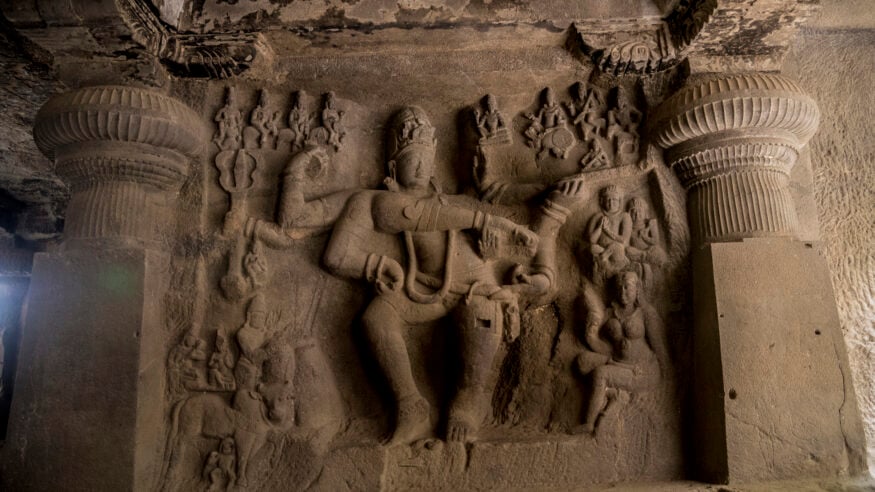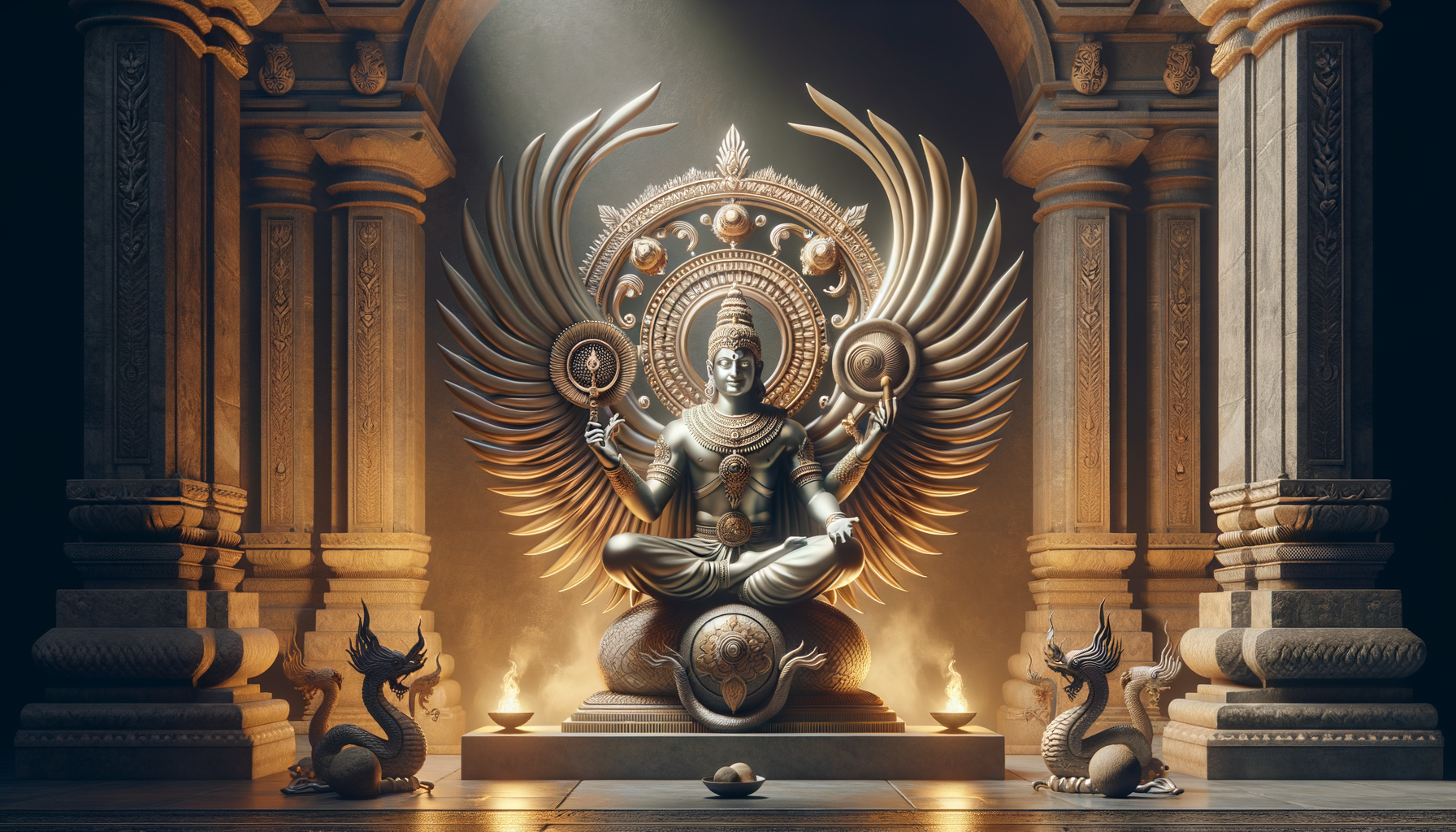
Garudasana, in the context of Hindu temple sculpture and iconography, denotes the sacred posture of Garuda, the devoted vahana of Bhagavan Vishnu. Far from a mere artistic convention, this form functions as visual theologyan enduring teaching rendered in stone, bronze, and paint across Vaishnava temples. It embodies devotion (bhakti), selfless service (seva), and the unbroken relationship between the Divine and the devotee.
Iconographically, Garuda appears with a human torso and avian attributes, often with wings poised to suggest readiness and swiftness. Hands are frequently shown in anjali (folded palms), the gaze uplifted in reverence, the body balanced in a stance of dynamic stillness. In many Vaishnava shrines, Bhagavan Vishnu is depicted enthroned or riding upon Garuda, a composition that communicates both cosmic sovereignty and intimate service. This “Garuda-vahana” motif stands as a canonical marker of Vaishnava iconography.
Scriptural and temple traditions anchor this posture in authoritative sources. Puranic narratives highlight Garuda’s exemplary devotion and courage, while Agama shastras inform the precise mudras, bhangas (stances), and proportions used by sthapatis (temple artisans). Through these prescriptions, Garudasana conveys a clear message: the strongest power is the strength willingly offered in service to dharma.
Symbolically, every element participates in meaning. The wings evoke protection and swift responsiveness to the Divine will. The anjali mudra signifies humility and surrender. The poised stance communicates vigilance without aggressionreadiness to act, but anchored in equanimity. Serpentine motifs sometimes associated with Garuda recall the overcoming of fear and bondage, underscoring liberation through devotion-guided courage.
Temple practice further deepens this message. Many Vaishnava temples feature a Garuda mandapa or the Garuda sthambha aligned to the sanctum, guiding the devotee’s gaze toward darshan of Vishnu. In processional traditions, the Garuda vahana carries the murti of the deity, visually enacting the principle of seva before entire communities. Pilgrims often describe a quiet resolve arising in the presence of Garudasanaa felt reminder to serve with steadiness and clarity of heart.
The thematic core of Garudasanadevotion expressed as service, strength tempered by humilityresonates across dharmic traditions. In Buddhist contexts, protective bird deities and guardians echo the symbolism of vigilant compassion. Jain traditions honor disciplined service and ethical steadfastness as spiritual virtues. Sikh teachings on seva as a lived expression of faith likewise affirm the same ethos. Thus, while Garudasana is distinctly Vaishnava, its values illuminate a shared dharmic commitment to selfless action and inner refinement.
For visitors and practitioners, mindful engagement with Garudasana can become a contemplative practice. Observing the mudra, stance, and relational placement to the sanctum invites reflection: What does readiness for seva look like in daily life? How might humility and courage be held together in one’s duties to family, community, and the wider world? Such questions transform iconography into lived insight.
Ultimately, Garudasana endures as a profound visual pedagogy. It teaches that devotion is not passive sentiment but active, reverent service aligned with dharma. In the presence of Garuda bearing Bhagavan Vishnu, the eye learns, the heart remembers, and the mind is invited to embody strength guided by humilitythe timeless union of bhakti and seva that sustains spiritual life and communal harmony.
Inspired by this post on Hindu Blog.