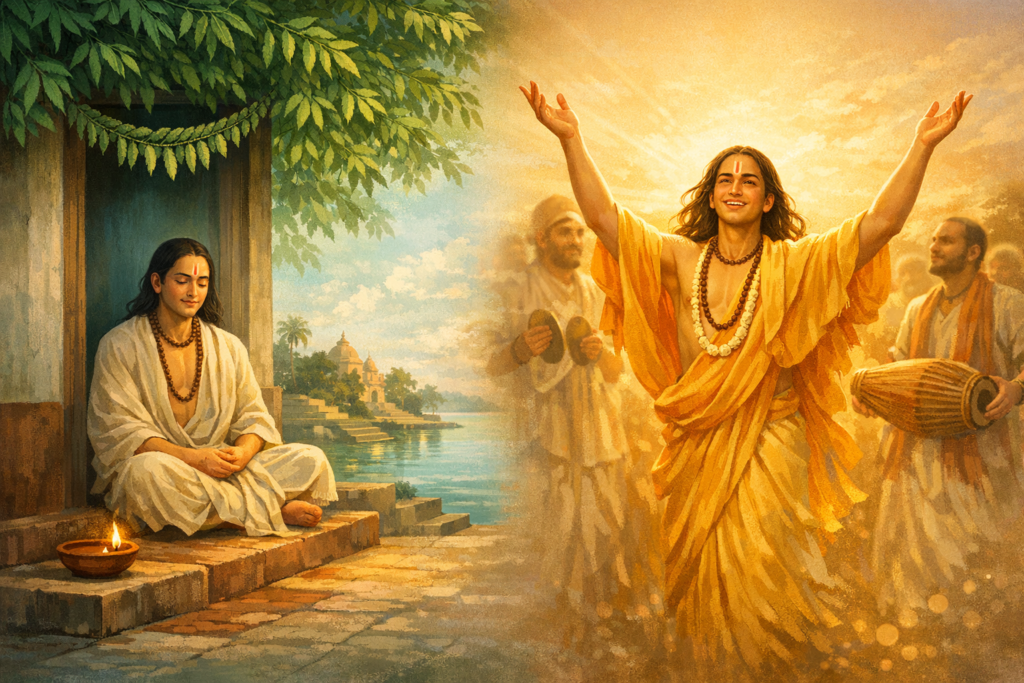
Sri Umapathi Sivam occupies a distinguished place in the annals of Hindu Dharma as a luminous Shaivite sage rooted in the living traditions of Chidambaram. Born in the 13th century CE into the revered Dikshithar family near the Thillai Natarajar Temple, his life reflects the close bond between temple culture, Vedic learning, and devotional practice that defines India’s Spiritual Heritage.
Renowned for mastery of the Vedic scriptures, he authored sacred works on Shaivism that consolidated philosophical insight with ritual discipline. This synthesis—characteristic of Chidambaram’s scholastic milieu and the Dikshithar lineage—situated his scholarship within the larger continuity of Hindu spiritual traditions, wherein scriptural study finds meaning through embodied worship and ethical living.
Accounts of his youth consistently emphasize steadfast devotion to Lord Shiva. Formative years spent in the shadow of the Thillai Natarajar Temple nurtured a lifelong commitment to the Lord’s cosmic dance, aligning rigorous learning with intimate bhakti. In this alignment, study becomes sadhana, and sadhana becomes a pathway to clarity—an enduring model for seekers navigating the interplay of knowledge and devotion.
The legacy of Sri Umapathi Sivam endures because it bridges textual wisdom and lived experience. His contributions fortify Shaivism while speaking to the broader, shared values of the dharmic family—Hinduism, Buddhism, Jainism, and Sikhism—such as ethical conduct, disciplined practice, contemplative inquiry, and compassion. Seen through this lens, his life offers a unifying template: devotion deepens understanding, and understanding refines devotion.
For pilgrims and learners alike, Chidambaram remains both a place and a paradigm: a sacred geography where the rhythm of temple rites, the cadence of mantras, and the rigor of scriptural study converge. Remembering Sri Umapathi Sivam in this setting evokes reverence for those Sages of India who safeguarded knowledge across generations and exemplified how scholarship can illuminate the path of inner transformation.
In contemporary reflection, his life invites renewed engagement with primary sources, temple traditions, and contemplative disciplines that honor plural pathways to truth. By situating devotion to Lord Shiva within an inclusive framework of dharmic harmony, Sri Umapathi Sivam’s example encourages a shared pursuit of wisdom—one that strengthens cultural continuity while inspiring sincere, respectful dialogue among diverse spiritual seekers.
Inspired by this post on Hindu Pad.