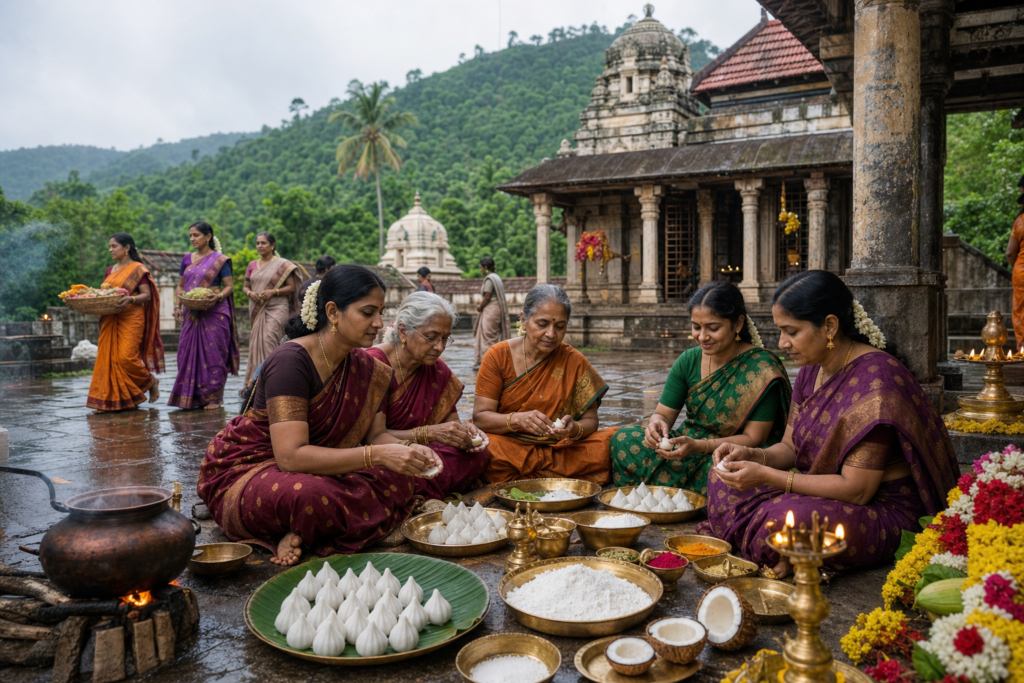
Tarapith, set in Birbhum district of West Bengal near Rampurhat along the Dwarka River, stands as a celebrated Shakti Peetha and a living confluence of Hindu and Buddhist traditions. Revered as the sacred seat of Mother Tara, it embodies a shared spiritual heritage where devotion, scholarship, and contemplative practice intersect.
According to the Shakti Peetha tradition, Tarapith is the holy site where the third eye (netra) of Goddess Sati fell when Lord Vishnu used the Sudarshana Chakra to pacify Shiva’s cosmic grief. This mythic geography infuses the landscape with shakti, establishing Tarapith as a focal point of tantra, bhakti, and transformative sadhana across generations.
The presiding deity, Sri Tara (often identified with Nīlasarasvatī), is venerated as one of the Mahāvidyās. Ritual life here reflects the classical idiom of Bengal’s tantra: fervent mantra recitation, deep meditative worship, and a solemn regard for the nearby cremation ground, understood as a space of impermanence and spiritual awakening. Figures such as Bāmakhepa exemplify Tarapith’s ethos of intense devotion and compassionate service, reinforcing the temple’s reputation as a place where spiritual discipline and grace coexist.
Tarapith’s layered identity is deepened by Tara’s prominence in Vajrayāna Buddhism, where she is honored as the swift saviouress, an embodiment of boundless compassion. In Bengal’s cultural memory and practice, Tara’s Hindu and Buddhist dimensions do not compete; rather, they illuminate a shared horizon of compassion, wisdom, and liberation. This interreligious resonance nurtures a spirit of unity among dharmic traditions, encouraging mutual respect and learning.
Symbolically, Tarapith is often associated with narratives that harmonize Shiva’s ascetic power and Tara’s maternal compassionmotifs that echo the Buddhist Tara’s salvific expedience. Read together, these images present a unified vision: Mother Tara as the compassionate bridge who gathers seekersHindu, Buddhist, Jain, and Sikhinto a common field of ethical living, contemplative depth, and reverence for life.
Visitors frequently describe a palpable stillness within the temple sanctumtemple bells chiming softly, incense drifting through ancient courtyards, and the quiet murmur of mantras. The adjacent śmaśāna (cremation ground) reinforces the contemplative mood: impermanence is not feared but faced, and spiritual practice becomes a disciplined embrace of truth, courage, and compassion. Such experiences, widely reported by pilgrims, scholars, and local devotees, continue to shape Tarapith’s reputation as a site of profound inner transformation.
Festivals such as Navarātri and Amāvasyā nights draw diverse pilgrims who engage in japa, meditation, and community service. The temple’s rhythms encourage inclusive participationhonoring multiple paths (mārga) without insisting on a single orthodoxy. In practice, this nurtures interfaith harmony, allowing adherents of Hinduism, Buddhism, Jainism, and Sikhism to find shared values in compassion, non-violence, truthfulness, and the disciplined pursuit of wisdom.
As a cornerstone of Bengal’s cultural heritage and a beacon of religious pluralism, Tarapith is best understood as a living bridge. Its mythic lineage, ritual traditions, and contemplative practices converge to affirm a simple insight: Mother Tara’s compassion unites, uplifts, and invites seekers to encounter the sacred within and around them. In doing so, Tarapith offers a model of unity in spiritual diversity, resonant with the broader dharmic family.
Inspired by this post on Hindu Blog.