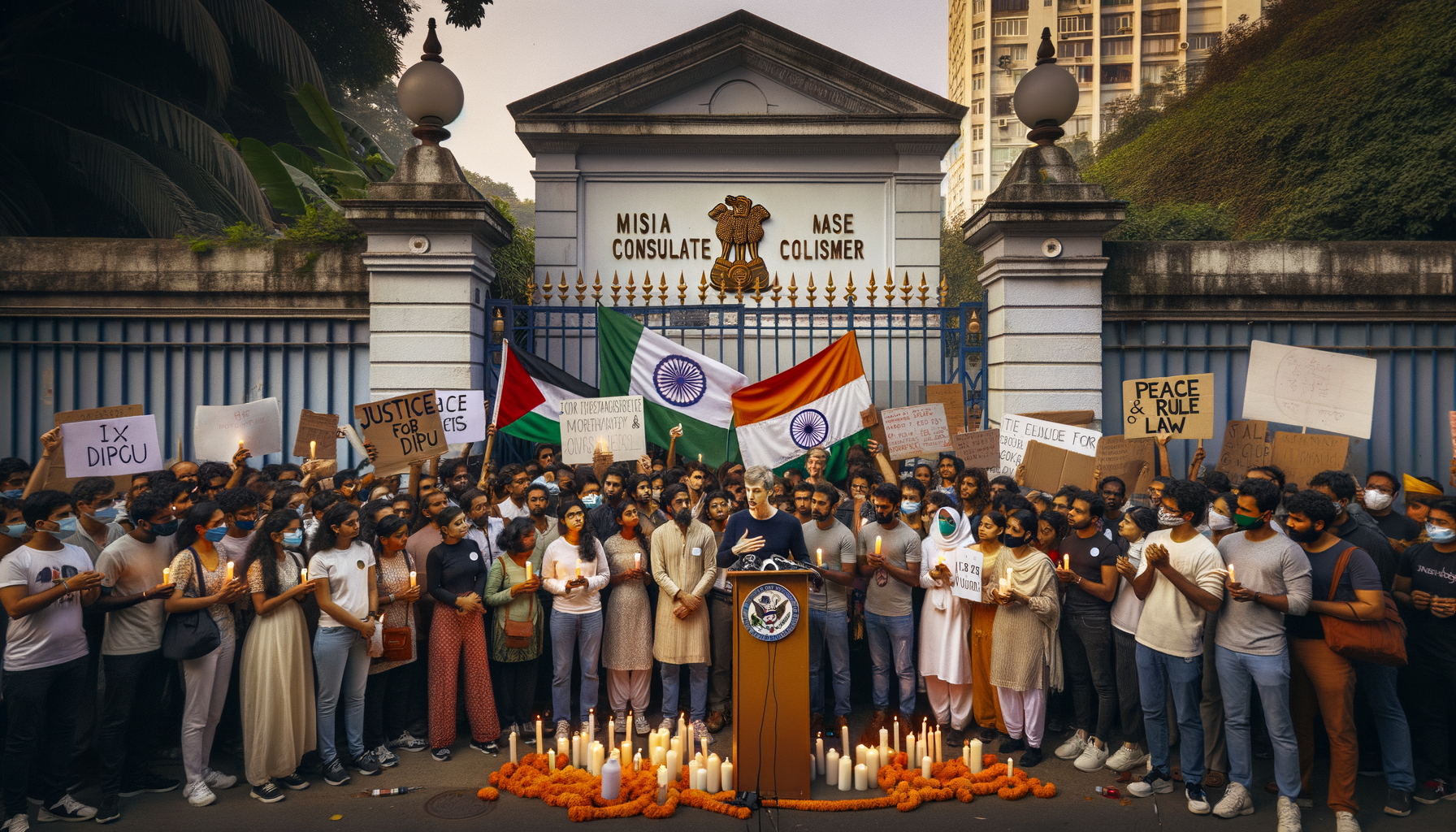
A peaceful public demonstration took place near the Bangladesh Deputy High Commission in Kolkata on Dec 22, 2025, following reports of the killing of a Hindu man, Dipu Chandra Das, in Mymensingh. Rally participants carried placards bearing #JusticeForDipuDas and called for a transparent, time-bound investigation by the relevant authorities in Bangladesh.
Senior political figure Suvendu Adhikari was among those who addressed the gathering, alongside civil society voices and community representatives. Speakers emphasized the rule of law, minority rights, and due process, urging sustained diplomatic engagement between India and Bangladesh to ensure accountability and prevent further violence.
The event resonated deeply across Bengal’s shared cultural space with Bangladesh. For many residents, the demonstration reflected grief, solidarity, and an insistence on human dignity. Community leaders framed the appeal as one grounded in compassion, nonviolence, and civic responsibility, urging that justice for Dipu Chandra Das be pursued without communal polarization.
Messages at the protest foregrounded the ethical teachings common to dharmic traditions—Hinduism, Buddhism, Jainism, and Sikhism—stressing empathy, ahimsa, and unity in diversity. Participants highlighted that safeguarding religious freedom and human rights is essential for social harmony and for constructive Hindu-Muslim relations in the region.
From a policy perspective, the demonstration called for: an impartial investigation in Mymensingh; regular consular dialogue through the Bangladesh Deputy High Commission; and coordinated monitoring by human rights institutions, with clear public communication on investigative progress. These steps were framed as necessary for restoring trust and strengthening cross-border cooperation.
Organizers repeatedly appealed for calm and lawful conduct, underscoring that principled dissent and peaceful assembly are integral to democratic life. The emphasis remained on de-escalation, community safety, and factual reporting to avoid rumor-driven tensions.
Observers noted that the protest also situated the tragedy within a broader context of regional peacebuilding, minority protections, and interfaith solidarity. By centering universal rights and responsibilities, participants sought to reinforce civic norms that protect all communities and help preserve the longstanding cultural bonds between West Bengal and Bangladesh.
In essence, Kolkata’s response was both emotional and disciplined: a call for justice anchored in constitutional values, dharmic ethics, and neighborly goodwill. The appeal for transparency in the Mymensingh case, coupled with appeals for Religious Freedom and Minority Rights, signaled a commitment to accountability and nonviolence as the surest path to lasting harmony.
Inspired by this post on Struggle for Hindu Existence.