On 1 January 1803, at first light, Viscount Valentia sighted the southernmost of the Nicobar Islands from aboard the Minerva. An attempted approach two hours later proved impracticable, but a safe landing on the island’s western side followed three days afterward. The route itself situates the voyage within early nineteenth-century maritime trade networks that linked the Bay of Bengal, the Andaman Sea, and the Indian littoral.
Valentia’s account reads like a landscape painting in prose, shaped by the perceptions of his age. His observations of the Nicobar inhabitants blend travel curiosity with the prejudices typical of European narratives of the period. Read today, these descriptions are invaluable not as anthropology, but as historical evidence of how colonial-era travelers framed difference and contact. It is easy to imagine the awe many feel when picturing those first landfallsthe blend of danger, wonder, and misapprehension that marked cross-cultural encounters in the Indian Ocean world.
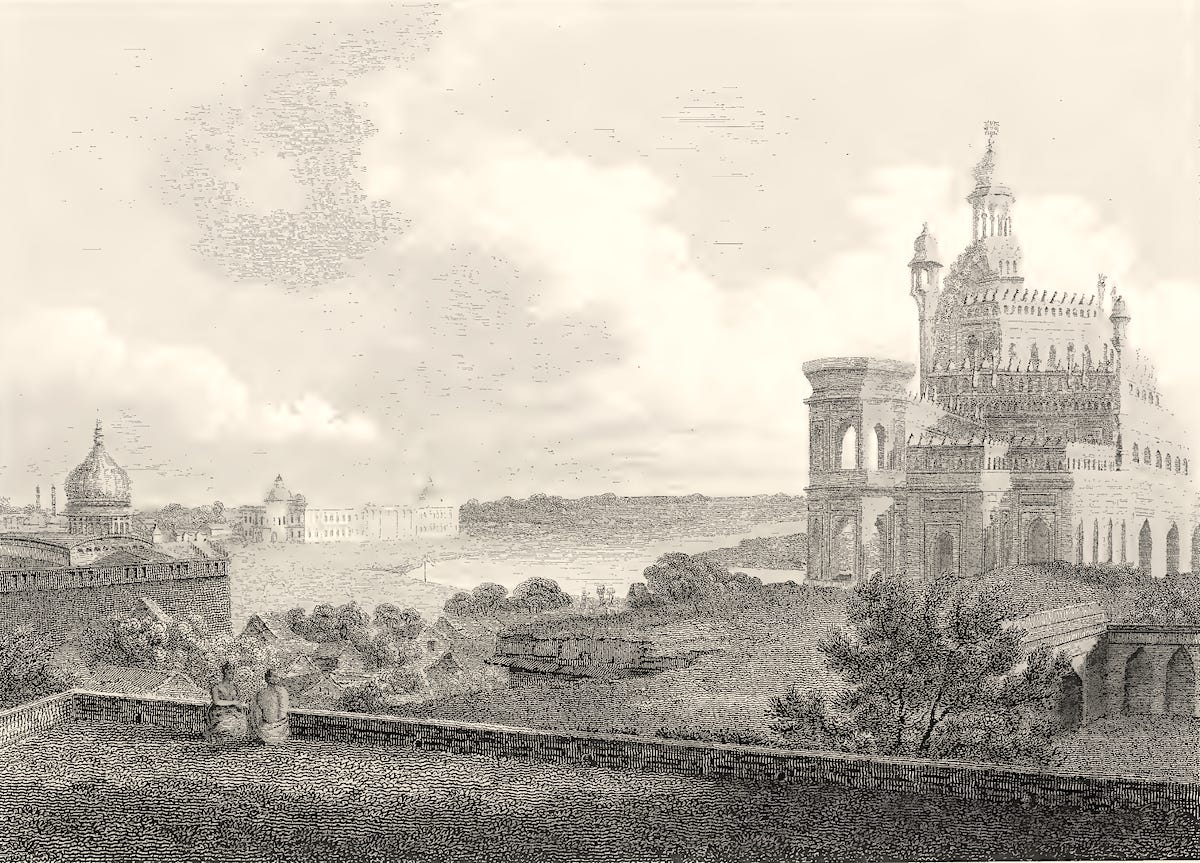
By 17 January, the Minerva had turned north, and Valentia recorded a distant sight that had captivated seafarers for centuries: the “black pagoda of Jagarnaut,” a reference to the sacred landscape of Puri. The vessel soon anchored at the mouth of the Hooghly River, where Valentia sent a letter to Governor-General Marquis Wellesley, setting in motion a sequence of formal courtesies that defined the remainder of his India sojourn.
On 25 January, in Saugor (Sagar), he received a cordial invitation to a grand gathering at the new Government House. Early the next morning, at seven o’clock on 26 January 1803, he left the Minerva in a state barge dispatched by Wellesley. The craftlong and narrow, embellished in green and gold, with a gilt eagle at the prow and a carved tiger at the sternprojected ceremonial power. Twenty oarsmen in scarlet robes and rose-coloured turbans propelled the barge with striking speed. The display exemplified East India Company choreography: spectacle as soft power, hospitality as political theater.
This inaugural pageant prefaced the treatment Valentia received across India: ornate palanquins, elephants and fine horses, and a carefully assembled retinue that included harikaras, chubdars, soontaburdars, and khidmatgars. Gifts came from figures of varied rankdescendants of dispossessed princes, leading nobles, and local elitesall attuned to how prestige, proximity, and reciprocity moved favor in the British colonial order. Company officials, keenly aware of Valentia’s rank as an Earl, cultivated him at every step. The line between courtesy and inducement blurred into what functioned as a social etiquette of empire.
Valentia, for his part, praised the arrangements generously. His interactions illuminate intra-British politics on Indian soil, revealing networks of patronage, rivalry, and information-sharing that lay behind official communiqués. The narrative’s value lies in its detail: it shows how British colonial rule relied not only on force, but on ceremonial hierarchy, controlled access, and the careful distribution of honours.
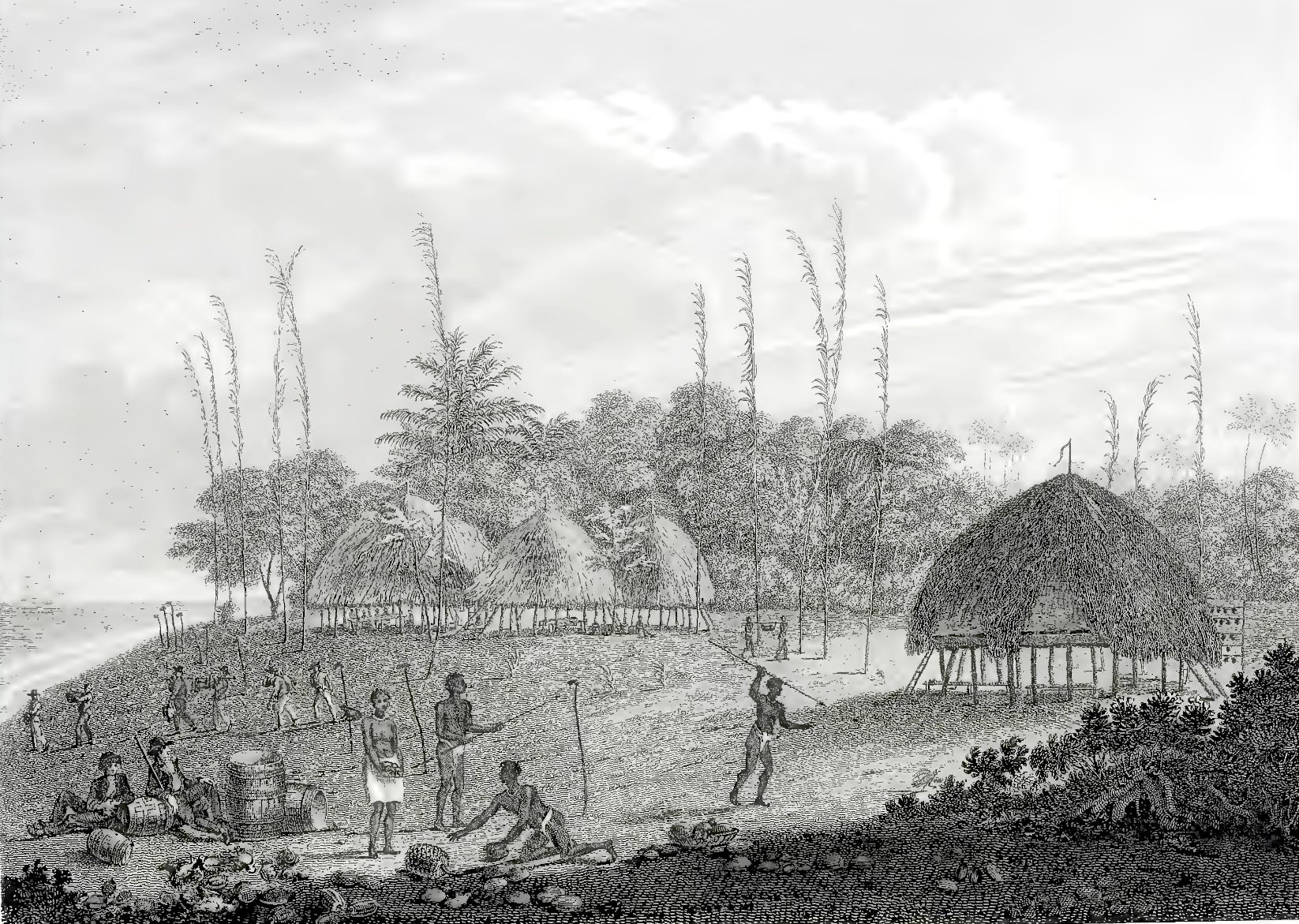
In Lucknow, then under the Nawab of Awadh, the interplay of language and power surfaced in a telling message. A personal envoy announced Valentia’s arrival with the phrase: “Lord Saheb ka bhanja, company ki nawasa teshrif laia.” In Valentia’s explanation, such language reflected a local belief that the India Company was personified as an old woman, and the Governors-General as her children, while dignitaries associated with them occupied a similar circle of kinship. The metaphor is revealing: it encodes hierarchy, dependence, and aspiration in familiar familial terms, a common strategy in South Asian courtly cultures to domesticate distant power.
These exchanges highlight a broader socio-political context. By the early nineteenth century, extractive and militarized regimesfirst under late Mughal successor states and then under expanding Company authorityhad eroded the autonomy of many communities. Scholars such as Jadunath Sarkar emphasized how prolonged political instability and coercive taxation stifled creative potential and public life. A more inclusive reading today recognizes that such conditions constrained Hindus, Buddhists, Jains, and Sikhs alike, yet these communities preserved knowledge systems, temple networks, monastic institutions, and household traditions that sustained dharmic continuity through adversity.
The familial characterization of the Company as an elderly matriarch, while poignant, signals a profound imbalance: corporate power presented in the guise of kinship. It underscores how colonial relations were normalized in everyday speech and ritual, even as they reshaped sovereignty, law, and revenue. For readers of Indian history, the phrase is a compact lesson in how metaphor can conceal as much as it reveals, turning political dependence into an idiom of domestic familiarity.
Seen through a dharmic lens, the episode invites a unifying reflection. Despite the disruptions of colonial and late pre-colonial rule, the civilizational resilience of India’s dharmic traditionsHinduism, Buddhism, Jainism, and Sikhismpersisted in shared ethics of learning, service, and community life. The maritime approach to Puri, the cosmopolitan riverine threshold of the Hooghly, and the courts of Awadh all testify to a cultural geography where sacred spaces and civic institutions nourished a common fabric stronger than any regime. In placing Valentia’s journey within this broader frame, the narrative becomes not only an itinerary of places and patrons, but a window into the endurance and unity of India’s living traditions.
Inspired by this post on Dharma Dispatch.