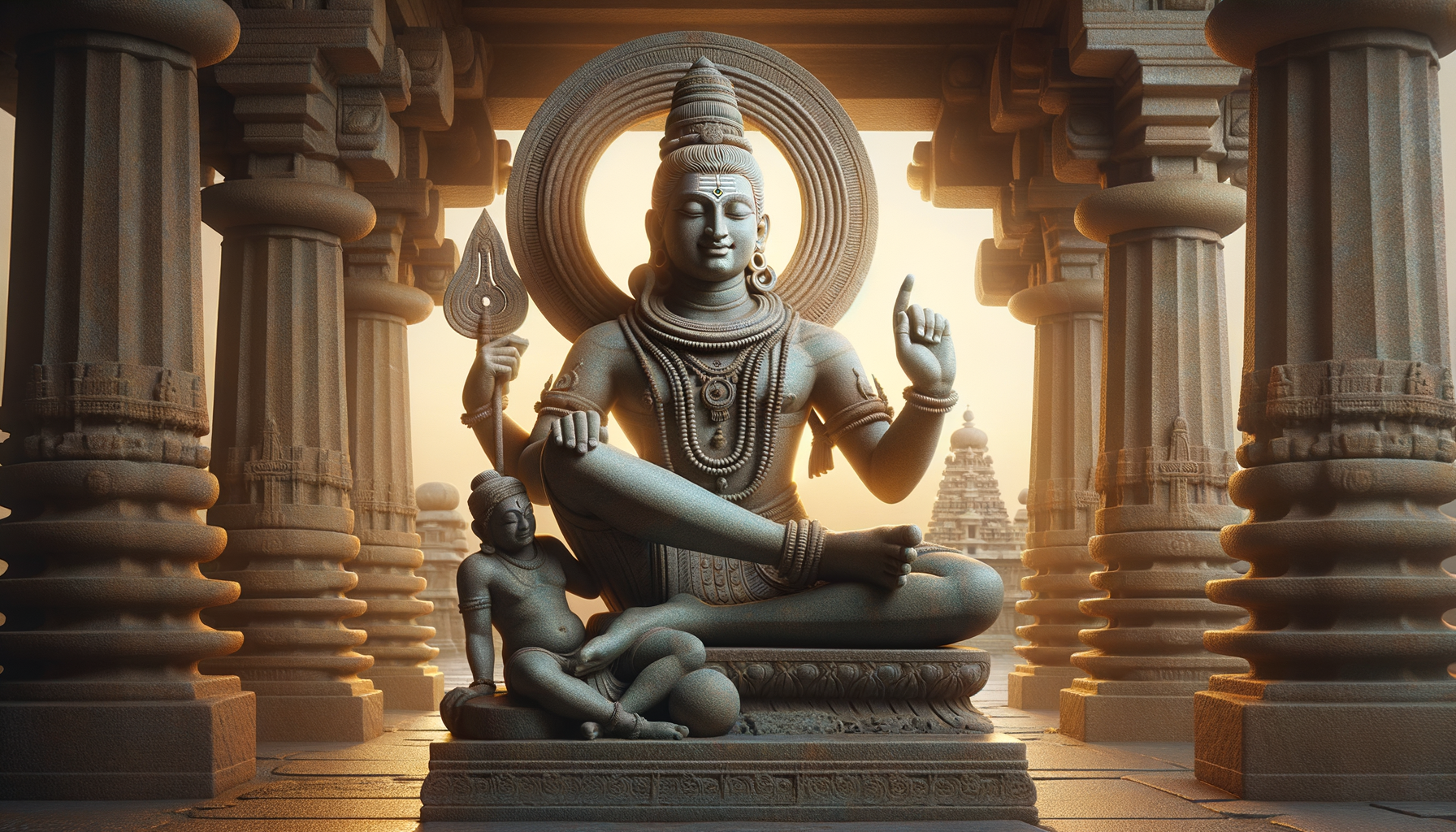
Centuries before the European Renaissance and the Mona Lisa’s famed enigma, Chola artisans in Tamil Nadu achieved a startling triumph: they coaxed a living smile from unyielding granite. At Gangaikonda Cholapuram, the image of NatarajaShiva as Lord of the Cosmic Dancepreserves a serenity and poise that read as unmistakably human, yet profoundly divine. This subtle smile, carved in the 11th century, remains a masterclass in precision, restraint, and spiritual intent.
Gangaikonda Cholapuram’s Gangaikondacholeesvarar Temple, commissioned by Rajendra Chola I, stands as a cornerstone of the Chola Dynasty’s artistic zenith and is part of the UNESCO World Heritage Site ensemble known as the Great Living Chola Temples. The site exemplifies South Indian temple architecture and sculpture, integrating ritual, aesthetics, and cosmology into a single, coherent vision. Within this sacred precinct, the Nataraja motif radiates anandablissthrough a smile that unites stillness and movement.
In the Nataraja icon, the circular prabhamandala (aureole) frames the dynamic dance while the upraised hand offers abhaya (assurance), and the planted foot subdues apasmara (ignorance). Yet it is the mouthbarely upturnedthat transforms the entire composition. In granite, where softness is hardest to capture, the Chola sculptor shaped micro-planes to catch ambient light, letting the lips appear relaxed in one angle and gently animated in another. The result is a living presence in stone, a play of light and intention that architectural space amplifies.
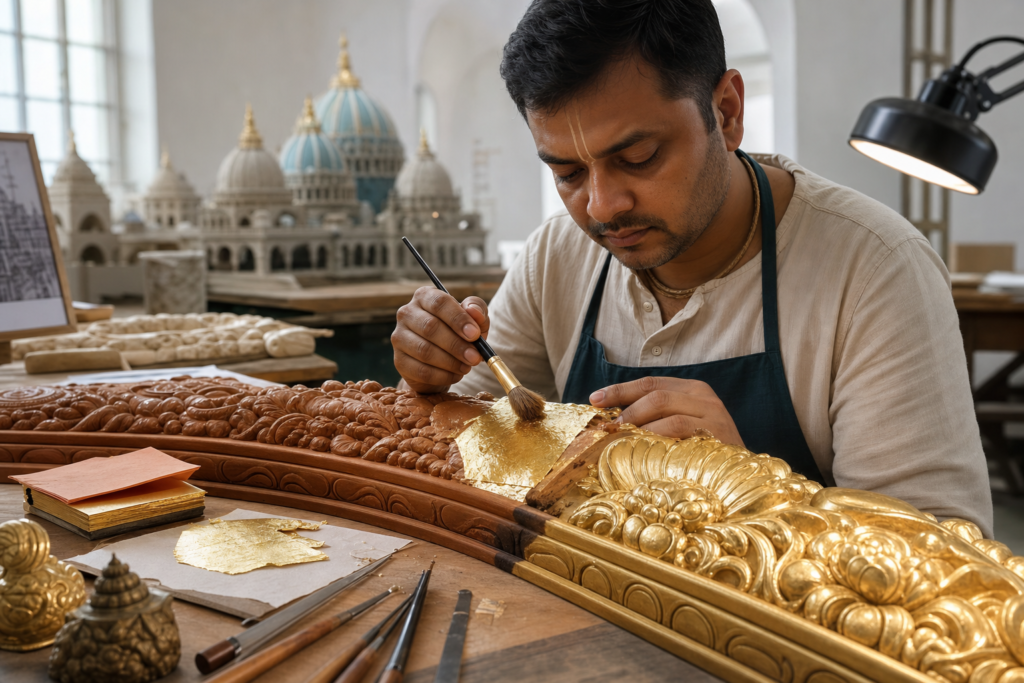
Technical acuity underpins this grace. Chola sculptors, drawing from shilpa shastras and regional workshops, used finely graduated chisels to articulate contours that remain crisp after a thousand monsoons. The mandapa’s controlled lighting cultivates depth and shadow, teaching the eye to see more with less. This dialogue between material and space is not incidental; it is a deliberate architectural pedagogy that refines perception and opens contemplative attention.
Historically, the temple signaled the Chola Empire’s cultural confidencelinked to maritime networks, thriving urban centers, and sustained royal patronage. Alongside Thanjavur’s Brihadeeshwara Temple, Gangaikonda Cholapuram embodies the continuity of a vision that fused governance, devotion, and the arts. In this milieu, Nataraja’s smile functioned as more than ornament; it operated as a visual theology of balancecreation, preservation, and dissolution held in rhythmic equipoise.
Visitors often report a quiet, cumulative awe rather than a single moment of revelation. At dawn and dusk, when the granite warms in changing light, the visage appears alternately contemplative and compassionate. The sculpture seems to respond to the beholder’s own stillness: the more measured the gaze, the more evident the smile. Such phenomenological depth is a hallmark of Chola temple architecture, designed not merely to be seen but to be experienced across time.
The icon’s resonance extends across dharmic traditions. The cyclical dance implicit in Nataraja echoes conceptions of rhythm and interdependence found in Buddhist reflections on impermanence, Jain insights into cosmic time and ethical restraint, and Sikh meditations on hukam (cosmic order). In this way, the sculpture becomes a shared civilizational mirrorinviting unity in diversity and affirming a common pursuit of wisdom, compassion, and ethical living.
Safeguarding this legacy is both an archaeological priority and a living commitment. Conservation of stone surfaces, informed visitor protocols, and community stewardship ensure that Gangaikondacholeesvarar Temple remains a vital center of learning, devotion, and cultural memory. The UNESCO World Heritage Site designation underscores an enduring truth: when art aligns with dharma and disciplined craft, stone can indeed seem to breathe.
Standing before Nataraja at Gangaikonda Cholapuram, one encounters an equilibrium that predates and transcends stylistic epochs. The smile endures not as a riddle to solve but as an invitation to clarityreminding viewers that the finest achievements of temple architecture are those that harmonize intellect, emotion, and the quiet courage to behold.
Inspired by this post on Hindu Blog.