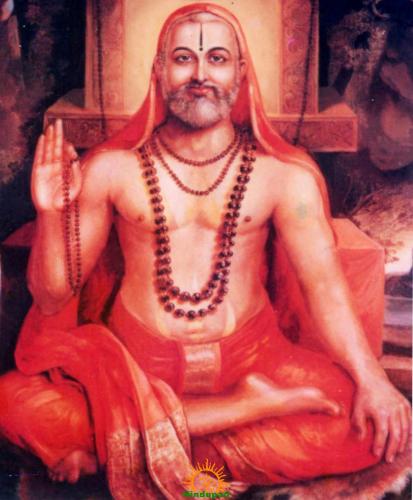
Tharoor, a small town in the South Indian cultural landscape, preserves the memory of one of the great devotees of Hari named Uddhava Chitguna.
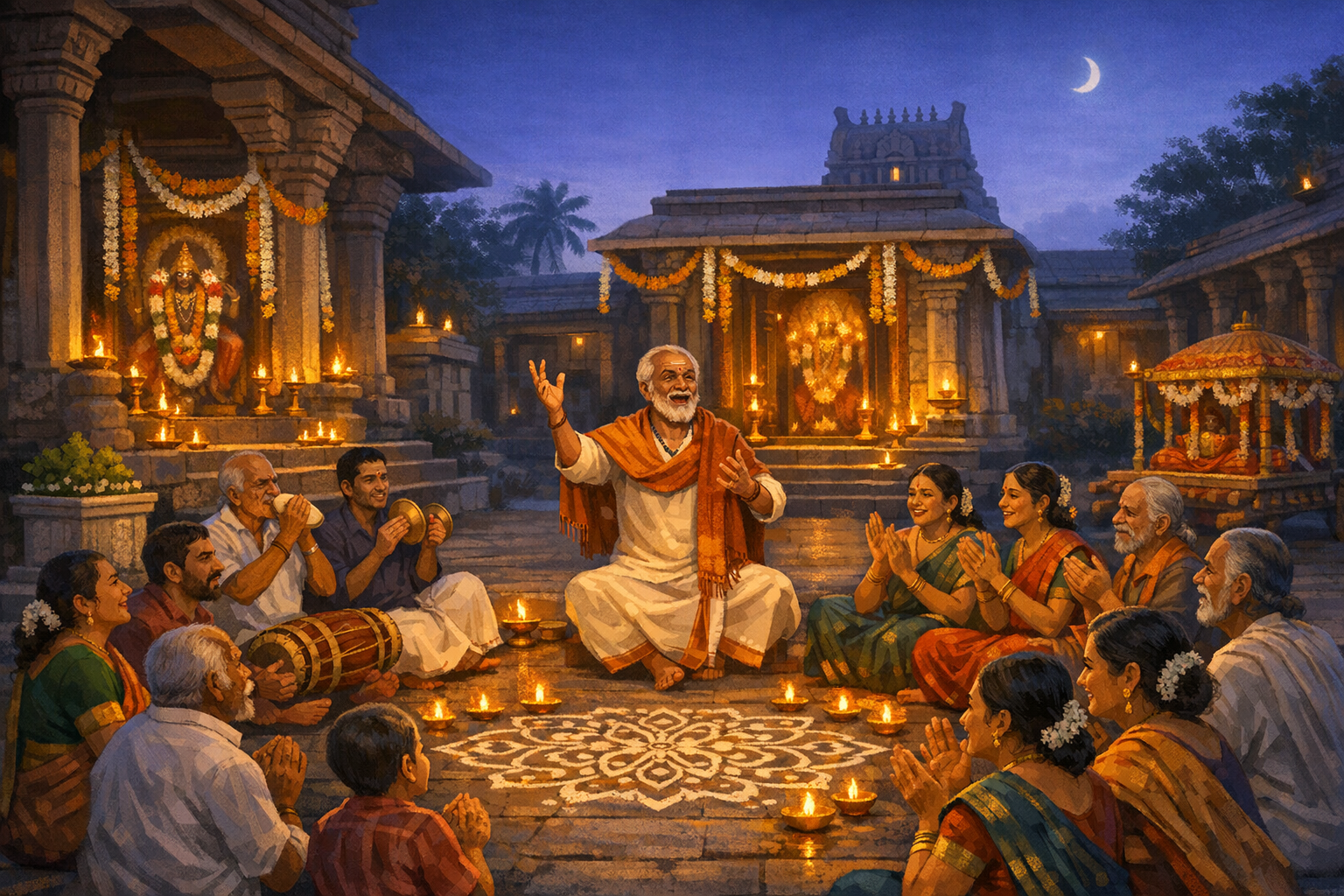
Accounts held in local tradition narrate that Uddhava Chitguna arrived as a pilgrim following an extended tirtha-yatra, offered worship to Perumal in the town temple, and at night enacted the pastimes (lila) of the Lord, gladdening residents.
Situating this narrative within the Bhakti Tradition and Vaishnavism clarifies both its theology and social effect: Hari, addressed locally as Perumal, is worshipped in archa-murti form through darshana and seva; such devotion centers on grace, remembrance, and communal singing.
Etymologically, the personal name Uddhava evokes the intimate confidant of Sri Krishna in the Bhagavata Purana, while Chitguna can be read, without asserting etymological certainty, as a compound linking citta (consciousness) and guna (qualitative disposition), a suggestive portrait of a contemplative, sattva-aligned devotee.
As a pilgrim, Uddhava Chitguna exemplifies tirtha-yatra, the movement between sacred nodes that weaves together temple networks, singing circles, and scriptural discourses; this circulation of people and practices historically diffused melodies, meters, and ritual styles across regions.
The Perumal temple in such towns typically follows Agama-guided cycles of abhisheka, alankara, archana, naivedya, and deepa aradhana, with utsava-murtis enabling festive processions; these rhythms create natural windows for satsang, particularly at dusk when the community gathers.
The nocturnal performance of divine pastimes is consistent with well-attested Vaishnava modalities such as Harikatha, Upanyasa, Bhagavata Mela nataka, Krishnattam, and Bhajana Sampradaya, each blending narrative, music, and theology to translate scripture into lived experience.
From the standpoint of aesthetics, such practices function as embodied theology: rasa theory frames devotion as a cultivated savor (bhakti-rasa) in which story, song, and gesture refine attention and awaken remembrance, aligning emotion with insight.
Janmashtami vigils, Ekadashi kirtans, and seasonal observancesespecially during Margazhiillustrate why nights are privileged time for remembrance; quiet hours amplify recitation, communal listening, and contemplative stillness.
In small towns like Tharoor, evening kirtan forms a recognizable soundscapeconch, cymbals, mridangam, and voices in call-and-responsethrough which neighbors experience belonging, mutual care, and the gentle discipline of shared rhythm.
Socially, devotional gatherings reduce isolation, transmit ethical memory, and strengthen reciprocal service; empirically, such settings correlate with volunteerism around prasada distribution, anna dana, and temple upkeep, modest but durable investments in local well-being.
Theologically, the lila motif holds that the Supreme, though transcendent, consents to be known in approachable forms; whether interpreted through Vishishtadvaita, Dvaita, or Achintya Bhedabheda, the practical outcome converges on devotion expressed as remembrance, humility, and seva.
Ritual narration of Bhagavata and Ramayana episodes remains the principal scriptural substrate for these performances, with the Puranas supplying both cosmological horizons and intimate moral scenes suitable for intergenerational pedagogy.
Within Temple History, such gatherings also mark civic time: festivals orchestrate craft economies, itinerant scholars, and performance troupes; town identity coalesces around these cyclical returns, and individuals often date personal milestones by remembered festivals.
Oral recollections about Uddhava Chitguna fit this wider pattern; while formal documentary traces may be scarce, the communal memory of a pilgrim who worshipped Perumal and enacted lila at night is historically plausible and culturally resonant in the Vaishnava milieu.
Comparative lenses across dharmic traditions sharpen the inclusive significance: Buddhist communities sustain faith through paritta and Jataka recitations, Jain sanghas through stavan and Kalpa Sutra readings during Paryushana, and Sikh sangat through kirtan and shabad; each tradition elevates virtue through shared song and story.
Recognizing this shared grammar of devotionsong, story, and serviceencourages unity in diversity among Hindu, Buddhist, Jain, and Sikh paths, honoring distinct theologies while celebrating convergent practices that heal, educate, and bind communities.
For residents, the experiential arc is simple yet profound: arrive, listen, participate, and depart lighter; many recount that a single evening of Harikatha can recalibrate worry into gratitude and redirect attention toward kindness in daily commerce.
From a research perspective, documenting such lives and practices benefits from triangulationoral histories, inscriptional references, temple kaifiyat and sthala-varalāru, and musical repertoires preserved by bhajana mandalisso that fragile memory matures into curated heritage.
Contemporary preservation can remain faithful to tradition while employing modern tools: community archiving, annotated recordings of Harikatha, transliteration of songs, and accessible primers that explain Perumal worship and Puranic episodes to younger audiences.
Seen in this light, Uddhava Chitguna is less an isolated figure and more a luminous thread in a larger tapestry where Bhakti Tradition, Perumal devotion, and night-time lila converge to nurture community spirit in places like Tharoor.
The enduring lesson is clear: when devotion becomes audible and shared, it transforms private piety into public friendship, aligning spiritual insight with social harmony across all dharmic traditions.
Inspired by this post on Hindu Pad.