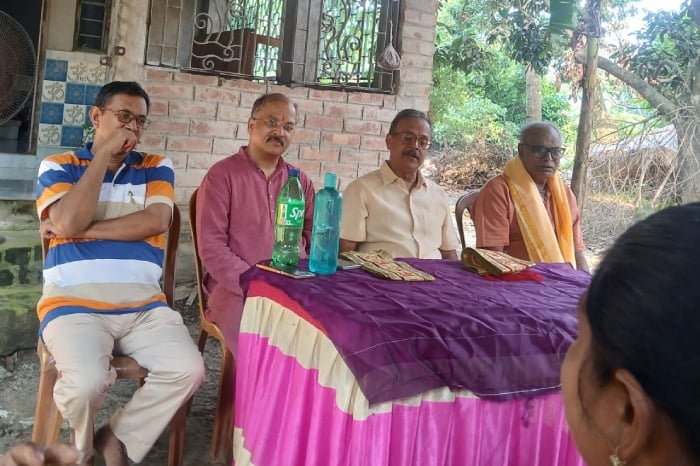
Cuddalore, Oct 30, 2025A focused standoff emerged in Abatharanapuram near Vadalur as villagers, accompanied by members of Hindu Munnai, gathered to oppose a proposed Hindu Religious and Charitable Endowments (HR&CE) Department takeover of the Pachaivazhi Amman Temple. The protest centered on safeguarding community stewardship, maintaining temple traditions, and ensuring that religious endowments remain accountable to local devotees.
Participants conveyed their position through peaceful public demonstrations, emphasizing that the temple functions as a shared cultural and spiritual hub. Residents articulated concerns that institutional control, if implemented without transparent consultation, could distance the shrine from its village-based practices, festivals, and volunteer-driven seva. Their stated objective was not confrontation but clarity: a transparent, consultative process for any administrative change affecting daily worship, temple finances, and customary rites.
The HR&CE Department’s statutory role in temple administration across Tamil Nadu remains a subject of active public discourse. Debates typically revolve around three themesheritage preservation, administrative transparency, and the rights of devoteesespecially where longstanding community-led practices exist. In this context, stakeholders often call for governance models that combine legal compliance with inclusivity and local representation.
Community voices underscored that Pachaivazhi Amman Temple nurtures social cohesion beyond ritual practicesupporting village life, charitable activities, and seasonal observances that sustain unity among neighbors. In line with a broader dharmic ethos, residents expressed a commitment to inter-sect and inter-community harmony across Hinduism, Buddhism, Jainism, and Sikhism. The stated preference was for an approach to religious governance that honors pluralism, protects sacred traditions, and encourages collaborative problem-solving rather than polarization.
According to local accounts, the gathering concluded without major incident. Officials acknowledged the concerns raised, and community representatives indicated they would seek formal dialogue, submit petitions, and pursue due process in line with existing legal frameworks governing Religious Endowments. The emphasis remained on constructive engagementdocumented concerns, structured meetings, and time-bound responses.
Analytically, a participatory governance pathway appears viable. Suggested measures include creating joint temple protection committees with defined roles; periodic disclosures of finances and maintenance works; third-party audits where appropriate; and a clear grievance redressal process accessible to devotees. Such measures can align statutory oversight with the temple’s living traditions, allowing both regulatory integrity and cultural continuity.
In broader perspective, the Abatharanapuram episode illustrates the balance required between state responsibility, community rights, and cultural heritage in Tamil Nadu. A transparent and consultative approachanchored in respect for dharmic diversitycan reduce mistrust, strengthen accountability, and preserve the social fabric that local temples sustain. When governance honors both law and lived tradition, the outcome reinforces unity and trust among devotees while safeguarding sacred institutions for future generations.
Inspired by this post on Struggle for Hindu Existence.