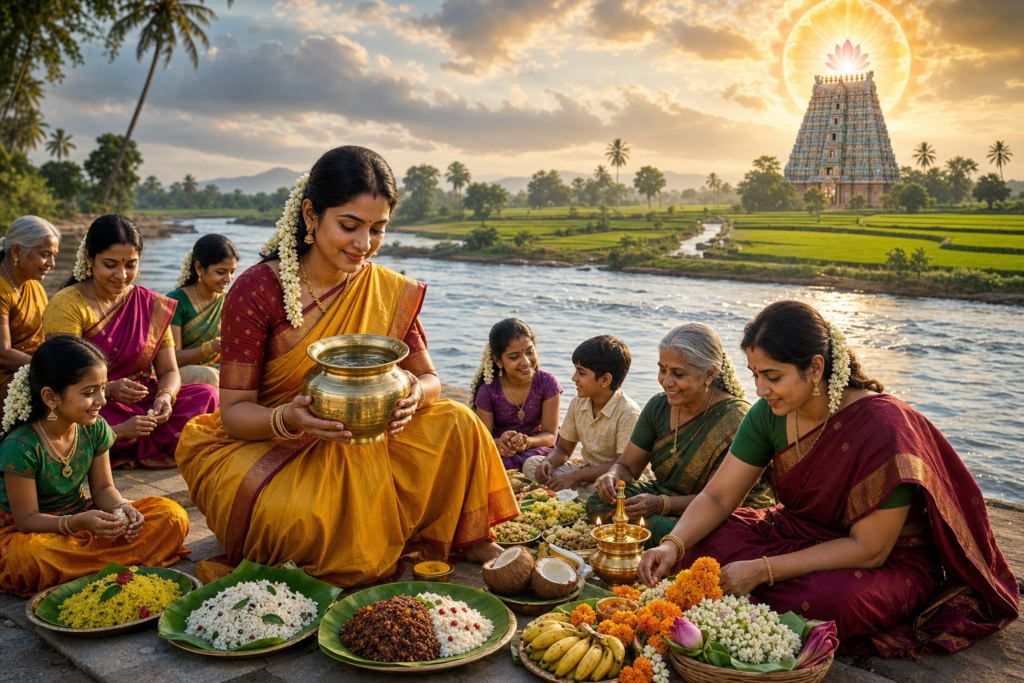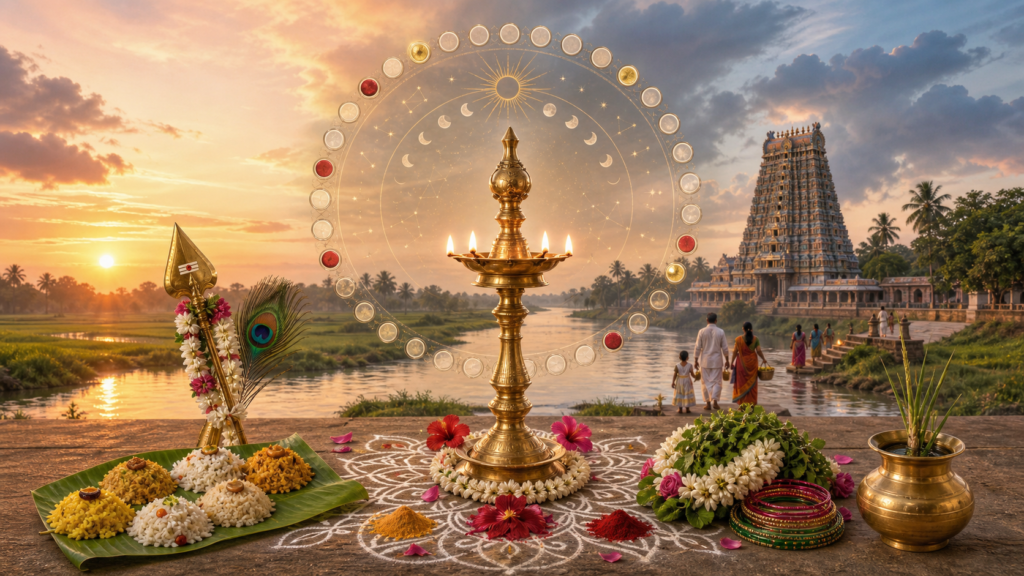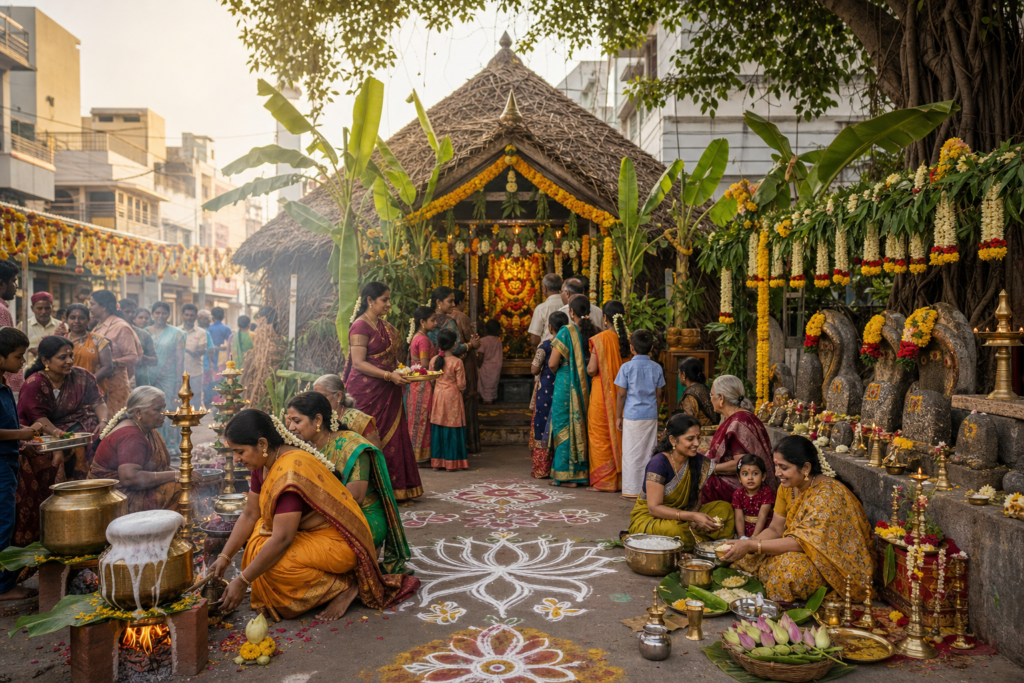
Pradakshina, or circumambulation, denotes the devotional act of walking clockwise around a sacred centerwithin and outside Hindu templesand extends to practices such as Girivalam around the Holy Mountain Arunachala. Recognized as an integral Hindu ritual, this movement places the heart toward the deity while aligning the devotee’s steps with a consecrated axis, reinforcing humility, focus, and continuity in worship.
Symbolically, the clockwise motion reflects the path of the sun and the order inherent in dharma. Circumambulation reorients attention from the periphery of distractions to the sanctified center, embodying the principle that the Divine stands at the heart of life’s orbit. In this sense, Pradakshina functions as embodied philosophy: each step externalizes inward reverence.
In temple practice, circumambulation unfolds through successive prakaras (enclosures) that guide the devotee from outer corridors to inner sanctity. Whether performed in the temple courtyard, around sub-shrines, or encircling the sanctum, the ritual maintains a mindful, unhurried pace. Hands are often joined, eyes softened, and the breath aligned with mantra or silent contemplationrooted in the Hindu way of life and its emphasis on attentive presence.
Girivalam at Arunachala (Tiruvannamalai) exemplifies circumambulation in its pilgrimage form. Revered as a living manifestation of Shiva, the 14-kilometer clockwise circumambulation of the hillespecially on Purnimais considered profoundly purificatory. The walking meditation across shrines and tirthas encircling Arunachala harmonizes physical movement, sacred geography, and sustained remembrance of the Divine Name.
This sacred practice also expresses unity across dharmic traditions. In Buddhism, devotees perform pradakshina around stupas; in Jainism, parikrama is observed around tirthankara temples; in Sikhism, parikrama proceeds around the sarovar and sanctum, notably at Harmandir Sahib. The shared gesture of encircling a holy center affirms spiritual diversity and a common reverence that nurtures harmony among Hinduism, Buddhism, Jainism, and Sikhism.
Many devotees recall formative experiences of repeated circumambulation shaping quiet joy and steadiness. In Chennai’s Ayanavaram, regular circumambulation of Sri Parasuramalingeswarar Templeoften undertaken multiple timesfosters a lasting memory of serenity, community bonding, and the gentle discipline of sacred walking. Such recollections illuminate how ritual movement becomes a lifelong source of solace and meaning.
Time-honored guidelines help sustain the sanctity of Pradakshina. Movement remains clockwise, commencing after respectful darshan; the pace is measured; conversations are minimized; and devotional focus is maintained through mantra, japa, or breath awareness. Courtesy to fellow pilgrimsavoiding overtaking and keeping to the rightpreserves collective attention in shared sacred space.
Common observances include completing 1, 3, 5, 7, or 11 rounds, depending on time, health, and sankalpa. While numbers may hold symbolic resonance, the essence lies in intention, steadiness, and devotion. For Girivalam, preparation with water, appropriate footwear (where permitted), and seasonal awareness ensures that mindful reverence is matched by practical care.
The benefits of circumambulation span spiritual and practical dimensions. Devotees frequently describe enhanced concentration, emotional balance, and devotional sweetness, alongside gentle physical exercise and improved breath rhythm. As a communal ritual, Pradakshina strengthens bonds within temple culture and the broader tapestry of cultural traditions that sustain living heritage.
In contemporary life, Pradakshina offers an accessible form of contemplative practice. It requires no elaborate preparation, aligns naturally with temple visits and pilgrimage traditions, and invites inclusive participation across generations. As a unifying ritual, it affirms that walking in reverencewhether around a sanctum or the sacred hill of Arunachalacan transform everyday movement into a pathway of clarity, gratitude, and shared belonging.
Inspired by this post on Hindu Pad.