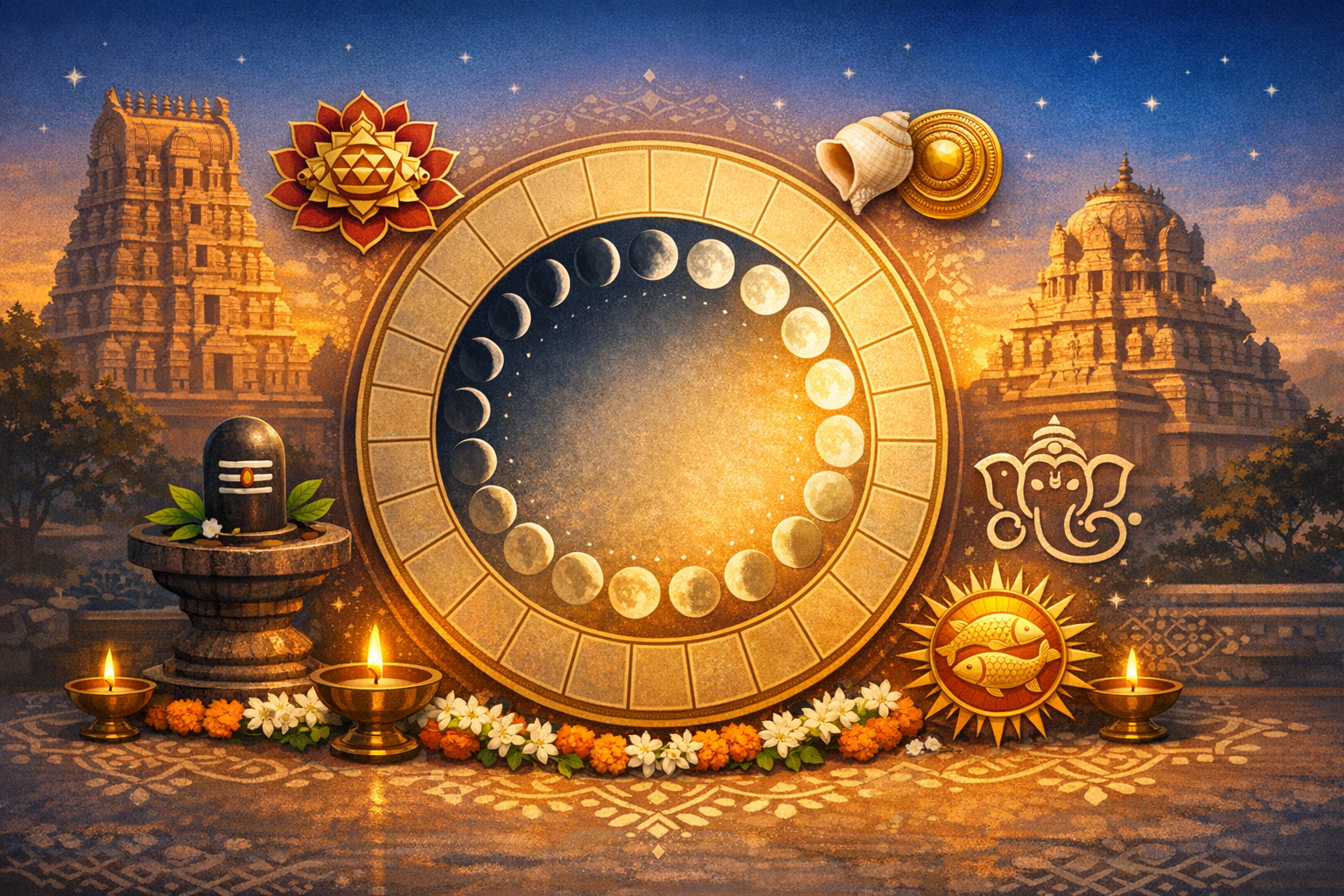
This guide presents an academically grounded, practical overview of pujas and observances anticipated in March 2026 at Sri Kanchi Kamakoti Peetham (Srimatam), Kanchipuram, Tamil Nadu. It aligns temple observances with the Hindu lunar calendar while also mapping them across major regional calendars to support clarity for devotees traveling from different parts of India and the diaspora.
March 2026 straddles Falgun Maas transitioning into Chaitra Maas in North Indian Hindi calendars; Phalguna Masam into Chaitra Masam in Telugu, Kannada, Marathi, and Gujarati calendars; Falgun Mash into Chaitra Mash in the Bengali Panjika; and Masi into Panguni in the Tamil solar calendar. This cross-calendar mapping is essential because temple schedules are anchored to tithis (lunar days) and, in some cases, to solar transits, rather than to civil dates alone.
Kanchipuram’s spiritual ecosystem is distinctive: while the Srimatam preserves the Advaita Vedanta lineage of Adi Shankaracharya, the wider kshetra is also home to iconic temples such as Sri Kamakshi Amman, Ekambareswarar, and Varadaraja Perumal. The Srimatam’s ritual life typically centers on Sri Chandramouleeswara Puja, Devi upasana in the Sri Mahatripurasundari tradition, Veda parayanam, homas on select occasions, and Smarta panchayatana practiceoffering a balanced rhythm of Shiva, Shakti, Vishnu, Surya, and Ganesha worship.
Within this cadence, Fridays (Sukravara) commonly feature enhanced Devi archana across Kanchipuram’s sacred spaces, and the Srimatam’s schedule often reflects this wider cultural emphasis on Sri Lalita Tripurasundari (Sri Kamakshi). Devotees generally experience a blend of contemplative ritual, Vedic recitation, and accessible darshan that together characterize the Srimatam’s measured, traditional approach.
From a Panchang perspective, March 2026 will include: one Purnima and one Amavasya, two Pradosham windows (each fortnight), two Ekadashi vratas (Shukla and Krishna paksha), one Masik Shivaratri (Krishna Paksha Chaturdashi), Sankashti Chaturthi (the Krishna paksha Chaturthi following Purnima), and Meena Sankranti (the Sun’s transit into Meena rashi) within the Tamil Masi–Panguni span. Depending on lunar-nakshatra alignment, Panguni UttiramTamil Nadu’s hallmark full-moon celebration associated with divine weddingsmay fall toward late March or early April 2026; devotees should confirm its precise occurrence for Kanchipuram in Indian Standard Time (IST).
Amavasya and Purnima traditionally elicit special worship at the Srimatam, centered on Sri Chandramouleeswara. Devotees can expect Vedic chanting (notably Sri Rudram, Purusha Sukta, and other stotras), abhishekam, and deepa aradhana that emphasize inner stillness on Amavasya and fullness of devotion on Purnima. These two lunar pivots are especially valued for sankalpa, satvika dana, and extended japa.
Pradoshamobserved during the twilight window spanning roughly 1.5 hours before and after local sunset on Trayodashiholds particular importance for Shiva bhaktas. At such times, the Srimatam’s emphasis on Shiva upasana is often marked by bilva-archana, Panchakshari japa, and, when announced, specific abhishekas. Masik Shivaratri (monthly Krishna Paksha Chaturdashi) sustains this current with night-centric Shiva dhyana and recitation of Sri Rudram, deepening the meditative tone of the fortnight.
Ekadashi, revered across the Smarta tradition, emphasizes Vishnu Sahasranama parayanam, Gita recitation, and restrained annashuddhi (dietary discipline). The Srimatam’s balanced orientation recognizes Ekadashi as a vital rhythm of inner alignment and mental clarity, complementing Shiva and Shakti observances.
Sankashti Chaturthi, the Krishna paksha Chaturthi following Purnima, is devoted to Sri Ganesha. Masik Vinayak Chaturthi is a well-known vrata for obstacle-clearing, and devotees commonly engage in Ganesha archana, fasting until moonrise, and simple offerings in a spirit of humility and learning.
Meena Sankranti (Sangrand in several North Indian and Sikh usages) marks the monthly solar ingress and typically inspires Surya upasana, arghya, and reflections on right conduct and steadiness. The shared recognition of monthly solar transitions across Hindu and Sikh practices underscores a wider dharmic consonance around timekeeping, discipline, and gratitude.
Panguni Uttiramif it falls within late March 2026bears major cultural resonance across Tamil Nadu, celebrating the divine marriages of Shiva–Parvati and Sri Subrahmanya–Deivanai and, in the Srividya lens, deepening the contemplative understanding of Sri Lalita Tripurasundari’s grace. In the Kanchipuram region, this utsava ethos harmonizes the bhakti of nearby temples with the Srimatam’s Advaita-focused sadhana.
Technically, a tithi is defined by each 12-degree increment of the Moon’s elongation from the Sun. Because tithis and nakshatras do not neatly align with civil midnight, observances can shift by date across geographies. Temple practice often follows established siddhanta and local Panchang norms; in Tamil Nadu, observance rules generally privilege the tithi prevailing at sunrise, while night-centric events may prioritize the tithi operating during the night segment of worship.
For devotees aligning their travel with March 2026 observances, it is advisable to reference an authoritative Panchang configured for Kanchipuram (IST). Note that India does not observe Daylight Saving Time; visitors arriving from regions that do should adjust expectations accordingly. Precision in tithi windows is especially relevant for Pradosham, Masik Shivaratri, and Sankashti moonrise.
A typical Srimatam day blends nitya-puja, Vedic chanting, and darshan in an environment of dignified quietude. For Pradosham days, arriving well before sunset helps secure an unhurried experience. On Amavasya and Purnima, a steadier flow of devotees can be expected, with many choosing to remain for extended parayanam and meditation.
Etiquette supports the sanctity of the Srimatam: modest attire, device silence, and gentle movement are encouraged; satvika offerings (fruits and flowers) align best with traditional practice; and deference to agamic and Srividya protocols sustains collective harmony. Photography is typically discouraged within inner spaces.
Personal sadhana can be synchronized with the March 2026 calendar: Sri Rudram and Lingashtakam for Pradosham and Masik Shivaratri; Vishnu Sahasranama and Bhagavad Gita passages for Ekadashi; Ganapati Atharvashirsha for Sankashti; and Lalita Sahasranama or Saundarya Lahari during Sukravara and full-moon Devi upasana. Journaling sankalpas from Amavasya to Purnima fosters continuity and measured self-observation.
These practices resonate across the wider dharmic family. Uposatha (Buddhist observance) on lunar pivots, Pratikraman (Jain introspection) around fortnightly markers, and Sangrand (Sikh monthly solar ingress) together evince a shared Indic grammar of time, discipline, and inner cultivationvalues the Srimatam embodies through balance, study, and worship.
Given that exact civil dates for tithis can vary by locality and the specific observance rules of a Peetham, devotees are encouraged to confirm the final March 2026 schedule as posted at the Srimatam or through its formal communications near the time of travel. This verification ensures alignment with local Panchang computations and any special announcements by the Peetham.
In sum, March 2026 in Kanchipuram is poised to offer a deeply integrated sadhana arc: from the introspective clarity of Amavasya to the luminous devotion of Purnima; from Pradosham’s twilight grace to Ekadashi’s mindful restraint; from Sankashti’s obstacle-clearing humility to the solar steadiness of Meena Sankranti and, potentially, the celebratory bhakti of Panguni Uttiram. Approached with study, patience, and reverence, these observances enrich both individual practice and the collective sanctity of Sri Kanchi Kamakoti Peetham.
Inspired by this post on Hindu Pad.