Uchitta Bhagavathy is a regional Hindu Goddess revered across North Malabar in Kerala, with devotion centered particularly in Kannur and Kasaragod. As a form of Devi within the Shakti tradition, Uchitta is celebrated both through temple worship and the living folk-ritual performance known as Theyyam, reflecting the deep continuity of Kerala culture and its cultural heritage.
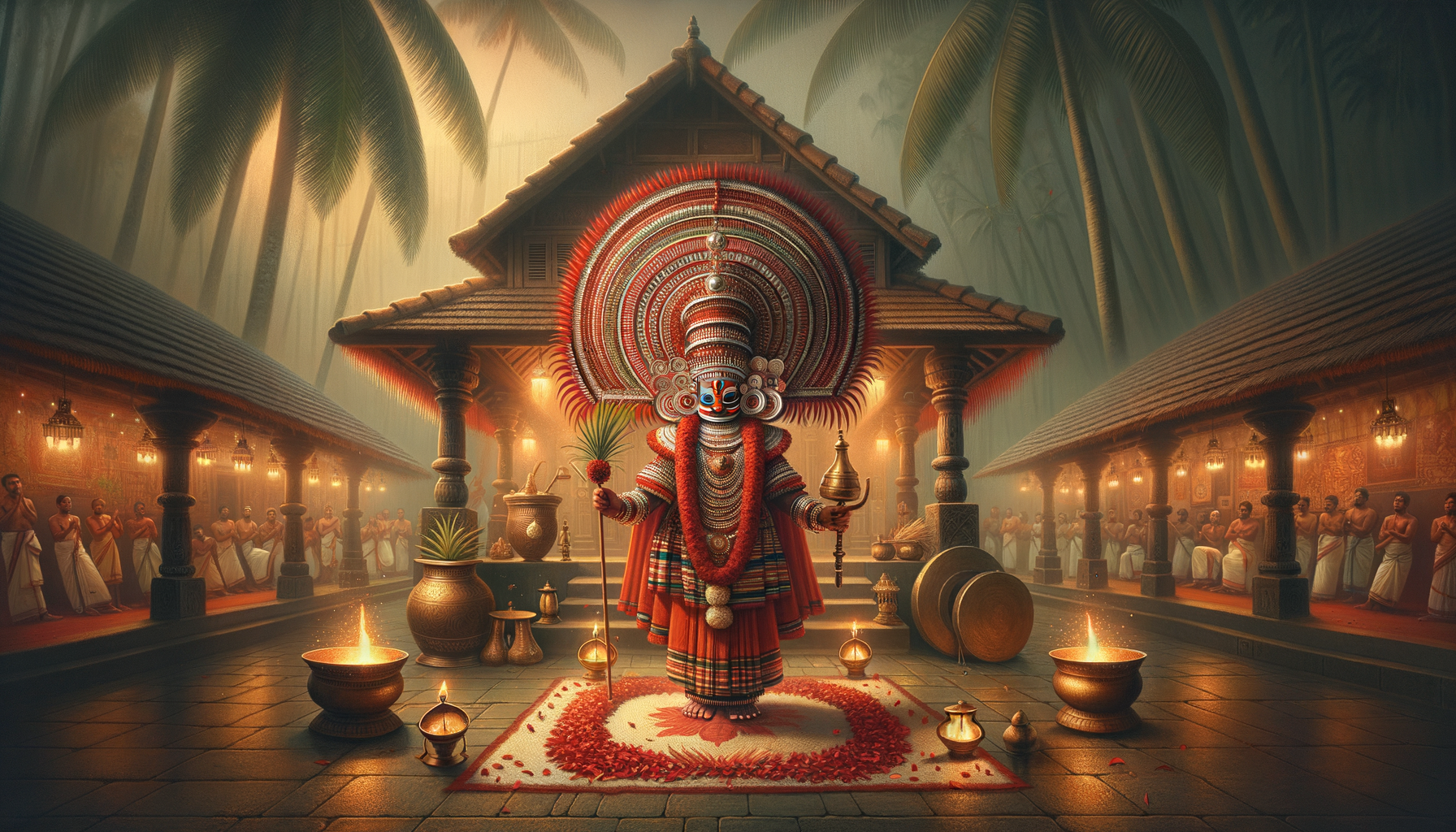
In the Theyyam tradition (often called Kaliyattam), trained ritual performers embody Uchitta Bhagavathy through codified dance, drumming, and sacred invocations. This ritual theater functions as worship, folklore, and community gathering at once, making the presence of the Hindu Goddess tangible and accessible. Many devotees describe Theyyam as an encounter with protective grace and moral courage, qualities widely associated with Devi.
Shrines dedicated to Uchitta Bhagavathy are distributed among local kavus and village temples across Kannur and Kasaragod. These Indian Temples often publish seasonal Theyyam calendars, allowing pilgrims to witness the deity’s appearance in ritual performance. While precise festival schedules vary by locality, the enduring pattern remains clear: temple tradition and Hindu folklore work in harmony to sustain a living lineage of devotion.
As heritage practice and spiritual experience, Uchitta Bhagavathy Theyyam underscores the inclusivity of Kerala culture and the broader dharmic ethos. The values expressed—compassion, discipline, and communal care—resonate with seekers across Hinduism, Buddhism, Jainism, and Sikhism, encouraging mutual respect and unity among dharmic traditions. This shared moral vocabulary strengthens cultural continuity without imposing a singular path.
Visitors and researchers alike observe that Theyyam environments invite reflective participation: maintaining decorum, seeking consent before photography, and respecting ritual boundaries preserves the sanctity of the kavu and its practitioners. Such sensitivity deepens understanding of Temple History and supports the responsible preservation of cultural heritage.
Viewed in a wider Indian context, Uchitta Bhagavathy stands as a distinctive expression of Devi worship in North Malabar. The integration of temple rites with living performance underscores how Hindu Temples, local communities, and ancestral knowledge sustain a vibrant, place-based spirituality. For those exploring Theyyam, Uchitta Bhagavathy offers an illuminating window into Shakti devotion, Kerala culture, and the enduring unity of dharmic traditions.
Inspired by this post on Hindu Pad.