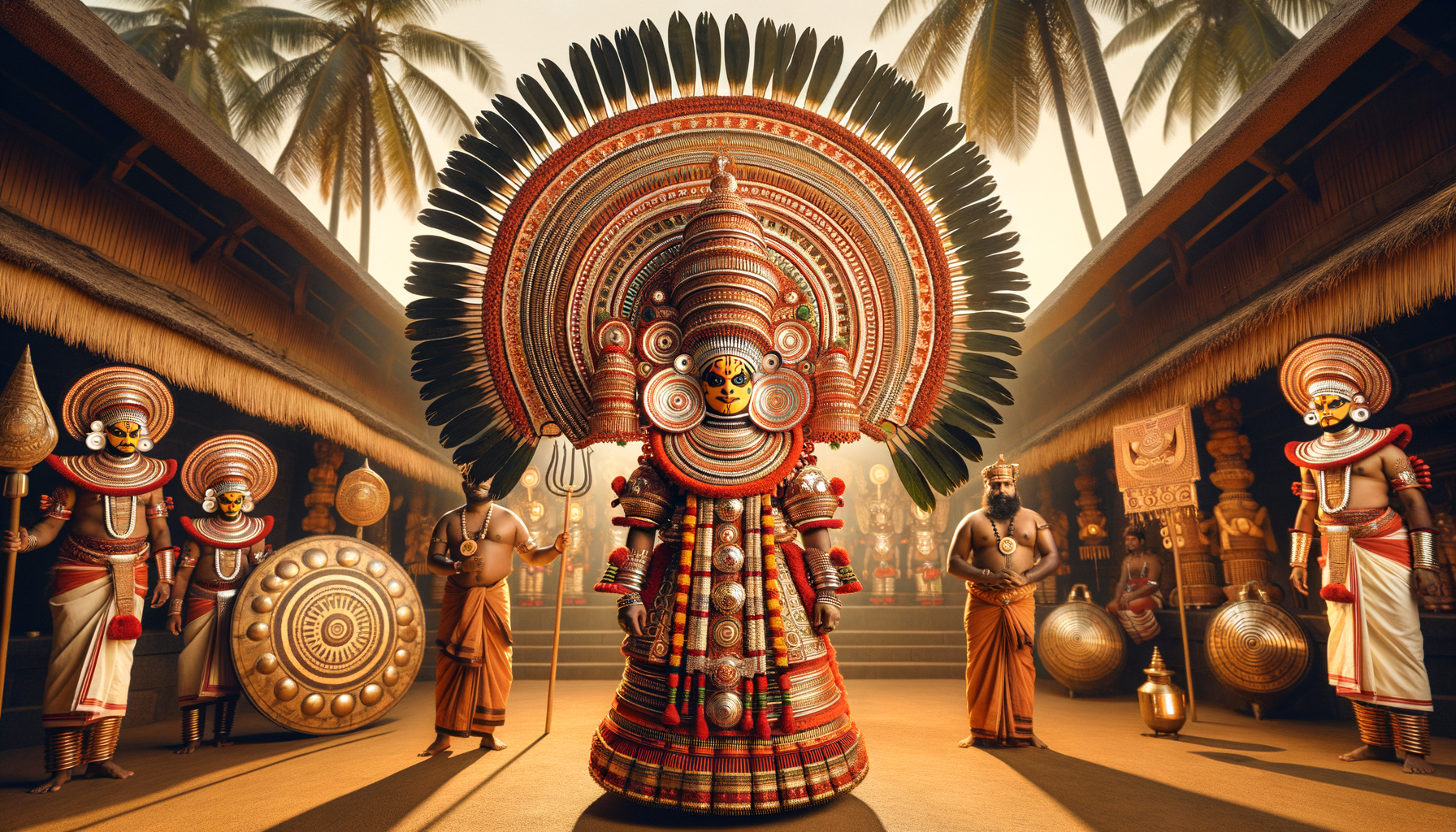
Ma Arya Poonkani, also known as Ma Aryakkarakani, is revered in the ritual landscape of North Malabar, Kerala. The devotional performance dedicated to her is known as Arya Poonkani Theyyam, and it is traditionally paired with Bappiriyan Theyyam in select temples and kaavu (sacred groves). Together, these performances sustain a living heritage where deity, community, and place converge in a rhythm of faith.
As an art form and religious observance, Theyyam blends ritual, music, and embodied storytelling. Costumes, face-painting, and towering headdresses transform the performer into a channel for divine presence, while percussionespecially chenda and elathalamestablishes a trance-like cadence. In the Arya Poonkani Theyyam, the choreography, songs, and oracle-like blessings merge to create an intimate space where devotees seek protection, guidance, and auspiciousness.
Local oral traditions present complementary narratives about Arya Poonkani and Bappiriyan. In widely shared tellings, Arya Poonkani undergoes a perilous journey and is aided by Bappiriyan, a figure associated with seafaring and courage. The paired Theyyams honor themes of trust, rescue, and gratitude, reflecting a cultural ethos where cooperation and mutual respect are celebrated. By performing these legends together within a temple setting, the community reinforces values of harmony that resonate with the broader dharmic ideal of coexistence.
Ritually, the sequence often unfolds with invocations, narrative songs, and blessings for households and the wider village. The visual language of the performancegeometric motifs, vibrant reds and oranges, and sacred insigniasignals protection and shakti. Devotees describe the soundscape and movement as both contemplative and electrifying, an experience that unites memory, devotion, and cultural identity in a single sacred moment.
Culturally, Arya Poonkani Theyyam stands as a vital strand in Kerala’s intangible heritage. It preserves local language, music, costume design, craft knowledge, and ritual practice, while also nurturing social cohesion. In spirit, the values embodiedcompassion, duty, and reverence for the sacredecho across Hinduism, Buddhism, Jainism, and Sikhism, emphasizing the shared dharmic commitment to ethical living and unity in diversity.
Visitors and pilgrims can encounter Arya Poonkani Theyyam during the Theyyam season, typically between November and May, in parts of Kannur and Kasaragod. Respectful participationsuch as observing local guidance, seeking permission for photography, and maintaining temple decorumensures that tradition-bearers and devotees experience the ritual without disruption. Listening to the accompanying songs or consulting with local elders often enriches understanding of the legend’s nuances.
Across generations, the combined performances of Arya Poonkani Theyyam and Bappiriyan Theyyam continue to inspire. They offer a compelling window into Kerala culture, temple traditions, and the living pulse of a community gathered around sacred storytelling. In affirming unity, these rituals model a dharmic pathway where diverse spiritual journeys are honored and the shared pursuit of truth, compassion, and harmony is celebrated.
Inspired by this post on Hindu Pad.