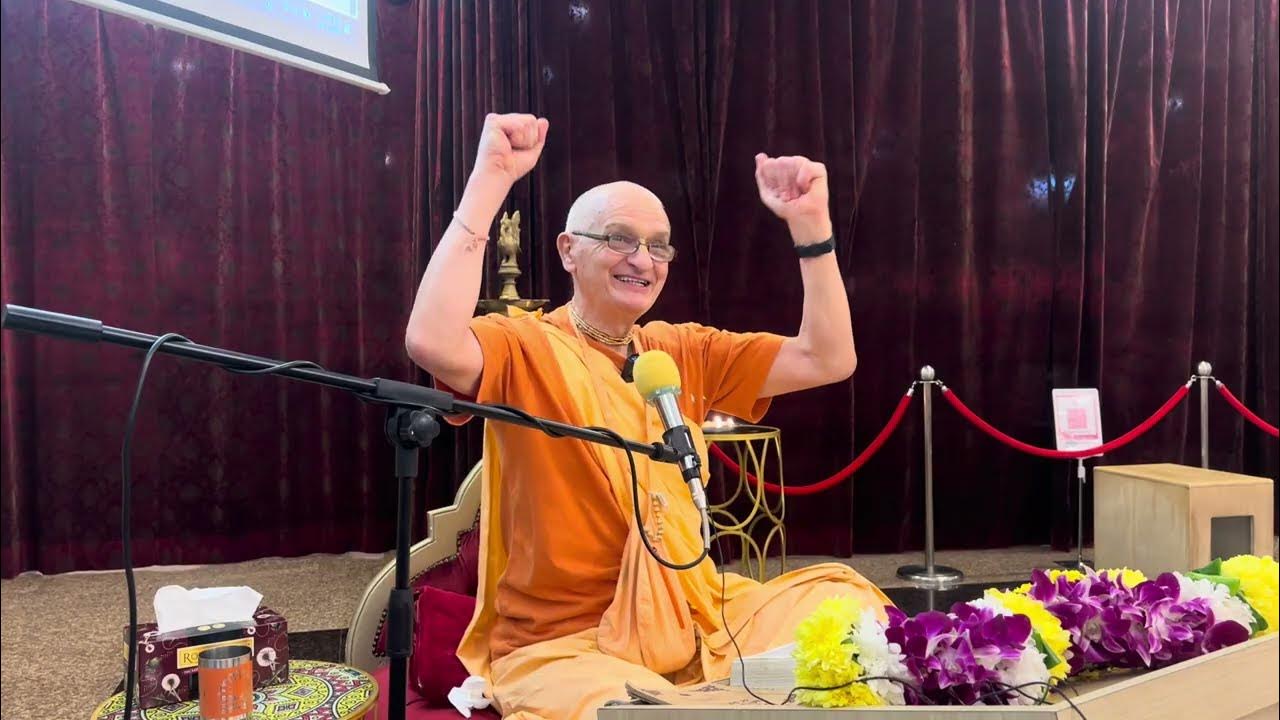
At ISKCON Sri Jagannatha Mandir, Kuala Lumpur (19.01.2026), HH Jayananda Goswami offered a reflective discourse anchored in Bhagavad Gita 2.7, illuminating how genuine spiritual surrender opens the door to clear guidance and purposeful living. Drawing on Srila Prabhupada’s final days, the talk emphasized that the essence of life is found not in merely extending physical existence but in continuously chanting the holy names of the Lord. This orientation reframes priorities: while the body deserves care, the ultimate nourishment is remembrance, devotion, and service.
The address described chanting and preaching Krishna consciousness as a kind of medicinea precise regimen for the restless mind and a compass for ethical action. In this view, japa and kirtan cultivate steadiness, compassion, and clarity, thereby aligning daily duties with higher aims. The holy name functions as both method and goal: it heals distraction, refines intention, and restores a sense of belonging to Krishna’s grace.
To ground these ideals, the talk contrasted early ISKCON temple lifemarked by simplicity, discipline, and rigorous routinewith contemporary expectations of comfort. Those earlier years were not austere for their own sake; rather, they trained attention, humility, and resilience. Regular japa, service, and kirtan formed a living laboratory where Bhagavad Gita teachings were practiced, tested, and internalized. The result was a culture of purpose that prioritized inner transformation over external accumulation.
Listeners responded to the message with a sense of gentle urgency. The atmosphere in the mandir made the reflections feel intimate and practical, as if each person had been handed a clear, time-tested method for meeting life’s uncertainties. Many resonated with the encouragement to return to essentials: daily chanting of the holy names, honest introspection guided by scripture, and compassionate outreach as an expression of bhakti.
Importantly, the discourse affirmed a broader dharmic kinship. Practices such as japa, simran, and mantra recitationfound across Hindu, Buddhist, Jain, and Sikh traditionsshare a unifying rhythm of remembrance and ethical refinement. This shared inheritance suggests that sincere chanting, whatever the specific form, can cultivate peace, responsibility, and mutual respect. In this spirit, the talk invited a vision of unity-in-diversity grounded in lived practice rather than abstract agreement.
Practical takeaways were clear. Begin with a steady japa routine, however modest; participate in kirtan to strengthen collective remembrance; and anchor daily choices in the guidance of Bhagavad Gita 2.7seeking counsel, surrendering pride, and aligning with dharma. Embracing simplicity and service can transform ordinary moments into opportunities for devotion. In this way, chanting becomes life’s true medicine, harmonizing body, mind, and purpose while fostering unity across the dharmic family.
Inspired by this post on Dandavats.