The annual Brahmotsavams of Sri Venkateswara Swamy, together with Sridevi and Bhudevi, will be observed from 28 February to 4 March 2026 at the Sri Venkateswara Swamy Temple in Ananthavaram village, Thullur Mandal, Guntur district, Andhra Pradesh. Organized under the aegis of Tirumala Tirupati Devasthanam (TTD), the festival is expected to follow the time-honored Vaishnava tradition that combines precise ritual observances with expansive community participation.
Situated within the Amaravati region and accessible from both Guntur and Vijayawada, the Ananthavaram Temple has emerged as a focal point for devotees in coastal Andhra Pradesh. The setting enables pilgrims from across the state to converge with relative ease, while TTD’s operational experience ensures a structured devotional environment that balances spiritual depth with on-ground safety and comfort.
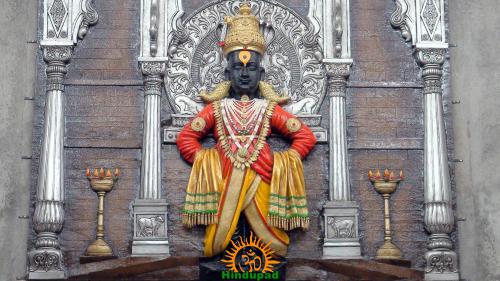
In iconographic terms, Sri Venkateswara Swamy is flanked by Sridevi (prosperity, abundance) and Bhudevi (earth, sustenance), conveying a theological synthesis in which transcendence and immanence meet. The festival’s core symbolismdarshan of the Lord across multiple vahanams (processional vehicles)expresses a central value of Hindu temple culture: to bring divine presence out to the community and reaffirm collective dharmic life.
Brahmotsavams, by tradition, commemorate the cosmic celebration said to have been first conducted by Brahma for Lord Vishnu. In contemporary practice under TTD, the festival unfolds through a calibrated sequence of ritespreparatory purification, ceremonial flag-hoisting, morning and evening vahana processions, sacred baths, and concluding ablutionseach designed to create an immersive cycle of seva (service), shraddha (devotion), and samskara (refinement).
In the lead-up to the festivities, Koil Alwar Tirumanjanam (a comprehensive temple-sanctum cleansing and perfuming rite) is typically conducted to purify the garbhagriha and allied spaces. This ritual, together with Ankurarpanam (the sowing of consecrated grains), ritually “germinates” the festival and signals readiness for the principal utsavams. Specific dates and timings for these preparatory observances are generally published through official TTD Updates.
The core festival days are traditionally anchored by Dwajarohanam (hoisting of the Garuda dhwaja to inaugurate the utsavam) and culminate with Chakrasnanam (ceremonial bath of the Sudarshana Chakra) followed by Dhwajavarohanam (flag-lowering). Between these rites, the Lord is taken in procession on emblematic vahanams such as Sesha, Hamsa, Hanumantha, Gaja, Simha, Surya, Chandra, Mohini, Kalpavruksha, and Sarvabhoopala, subject to the schedule finalized and announced by TTD.
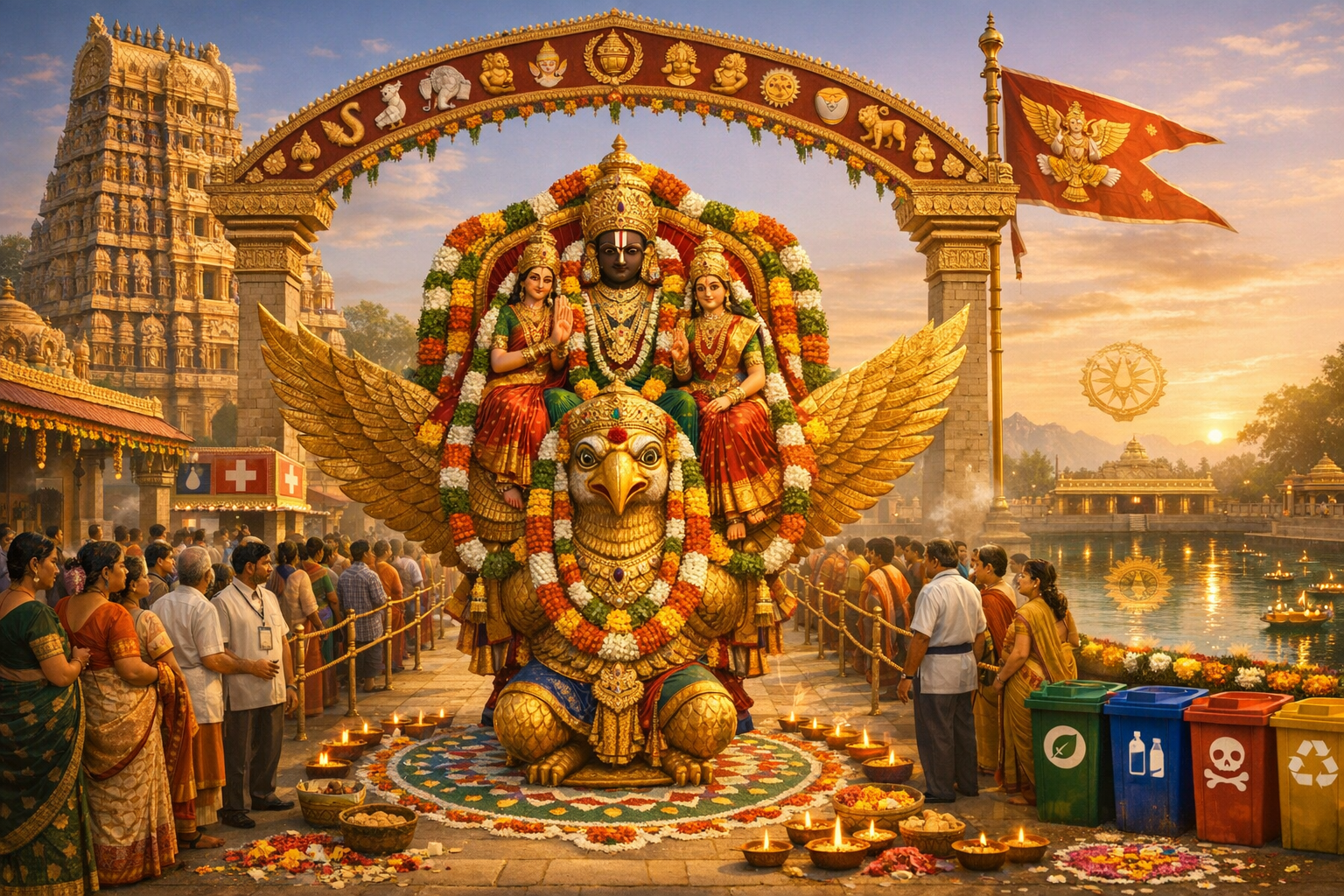
Dwajarohanam marks the formal beginning, invoking Garudathe vahana of Vishnusignifying auspicious commencement and the safeguarding of all participants. The raising of the dhwajapatam is accompanied by Vedic chants, mangalas, and sankha-nada (conch-blowing), rendering the temple precincts ritually “consecrated in motion” for the duration of the Brahmotsavams.
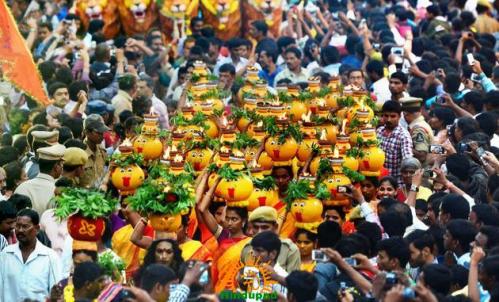
Among the processions, Garuda Seva typically draws the largest congregations, reflecting the intimate theological bond between Sri Venkateswara and Garuda. Processional design, route management, and timekeeping are handled with precision to facilitate both smooth darshan and the safety of pilgrims, residents, and participating bhajana mandalis.
Snapana Tirumanjanam (ritual abhishekam with milk, turmeric, sandal, and other sanctified dravyas) provides a meditative counterpoint to the dynamism of the street processions. Through these sacred baths and alankarams (decorations), devotees witness the Lord’s anugraha (benevolent grace) expressed as shanta (peace), saumya (gentleness), and karuna (compassion).
The concluding day generally features Chakrasnanaman ablution of the Sudarshana Chakra in the temple tank or designated kshetra jalas (sacred waters)symbolizing the ritual re-absorption of divine energy that has circulated through the community during the festival. Dhwajavarohanam then ceremonially brings the utsavam to close, restoring the temple to its post-festival rhythm.
For pilgrims, the Brahmotsavams at Ananthavaram combine devotional intimacy with the hallmark organizational discipline for which TTD is known. Early-morning darshan often affords quieter contemplation, while evening vahana sevas provide a shared, uplifting experience. Seva opportunitieswhen announcedoffer structured ways to participate through voluntary service and disciplined observance of temple etiquette.
TTD’s arrangements customarily include queue management systems, drinking water points, medical aid stations, sanitation teams, crowd-flow stewards, and public announcements for schedule adherence. Annaprasadam distribution is typically organized during major events to support pilgrims, and signage is deployed for route guidance and emergency access. Final modalities are confirmed via official TTD communications.
While the Brahmotsavams are rooted in Vaishnavite practice, their ethos resonates across dharmic traditionsHinduism, Buddhism, Jainism, and Sikhismthrough shared values of dana (generosity), ahimsa (non-injury), seva (service), and satsanga (community fellowship). The festival thus serves as a living forum for unity in diversity, encouraging mutual respect and a culture of reverence that transcends sectarian lines.
Access to Ananthavaram is convenient from Guntur and Vijayawada via public and private transport. Vijayawada International Airport (Gannavaram) serves as the nearest major aviation hub, while Guntur Junction and Vijayawada Junction are the primary railheads. Local and regional buses, taxis, and app-based services typically operate increased frequency around major festival dates.
Pilgrims often find accommodation in the broader Amaravati–Guntur–Vijayawada corridor. Options may range from dharmashalas and budget lodgings to hotels, depending on proximity and demand. Early planning remains advisable, given the multi-day nature of Brahmotsavams and the influx of devotees during Garuda Seva and other high-attendance processions.
Temple etiquettemodest attire, footwear removal, respectful silence near the sanctum, and adherence to queue protocolspreserves the sanctity of the kshetra. Offerings (flowers, coconuts, and prasadam items) should follow temple guidelines, and photography may be restricted in designated zones; pilgrims are encouraged to observe signage and announcements.
In recent years, TTD has emphasized sustainability measures, including plastic-free precincts, biodegradable prasadam packaging, segregated waste collection, and disciplined crowd dispersal post-events. Such practices safeguard the temple environment and reflect a broader dharmic stewardship toward nature (prakriti rakshana).
Weather in late February and early March is typically warm during the day and pleasant in the evening. Pilgrims are advised to carry water, use sun protection for daytime processions, and factor in additional time for security checks and route diversions instituted for vahana sevas. Individuals requiring mobility support should plan for assistance given possible walking distances during processions.
As with all major TTD events, the detailed day-wise schedule, seva availability, and any special advisories for the Anantavaram Brahmotsavams 2026 will be released through official channels. Pilgrims are encouraged to verify timings close to travel dates and align their plans accordingly to optimize darshan and participation.
By bringing Sri Venkateswara Swamy, with Sridevi and Bhudevi, into the heart of community life through scripture-guided ritual and disciplined devotion, the Anantavaram Brahmotsavams reaffirm a central truth of India’s spiritual heritage: collective well-being is nurtured where reverence, service, and unity converge.
Inspired by this post on Hindu Pad.