
-
Matsya Jayanti 2026 at Nagalapuram Vedanarayana Swamy: Sacred Sevas and Equinox Sun Miracle
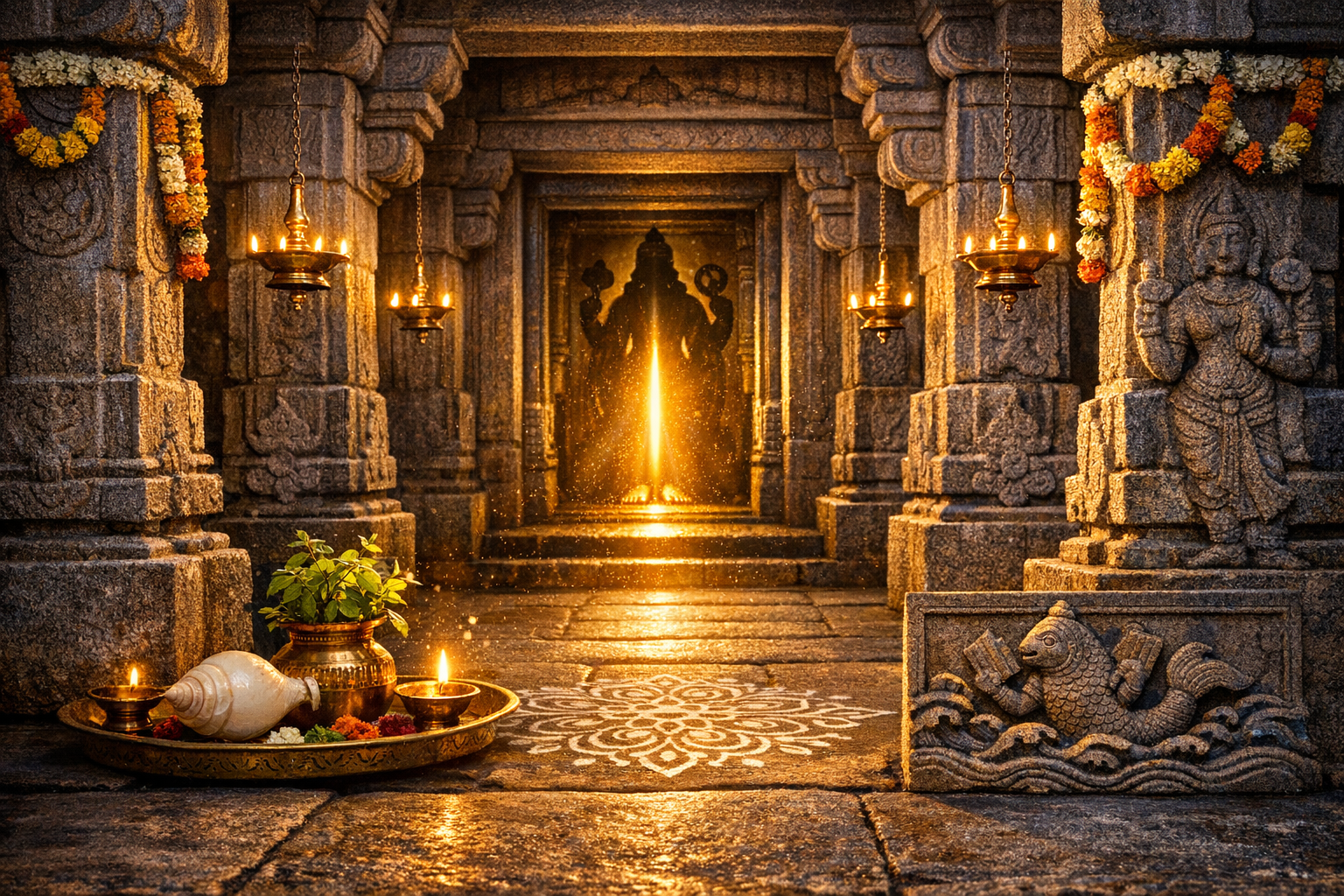
Matsya Jayanti 2026 at Sri Vedanarayana Swamy Temple, Nagalapuram (Andhra Pradesh), will be observed on 21 March with early-morning Suprabhata Seva, Tomala Seva, and Archana, followed by public darshan. The festival, set in the Chaitra Month, honors Vishnu’s first Avataar and the safeguarding of the Vedas during the cosmic deluge. Nagalapuram’s famed equinoctial Surya Pujawhen…
-
Angada Abharana Unveiled: The Divine Armlet’s Symbolism, Craft, and Cross‑Dharmic Legacy
Angada Abharana, the divine armlet worn on the upper arm at the bahu desha, is far more than ornament in Hindu iconographyit binds strength to service and sovereignty to compassion. This long-form exploration distinguishes the angada from the wrist-worn keyura, traces typologies like the vanki and sarpa-angada, and decodes motifs such as makara and kirtimukha.…
-
From Hunter to Bridegroom: Decoding Shiva’s Kirata and Kalyanasundara Murtis in Tamil Temple Culture
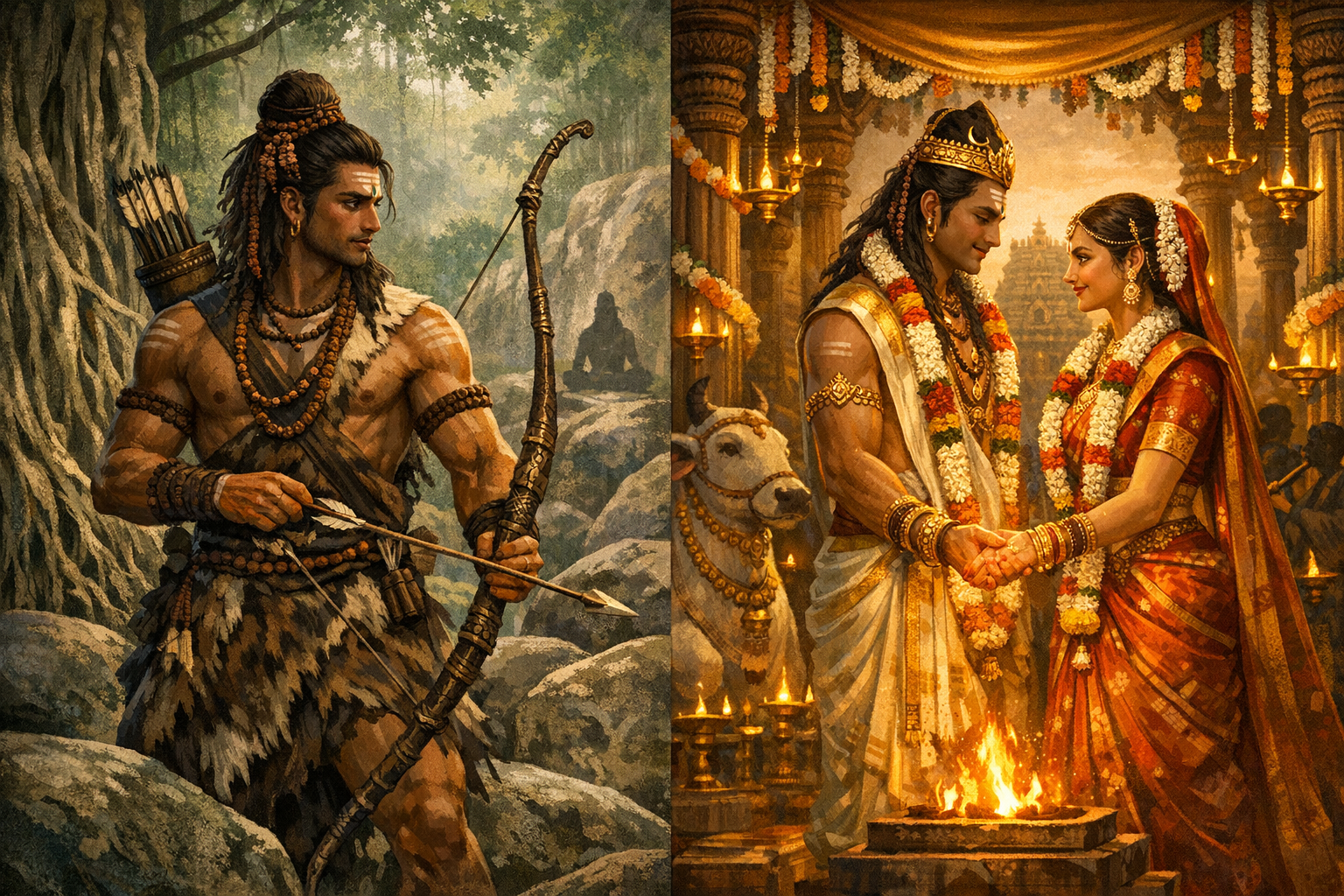
Shiva’s Kirata and Kalyanasundara murtis together reveal a powerful arc “from hunter to bridegroom,” uniting ordeal and grace, tapas and ananda. Drawing on the Mahabharata’s Kirata episode, Bharavi’s Kiratarjuniya, Puranic sources, and Kalidasa’s Kumarasambhava, this study situates both forms within Tamil temple culture and Chola–Pallava art. Readers gain clear iconographic cues (the Kirata’s hunting regalia;…
-
Kiratamurti Unveiled: Shiva the Divine HunterIconography, Symbolism, and Temple Legacy
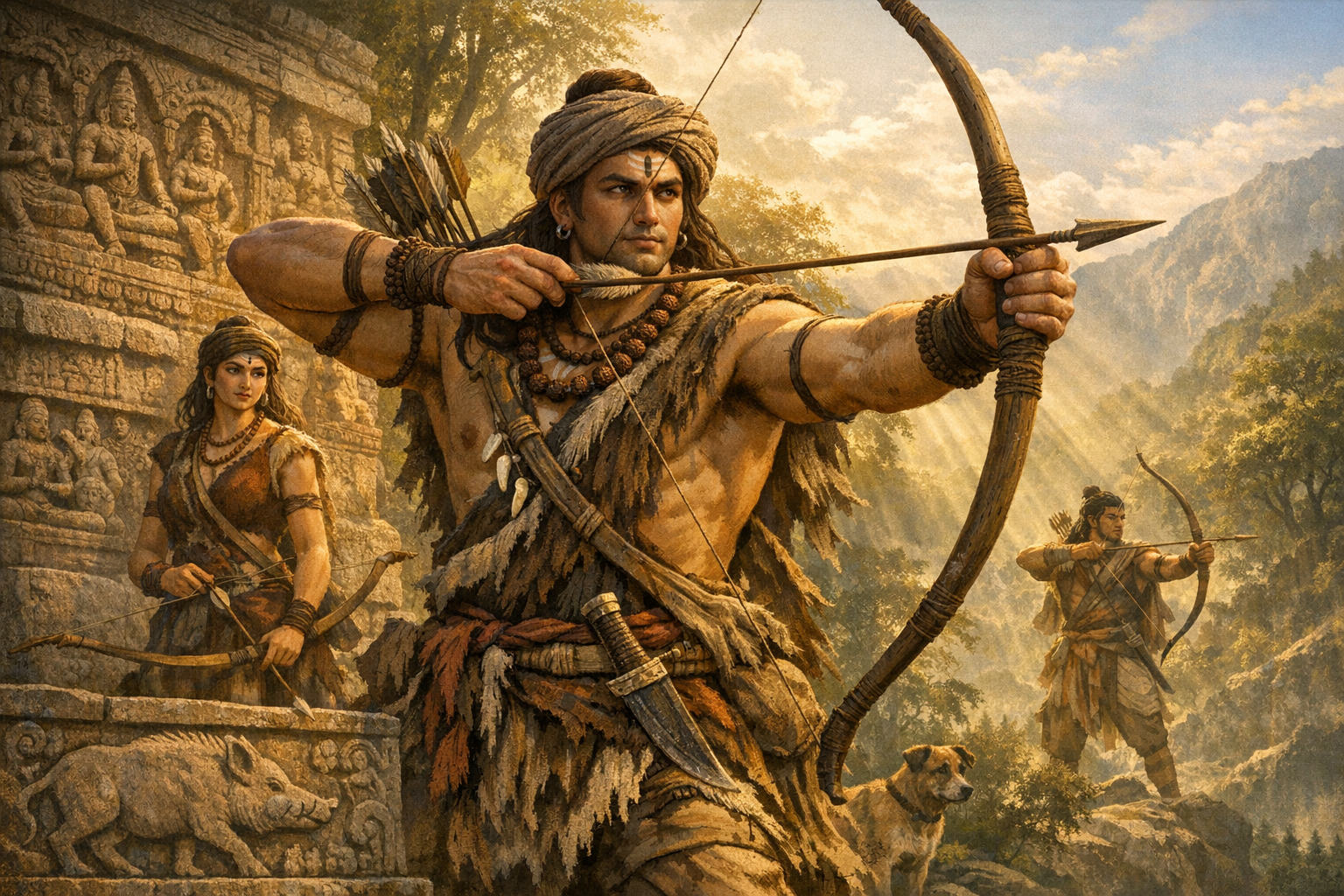
KiratamurtiShiva as the Divine Hunterunites textual authority, temple iconography, and living ritual into a single, resonant theology of focus and grace. This long-form study traces the Mahabharata’s Kiratarjuna episode, explains key iconographic features (hunter’s bow, forest attire, Kirāti companion, boar as symbol), and maps the motif across major sites from Kanchipuram and Ellora to Hoysala…
-
Padma Nidhi of Kubera in South Indian Temples: Timeless Gate Guardians of Abundance
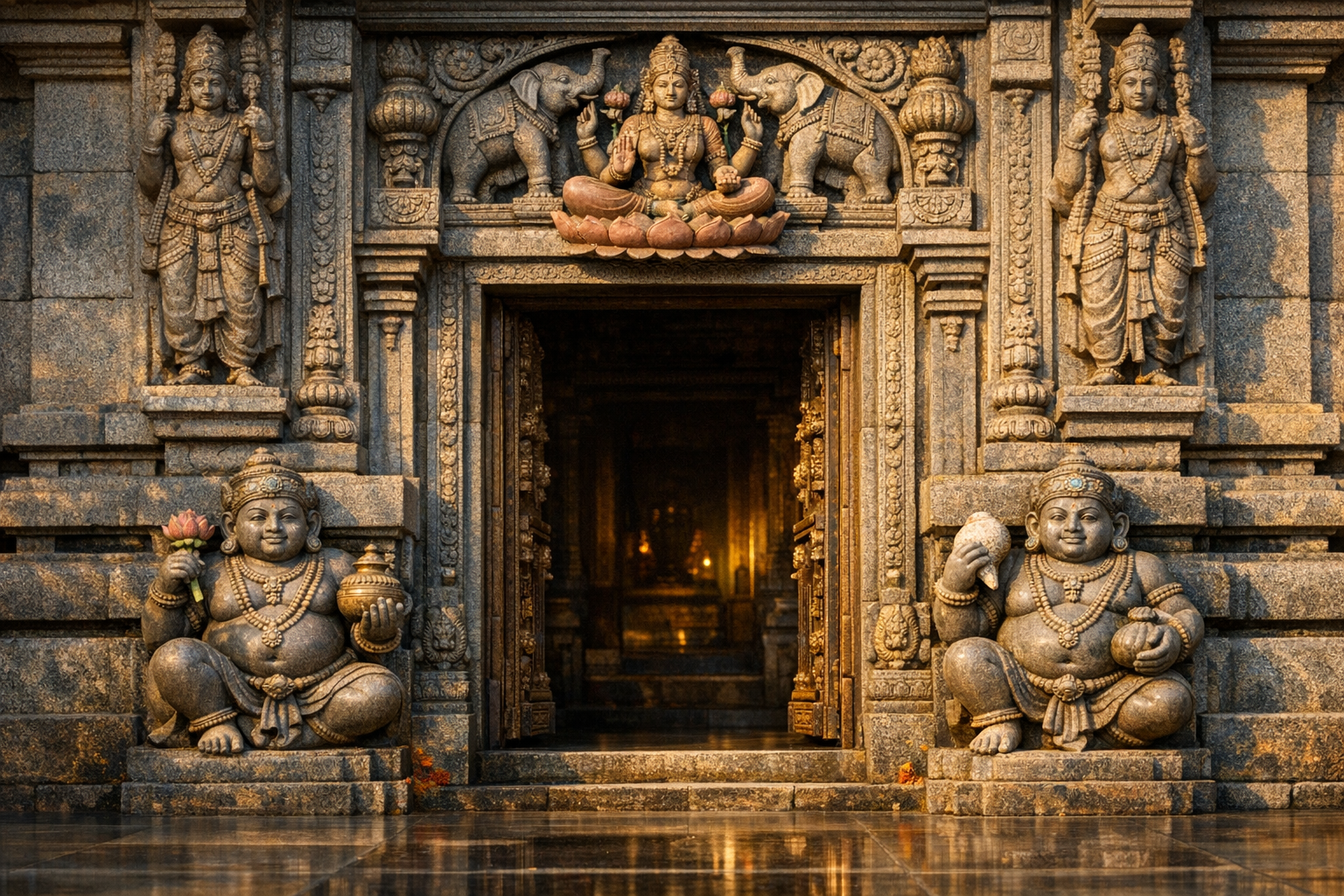
Padma Nidhipaired with Śaṅkha Nidhifunctions as a liminal, auspicious guardian at South Indian temple thresholds, especially in Tamil Nadu. Grounded in Agamic and Śilpa-śāstra prescriptions, the pair integrates with dvarapālas and Gaja-Lakṣmī to create a complete doorway program of protection, grace, and prosperity. As personifications of Kubera’s treasures, these compact, pot-bellied figures translate the metaphysics…
-
Kalantaka Shiva Unveiled: Tantric Iconography and the Fearless Conquest of Death and Time
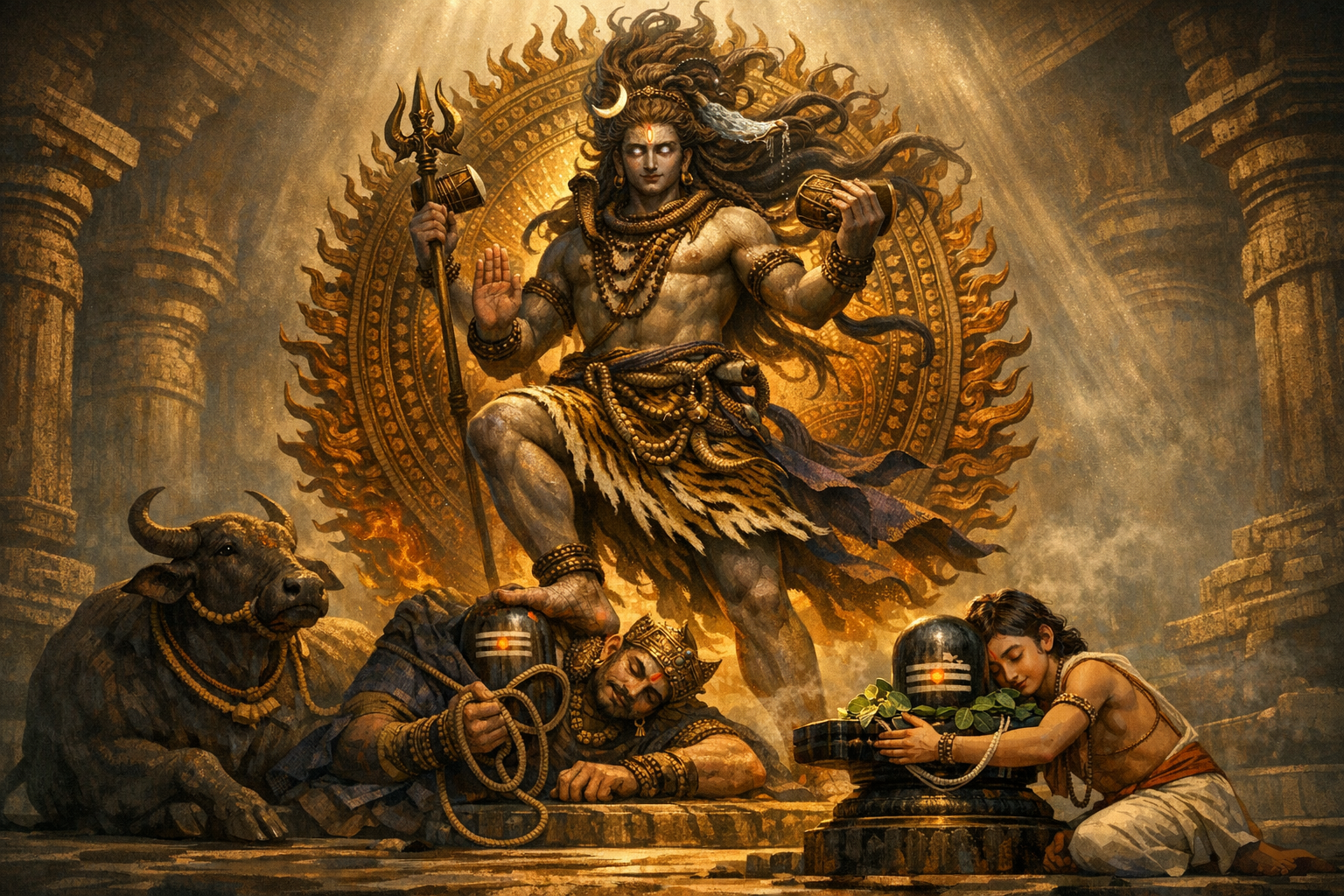
Kalantaka Shiva embodies Lord Shiva’s sovereignty over death and time, uniting narrative, ritual, and art into a coherent path of fearlessness. Drawing on Puranic sourcesespecially the Markandeya episodethis study unpacks the icon’s ugra yet compassionate character and explains how the trishula, damaru, and noose operate as precise Tantric symbols. Readers gain a field guide to…
-
Agamas in Hinduism: A Definitive Guide to Temple Science across Shaiva, Vaishnava, Shakta Paths

Agamas in Hinduism are authoritative temple sciences that unite theology, meditation, ritual, architecture, and iconography into a single living system. This article clarifies what “Āgama” means, how it relates to Veda and Smṛti, and why Shaiva, Vaishnava (Pañcarātra and Vaikhānasa), and Shakta lineages each preserve distinct yet harmonious Agamic corpora. Readers gain a technical overview…
-
Kokamukha Unveiled: The Jackal-Faced Mahakali in Texts, Temple Inscriptions, and Tantra
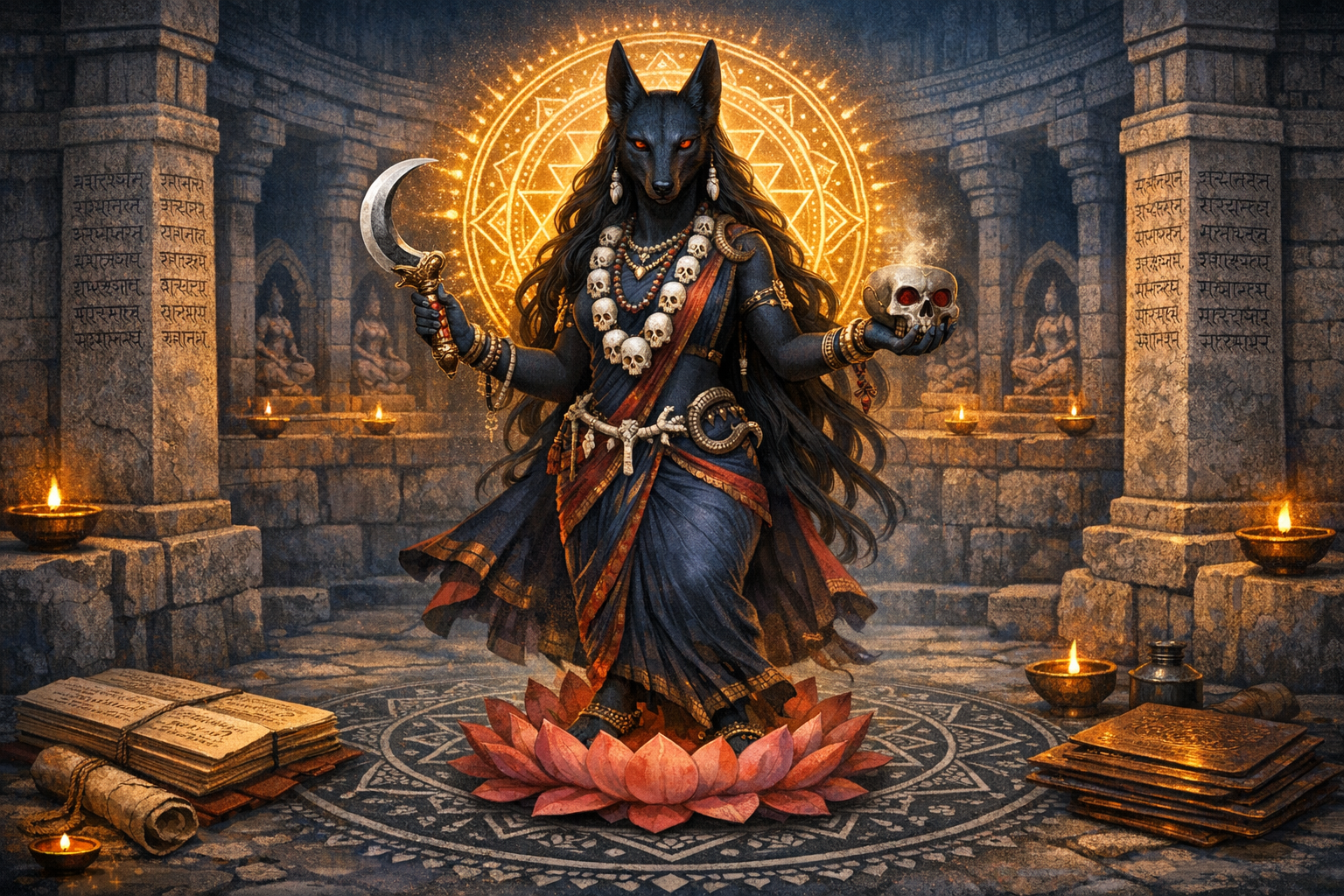
Kokamukha, remembered as the jackal-faced manifestation of Mahakali, emerges in the Shakta landscape at the intersection of Hindu scriptures, temple traditions, and Tantric iconography. The article clarifies the name’s philological roots and situates the form within cremation-ground theology, where fierce imagery communicates protection, fearlessness, and ethical clarity. It connects Kokamukha with Yogini traditions and early-medieval…
-
Alidha Stance in Hindu Iconography: Embodied Power, Dharma Readiness, and Sacred Motion
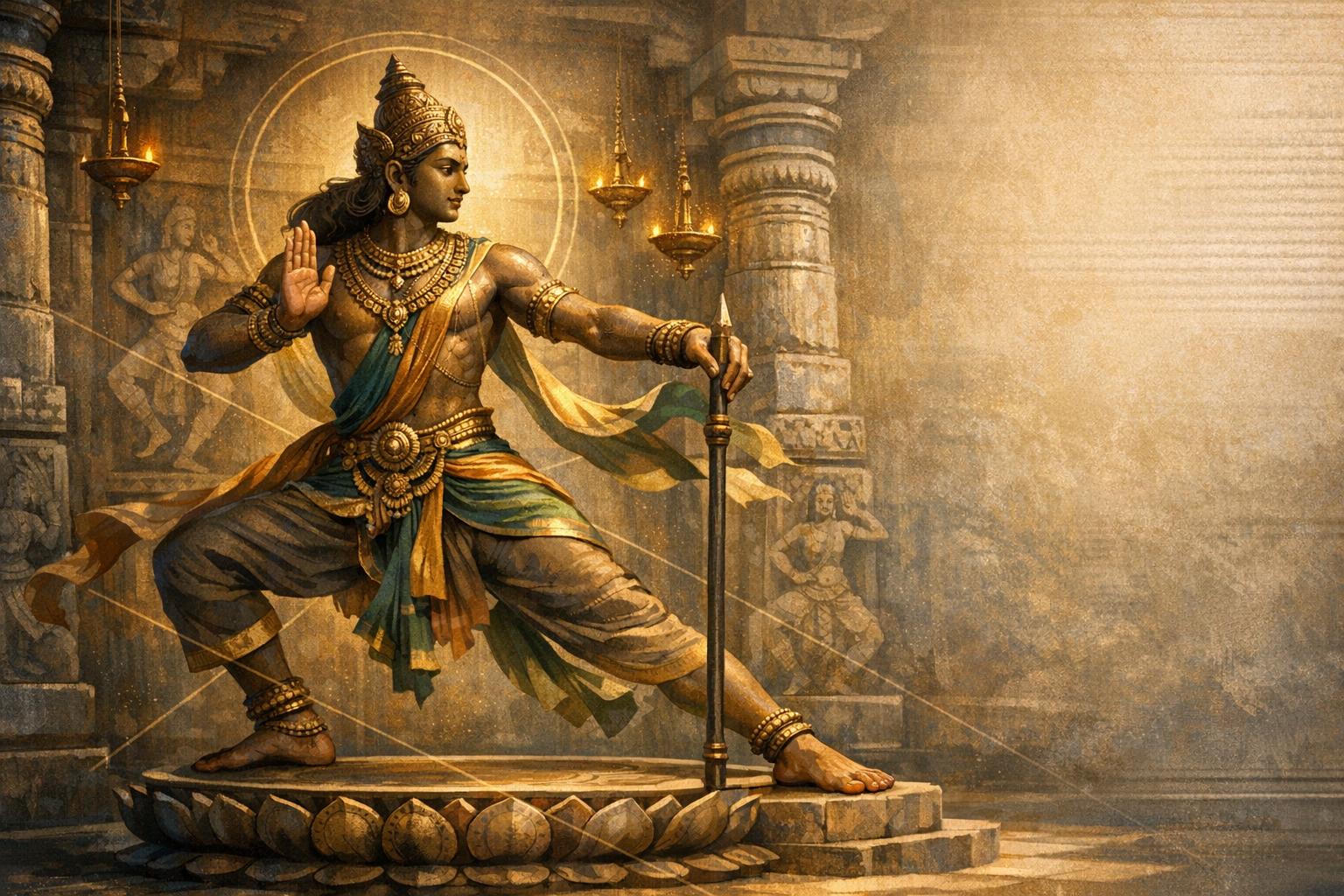
Alidha (ālīḍha) is the forward-striding stance in Hindu iconography where the right leg advances and the left draws back, fusing motion with stability to signal dharma-ready power. Rooted in the Nāṭyaśāstra and Dhanurveda and codified in Śilpa-śāstra, it recurs across Shaiva, Shakta, and Vaishnava imagery and in classical dance such as Bharatanatyam. The stance animates…
-
Essential March 2026 Festival Guide: Tiruchanur Padmavathi Ammavari Temple Rituals & Sevas
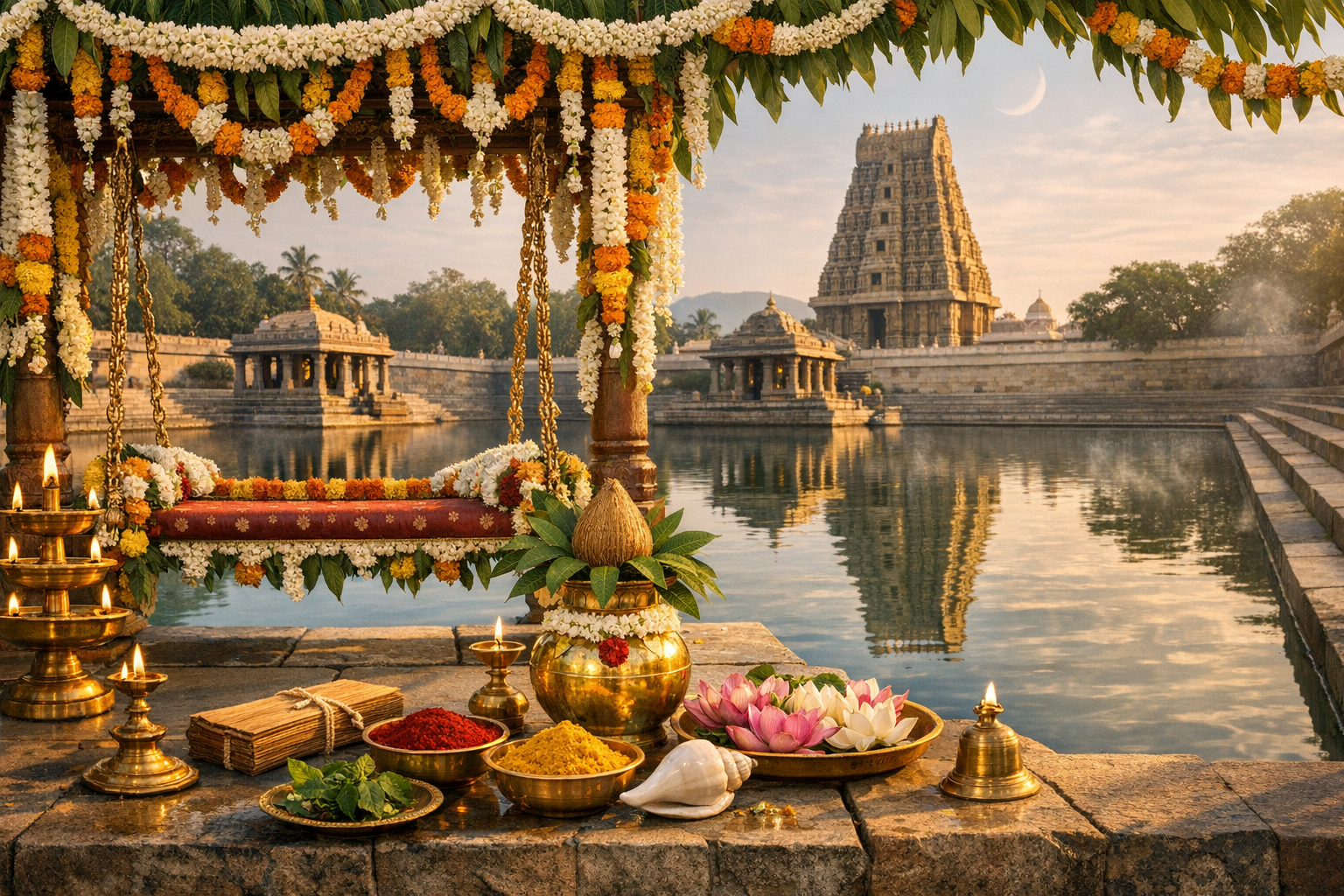
Sri Padmavathi Ammavari Temple in Tiruchanur will host a spiritually rich programme in March 2026, in addition to Ugadi and Sri Rama Navami. This academically grounded guide explains how the tithi-based Hindu calendar shapes the month’s observances and what devotees can expectAbhishekam, Kalyanotsavam, Unjal Seva, Sahasranamarchana, and special alankarams. It clarifies the theological meaning of…
-
Mahasadashiva Unveiled: Rare 25-Headed, 50-Armed Cosmic Shiva in South Indian Temples

Mahasadashivadepicted with twenty-five heads and fifty armsis among the rarest and most conceptually rich forms of Shiva in South Indian temple art. Drawn from the Shaiva Agamas and śilpa treatises, the icon expands the fivefold logic of the pañca-brahma into a full cosmic diagram in stone. The fifty arms are widely read as the Sanskrit…
-
Yoga Dakshinamurti Unveiled: Two Sacred Postures, Agamic Iconography, and Inner Silence

Dakshinamurti, Shiva’s south-facing form, embodies the Adi Guru whose silence instructs more deeply than speech. This long-form guide decodes two canonical idol forms of the Yoga DakshinamurtiDhyana-Padmasana and Virasana/Maharajalilasanausing Agamic and Shilpa Shastra principles. Readers learn practical cues to identify each form in temples, from asana and yogapatta to mudras, attributes, and the optional presence…
-
Nagabharana of Venkateswara Swamy: Adisesha’s Golden Embrace on Tirumala’s Divine Shoulders

The Nagabharana of Venkateswara Swamytwin golden serpents resting on the Lord’s shouldersembodies Adisesha’s protective presence in Tirumala’s Vaishnava tradition. This in-depth exploration explains its theological meaning, Agamic grounding, and South Indian craftsmanship, while showing how ornament becomes lived theology in darshan. It connects naga symbolism to Puranic narratives and to broader Dharmic motifs found in…
-
Guardians at the Village Edge: Ayyanar’s Terracotta HorsesHistory, Ritual, Symbolism
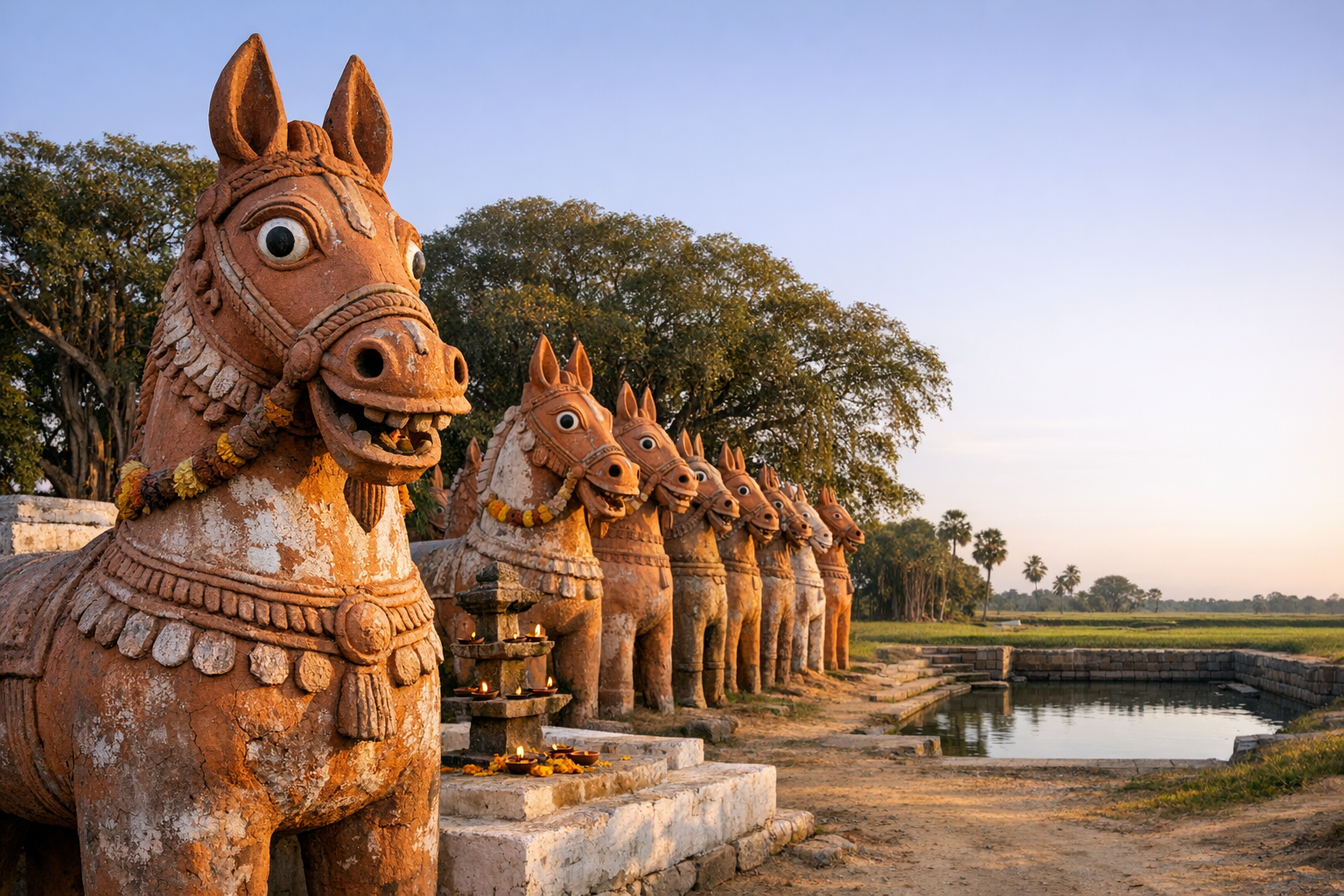
Across rural Tamil Nadu, monumental terracotta horses stand guard as votive offerings to Ayyanar, the village boundary-keeper whose protection encircles fields, groves, and water. This long-form, research-driven overview explains the history, iconography, and ritual ecology of Ayyanar worship, showing how art, craft, and community cohere into a living heritage system. Readers will learn how Velar/Kuyavar…
-
Landmark ASI survey at Dhar Bhojshala reveals extensive temple spolia in Kamal Maula Masjid
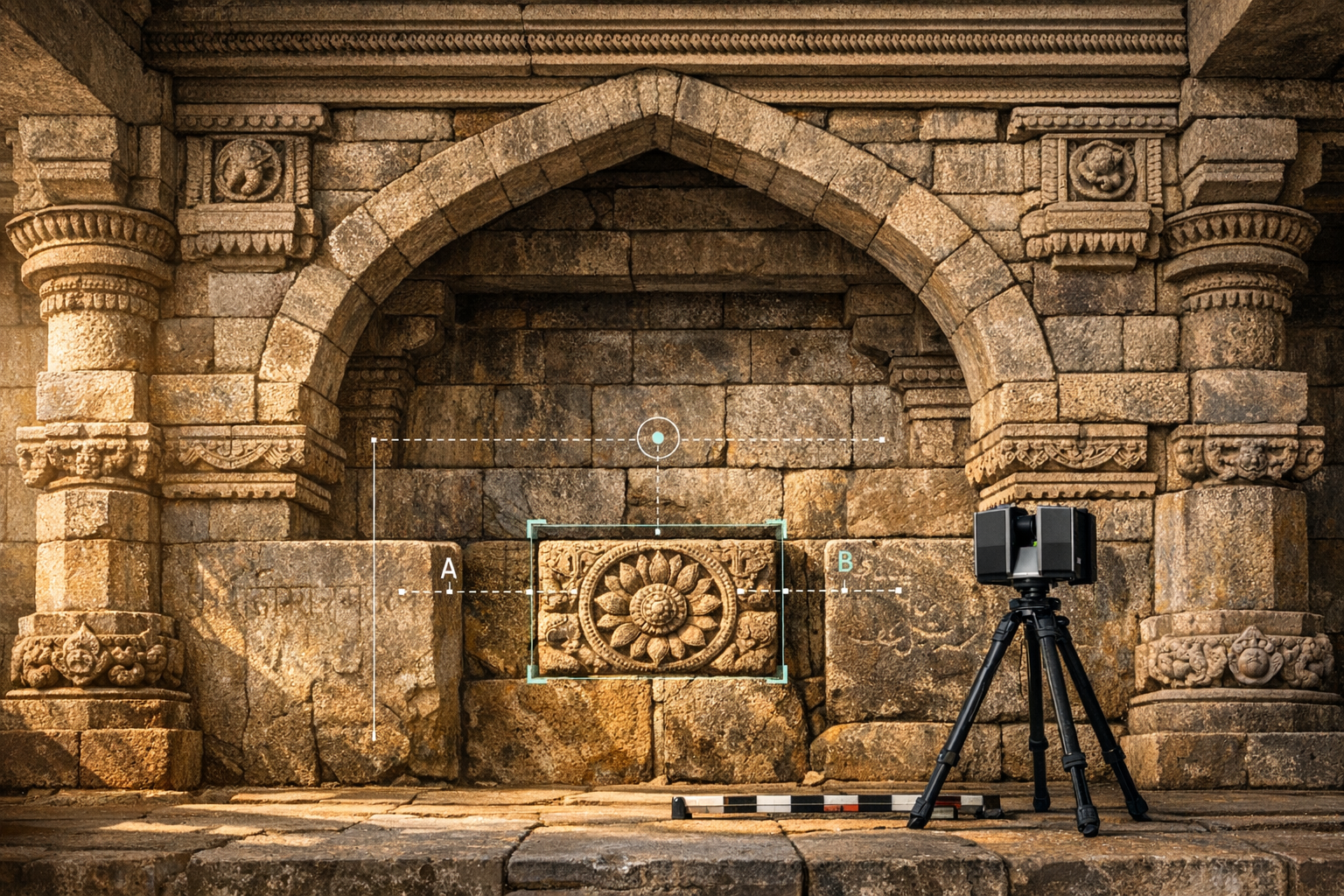
The Archaeological Survey of India informed the Indore Bench of the Madhya Pradesh High Court that Kamal Maula Masjid at Dhar Bhojshala incorporates reused temple materialsarchitectural members, sculptural fragments, and inscriptionsrevealing a stratified building history. This evidence of spolia, identified through standard archaeological methods including architectural typology and epigraphic analysis, places the complex within well-known…
-
Chamunda’s Mysterious ‘Anteater’: Tantric Power, Cosmic Cycles, and Sacred Ecology Explained
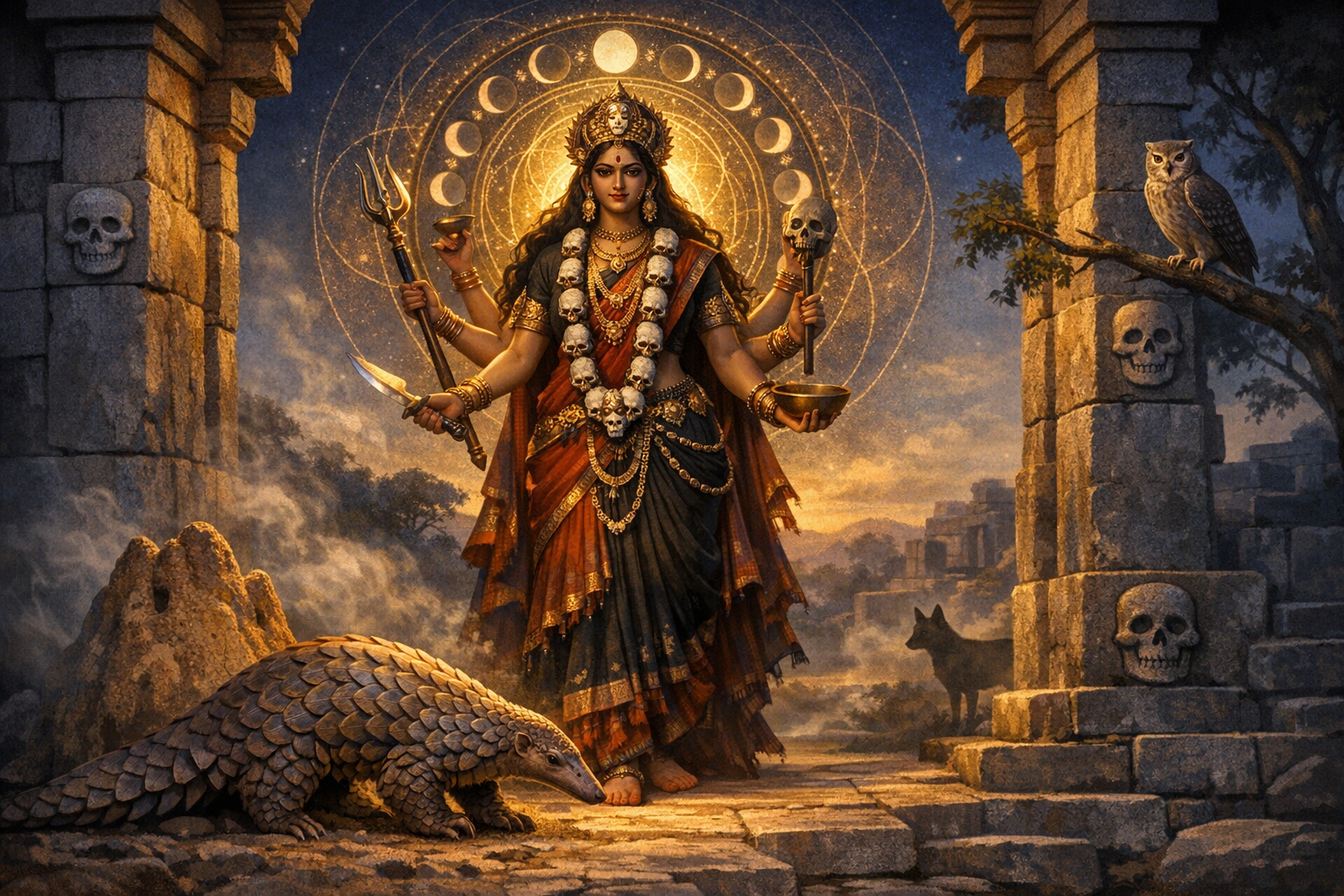
Chamunda’s enigmatic ‘anteater’ is not a New World mammal but, in most Indian contexts, a carefully carved Indian pangolinan attendant that encodes Śākta ideas of dissolution, protection, and renewal. By tracing zoological details (scales, tail, snout) and correlating them with śilpa-śāstra traditions, the essay corrects common cataloguing errors and restores ecological specificity to Hindu temple…
-
ASI survey reveals temple-era spolia at Bhojshala–Kamal Maula, renewing shared heritage
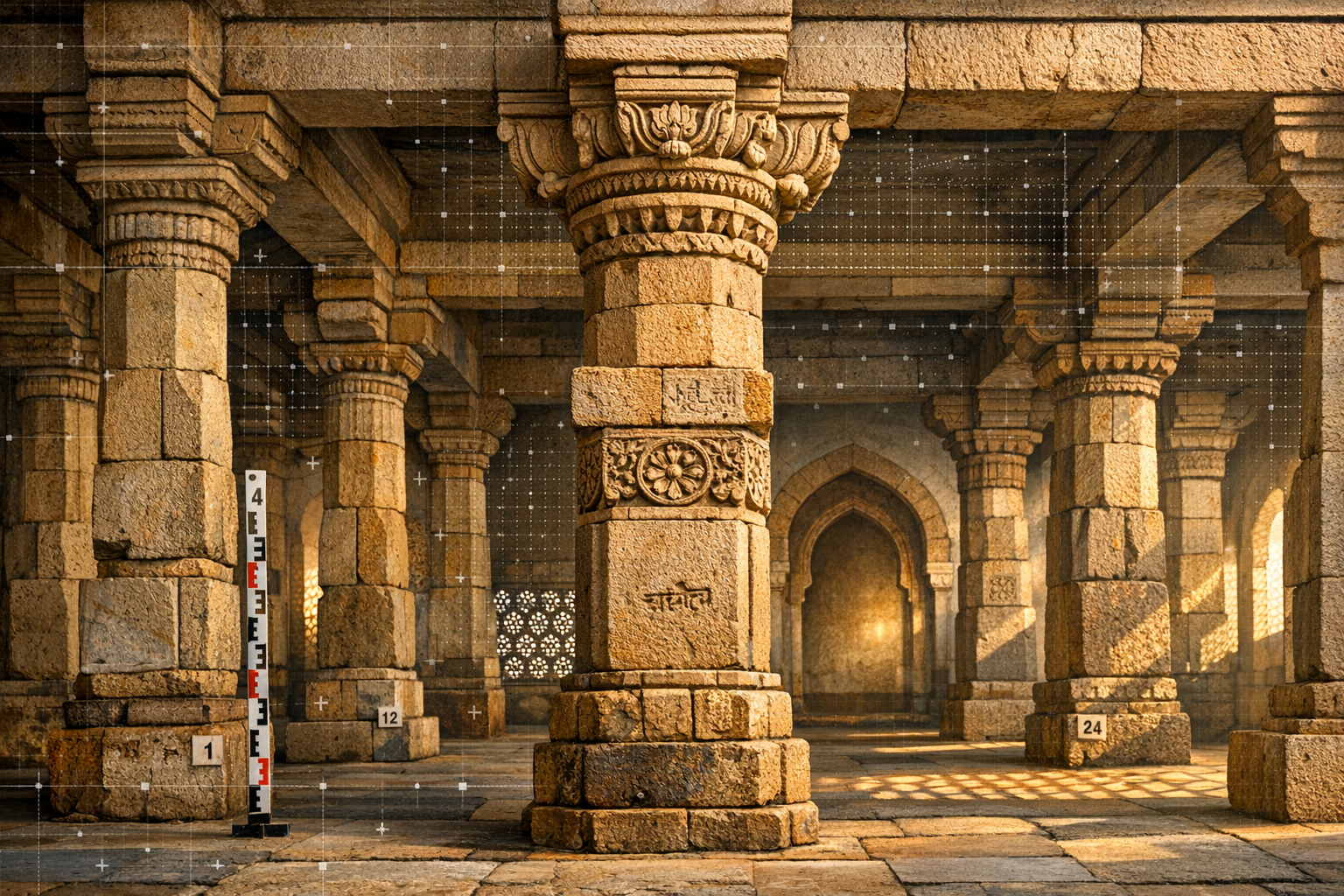
An ASI survey at the protected Bhojshala–Kamal Maula monument in Dhar, Madhya Pradesh, has renewed attention to the site’s layered history by documenting temple-era spolia reused within the present complex. This analysis explains, in clear archaeological terms, what ‘pre-existing structure’ and ‘spolia’ mean and why such findings are common across India’s syncretic monuments. It situates…
-
Vishkanya in Hindu Temples: Unmasking the Haunting Symbolism, Statecraft, and Ethics
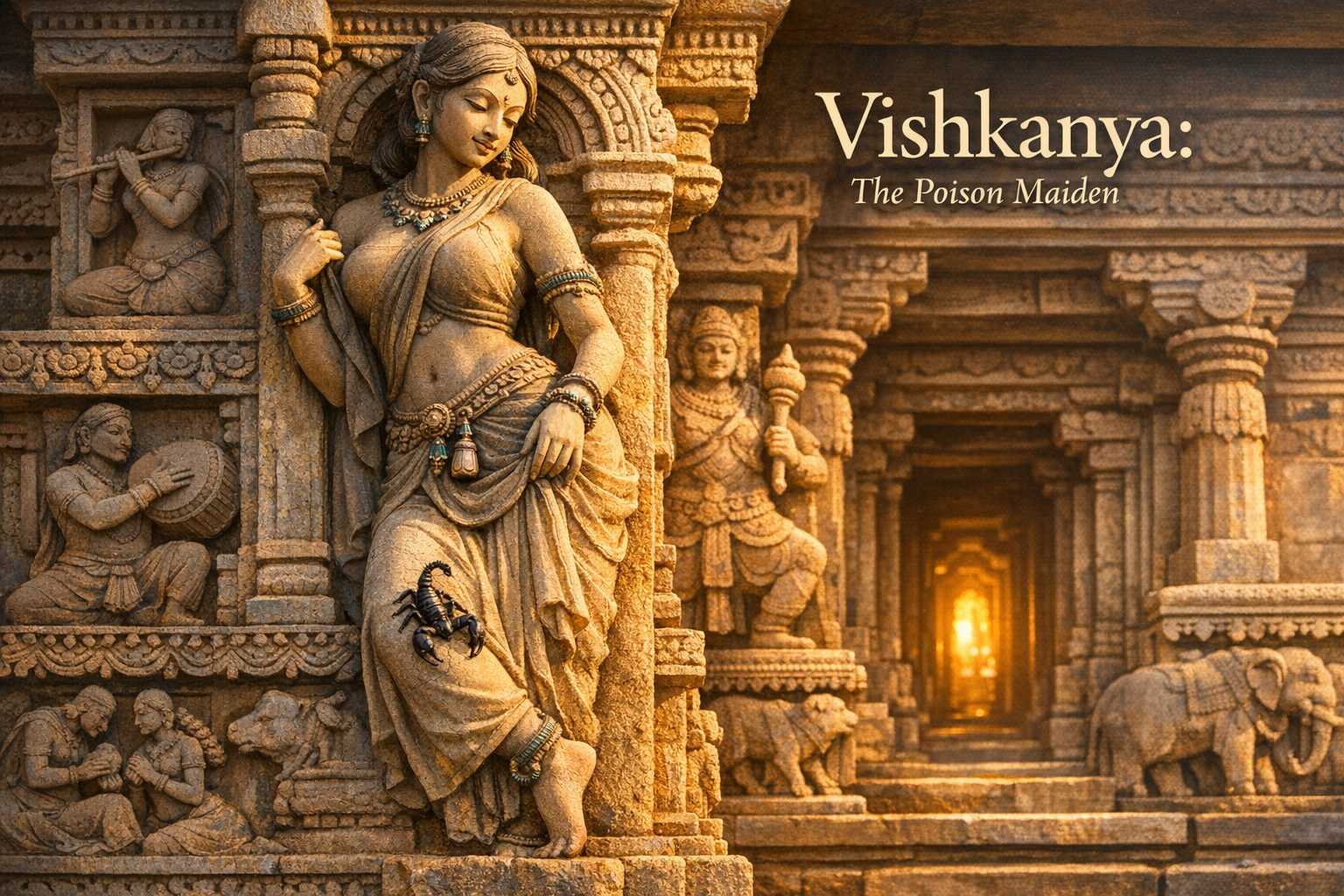
The Vishkanya (Vishakanyaka), or “poison maiden,” is one of the most intriguing and misunderstood figures in Hindu temple iconography. This long-form analysis situates the motif within Arthaśāstra-inspired statecraft, narrative literature like Mudrārākṣasa, and the premodern study of toxicology (agada-tantra). It explains how specific sculptural cuessuch as a scorpion on the thigh or serpent ornamentstransform a…
-
Prabhavali or Prabhamandala: The Sacred Arch of Light, Protection, and Cosmic Order in Temples
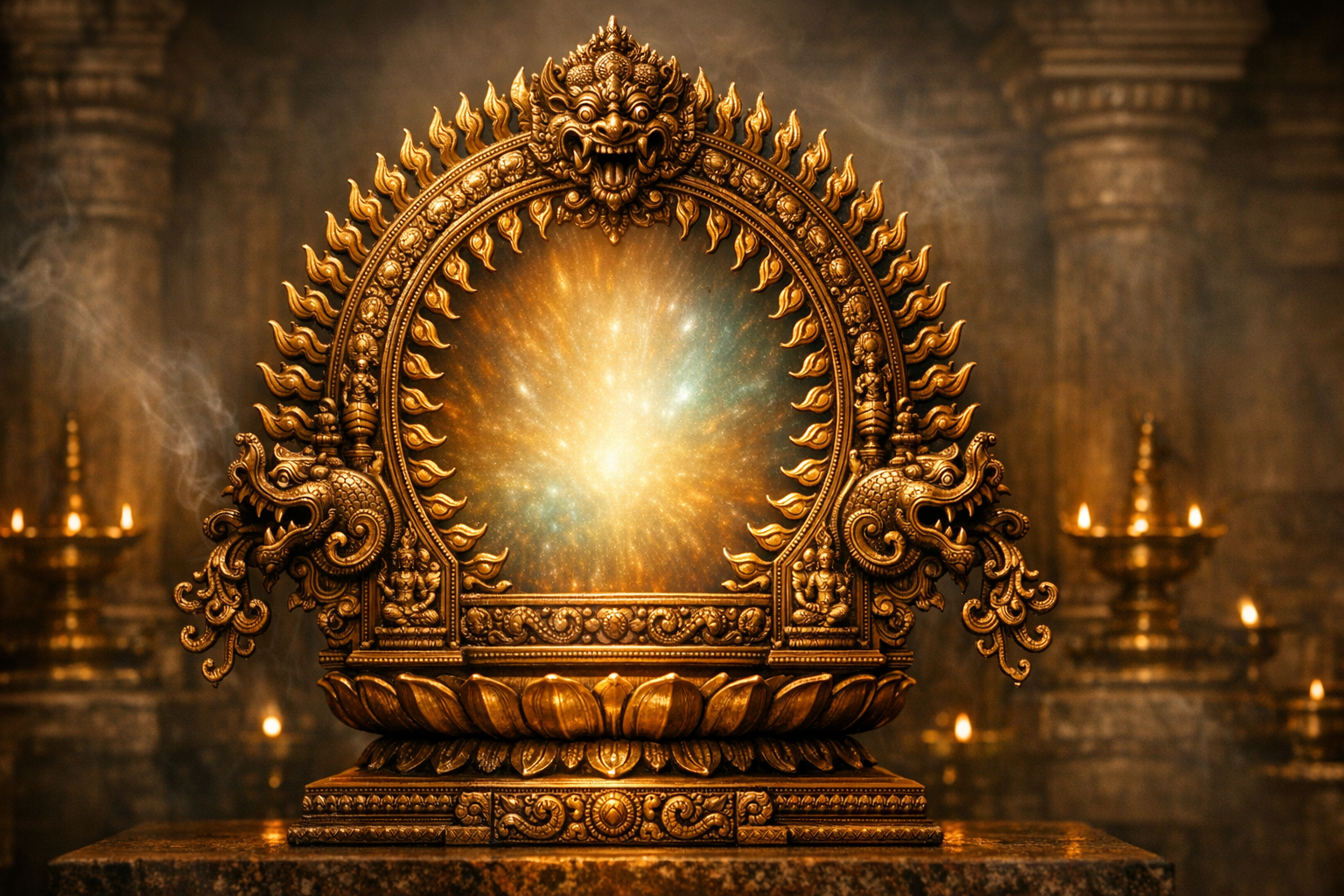
The prabhavali, or prabhamandala, is the luminous arch that frames deities in Hindu temple sanctums, uniting aesthetics, ritual function, and metaphysical meaning. Emerging prominently in classical and medieval India and perfected in traditions such as the Chola bronzes, it encodes protection, radiance, and cosmic order through motifs like kirtimukha, makara, and jvala flames. Stone, metal,…
-
Veenadhara Dakshinamurthy: Shiva’s Musician-Guru in Pallava and Chola Temple Art
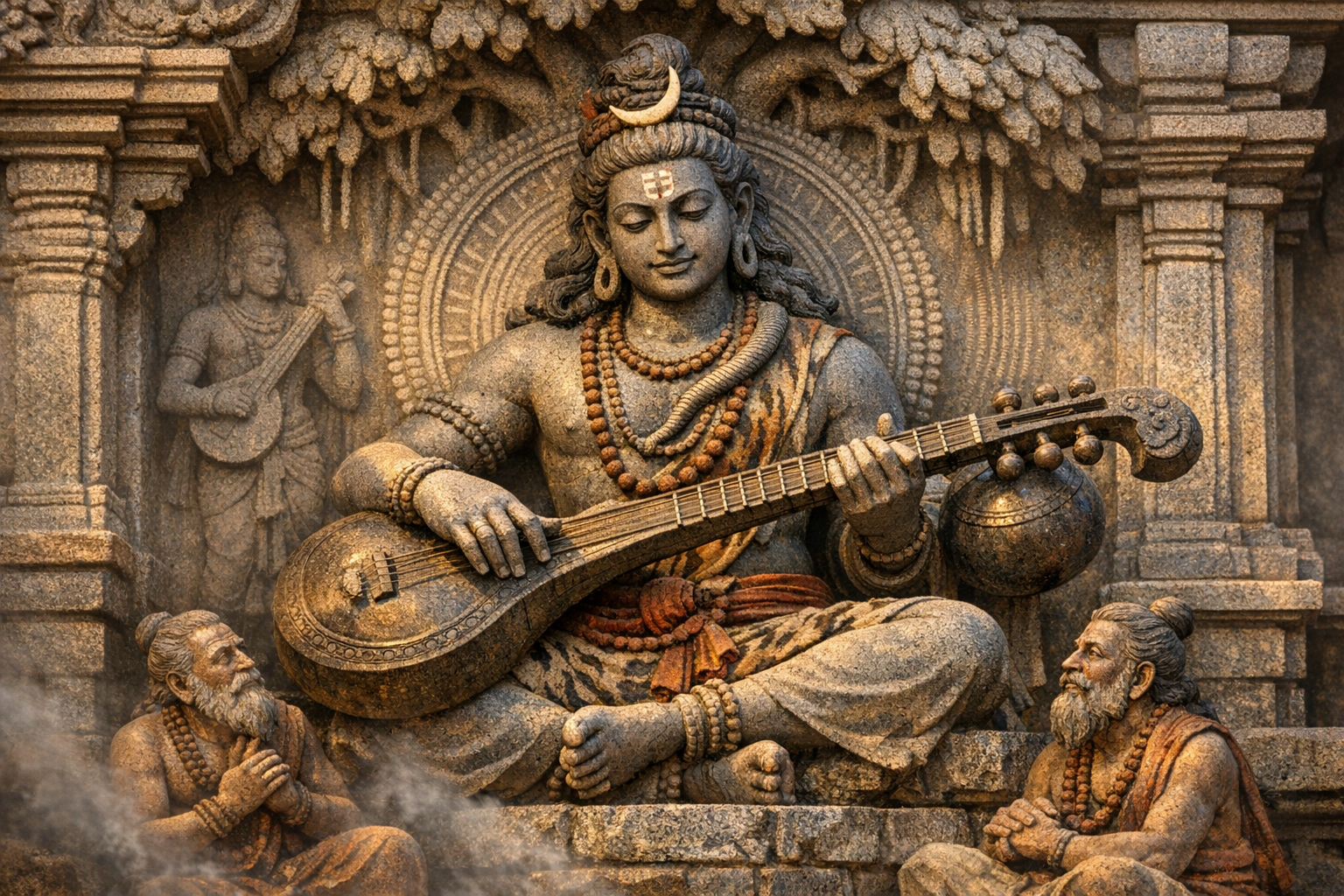
Veenadhara Dakshinamurthy portrays Shiva as the musician-guru, where wisdom becomes audible as sacred sound. Distinguishing aasana (seated) and sthanaka (standing) variantslinked respectively with Chola refinement and early Pallava dynamismclarifies how form encodes function in South Indian temple architecture. The veena symbolizes disciplined harmony of senses and breath, turning listening into a pathway of learning. Practical…