
-
Decoding the Golden Temple (Harmandir Sahib): Marble Motifs, Sacred Geometry, and Seva

This in-depth exploration decodes the Golden Temple (Harmandir Sahib) as a readable language of marble, motifs, and gilded form, revealing how architecture teaches Sikh ethics of oneness, seva, and equality. Readers will discover how geometry, calligraphy in Gurmukhi, floral arabesques, and jaali screens cohere into a visual theology aligned with continuous kirtan. The essay traces…
-
Chanda at Vishnu’s Eastern Gate: The Fierce Dvarapala Safeguarding Vaishnava Sanctuaries
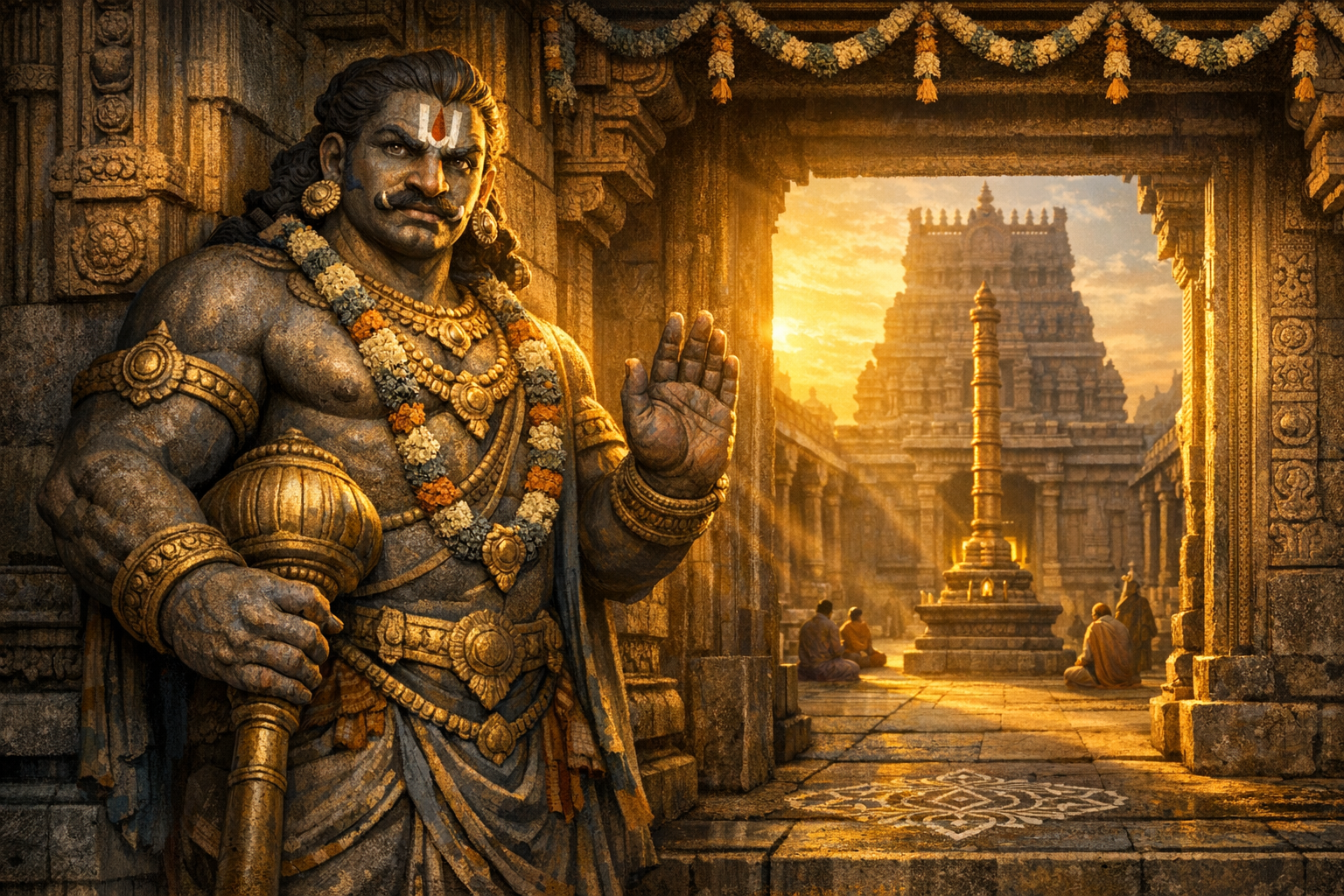
Hindu temple architecture encodes a sophisticated theology of thresholds, and in many Vaishnava kshetras, Chanda stands as the fierce guardian of Vishnu’s eastern gate. This analysis situates Chanda within Agamic prescriptions, Puranic memory, and regional priestly traditions, explaining why the eastern entrancealigned with dawn and auspicious beginningsreceives a sentinel of disciplined kshatra-energy. It outlines the…
-
Kukke Subramanya’s Sacred Sub-Temples: A Timeless, Comprehensive Guide to Subshrines

Kukke Subramanya Temple in Dakshina Kannada is renowned for serpent veneration and a living ecosystem of sub temples (subshrines) that enrich the pilgrimage experience. This comprehensive guide profiles the documented KukkeLinga TempleVimana Type – NO; Sanctorum Shape – Square Shape; Speciality – Purathana; located indoor of kukke shri subrahmanyaand explains why some enclosed subshrines lack…
-
Madurai Meenakshi Sthala Puranam: Indra’s Atonement, the Divine Wedding, and Temple History
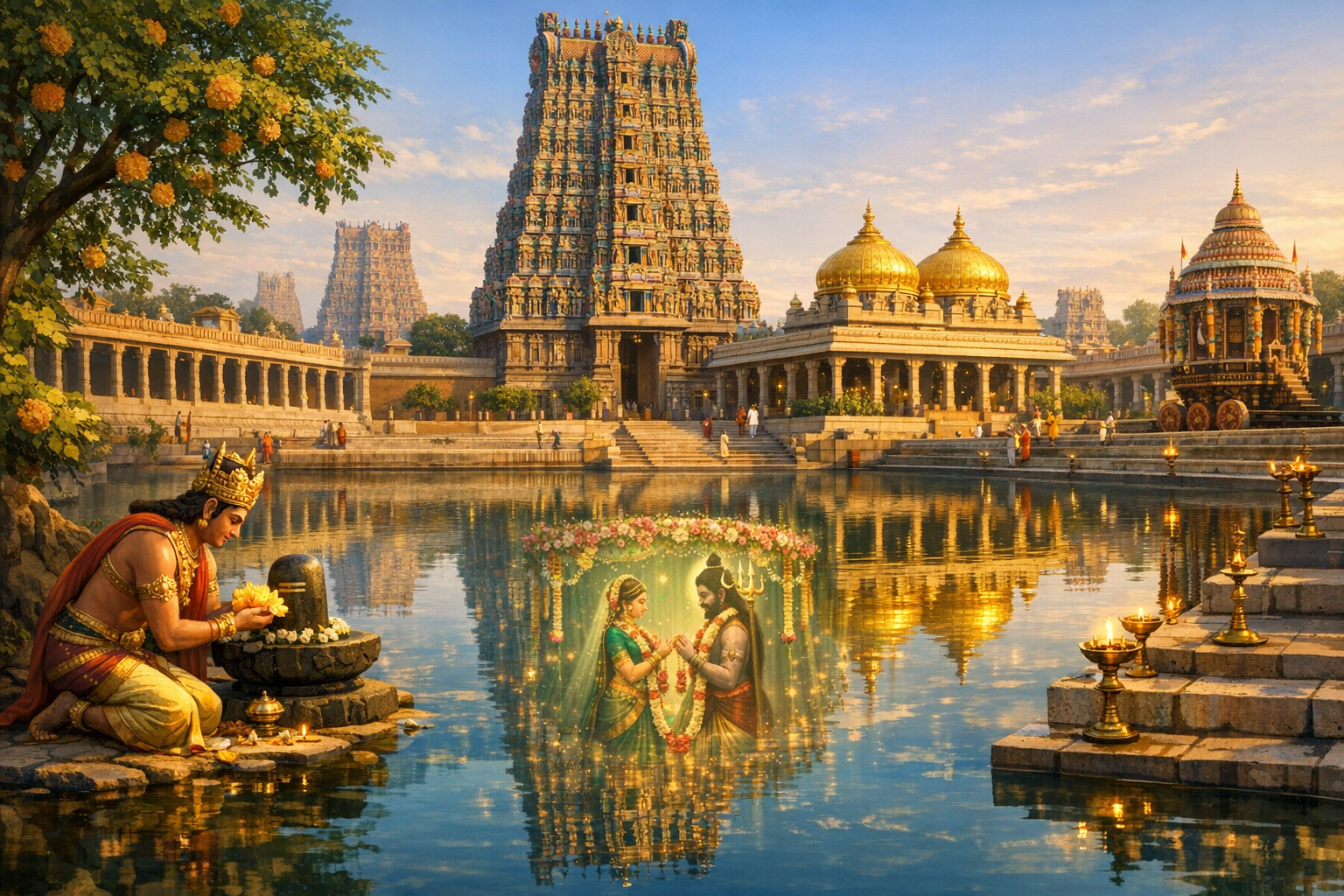
This in-depth, research-driven overview unpacks the Sthala Puranam of the Madurai Meenakshi Sundareshwarar Templefrom the ‘effacing of Indra’s sin’ beneath the kadamba tree and by the Pottamarai Kulam to Meenakshi’s birth, prophecy, and the divine wedding with Sundareshwarar. It elucidates how the legends express the ethical logic of karma and reincarnation, resonating with the wider…
-
Inside Kukke Subramanya: A Sacred, Comprehensive Guide to Sub-Shrines, Rituals, and Architecture

Kukke Subramanya Temple in Dakshina Kannada, Karnataka, is famed for Subrahmanya’s protective grace and for Naga-related rites such as Sarpa Samskara and Ashlesha Bali. This comprehensive guide maps the temple’s sub-shrineshighlighting the Purathana KukkeLinga Temple (Vimana Type – NO; Sanctorum Shape – Square Shape) located indoors of the main complexalongside Adi Subrahmanya and Sri Samputa…
-
Nava Veeras of Muruga: Origins, Iconography, and Living Traditions of Nine Divine Guardians
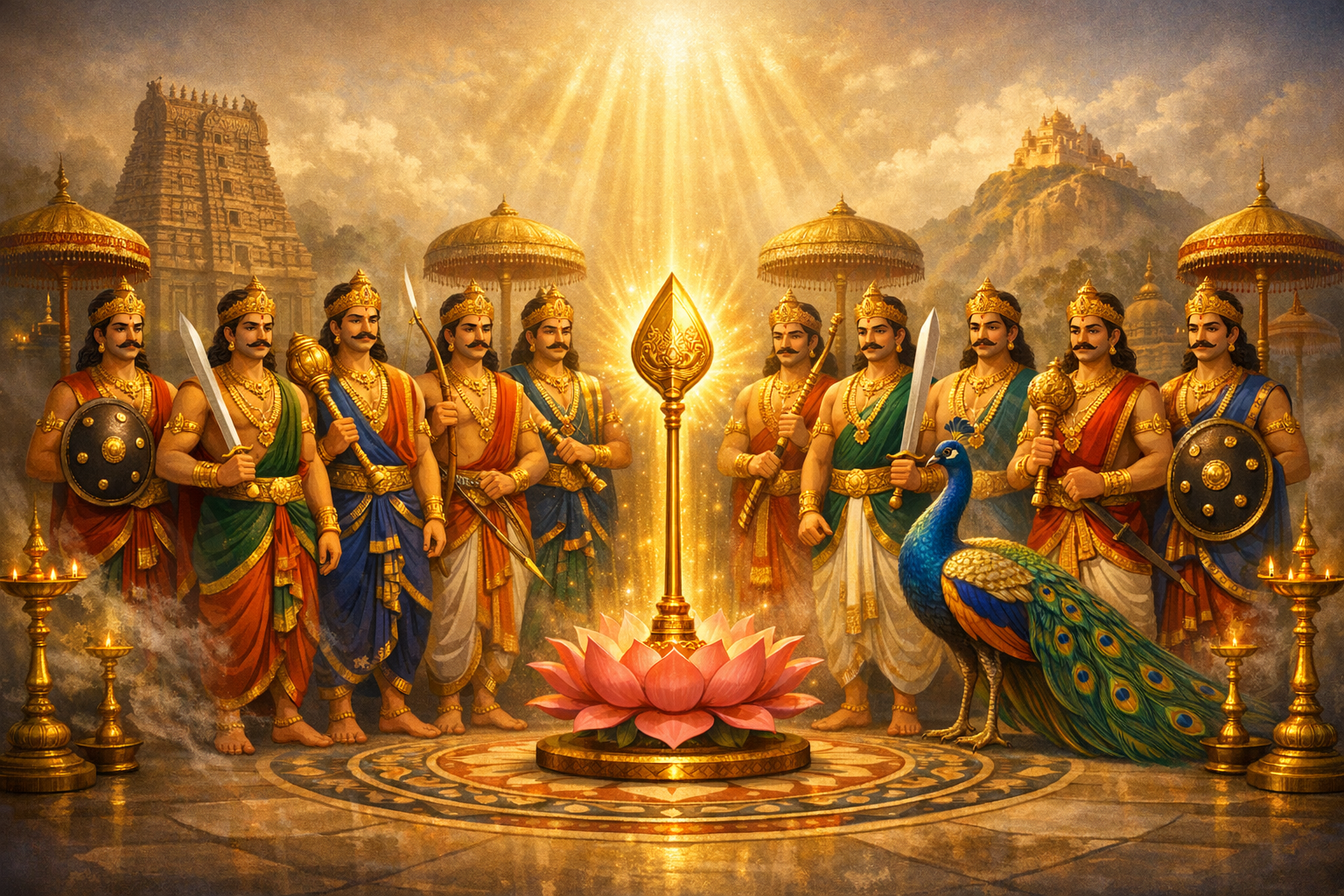
This article explores the Nava Veerasthe nine divine guardians of Lord Murugaas living embodiments of Parvati’s Shakti and exemplars of disciplined courage in service of dharma. It situates their origins within the Skanda Purana/Kanda Puranam tradition, explains their roles in the Soorasamharam cycle, and examines how regional temple practices shape their iconography and worship. Readers…
-
Decoding Kerala’s Sacred Geometry: Tantric Blueprints that Shape Hindu Divine Forms
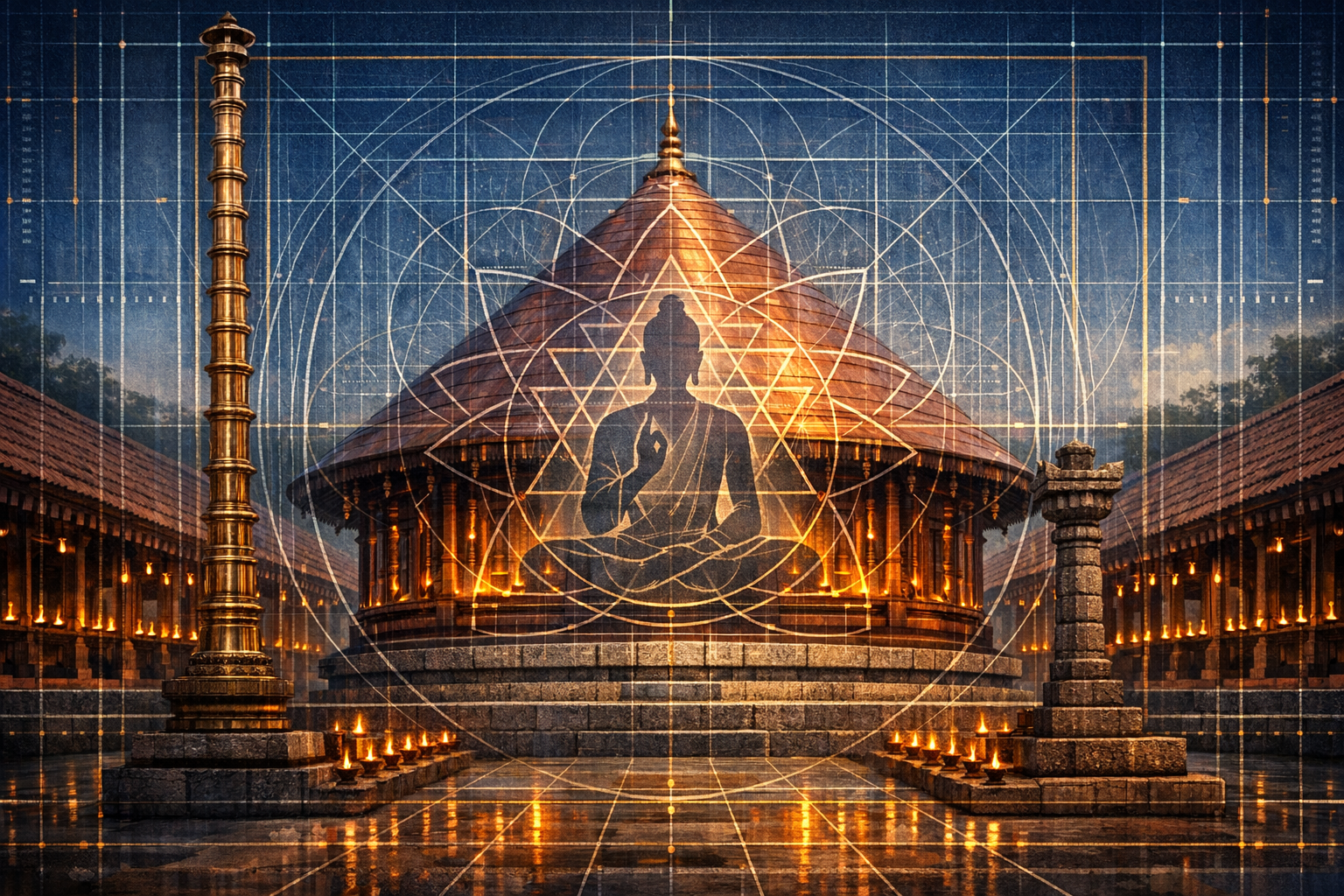
Kerala’s temple sculpture is governed by a rigorous synthesis of Tantra, Āgama, and Śilpa-śāstra that translates metaphysical vision into precise sacred geometry and iconography. The Tantrasamuccaya and allied Sanskrit manuscripts calibrate everything from ground plans to mudras, ensuring that Hindu divine imagery remains theologically faithful and experientially powerful. Visitors can read this grammar in the…
-
Awe-Inspiring Rameswaram Pilgrimage: Sri Ramanathaswamy Temple, Rama Setu, Sacred Shores

Rameswaram on the Gulf of Mannar is a conch-shaped island central to the Char Dham yatra and home to the Jyotirlinga of Sri Ramanathaswamy. Scriptural accounts in Srimad-Bhagavatam and Caitanya Caritamrta attest to its enduring sanctity, while Ramayana memory links the shrine to Rama Setu. The temple’s nearly 4,000-foot pillared corridor exemplifies South Indian temple…
-
Pingalamata Unveiled: The Bhairava Agama Guiding Linga Worship and Temple Consecration

Pingalamata is a Bhairava-oriented Shaiva Agama that codifies the ritual science and architectural norms of Linga worship and temple consecration. Closely allied with the Brahmayamalatantra, it aligns mantra, mudra, nyasa, yantra, and mandala to create a reliable pathway for manifesting Shiva’s presence. Readers gain a structured view of daily puja, abhishekam, prana-pratishtha, kumbhabhisheka, and the…
-
Shiva’s Playful Forms (lilamurtis): Deep Symbolism, Agamic Iconography, Living Tradition

This essay decodes Shiva’s lilamurtisplayful sacred forms that translate the formless into transformative encounterthrough the lenses of Agamic iconography, Purāṇic narrative, and living ritual. It explains the aniconic meaning of the Linga and shows how iconic forms like Nataraja, Ardhanarishvara, and Dakshinamurti encode philosophy as gesture and posture. Readers learn how temple architecture and ritual…
-
Yog Dhyan Badri, Pandukeshwar: Pandavas’ Legacy and Vishnu’s Winter Worship in Uttarakhand

Yog Dhyan Badri at Pandukeshwar (Chamoli, Uttarakhand) is a key Panch/Sapt Badri shrine where Vishnu is revered in a rare meditative form. Tradition links the site to King Pandu’s penance and the Pandavas’ birth, embedding the temple in the moral landscape of the Mahabharata. During Badrinath’s winter closure, Yog Dhyan Badri serves as a principal…
-
Haddinakallu Hanumantharaya at Eagle Stone Hill: Awe-Inspiring 8th‑Century Temple in Karnataka
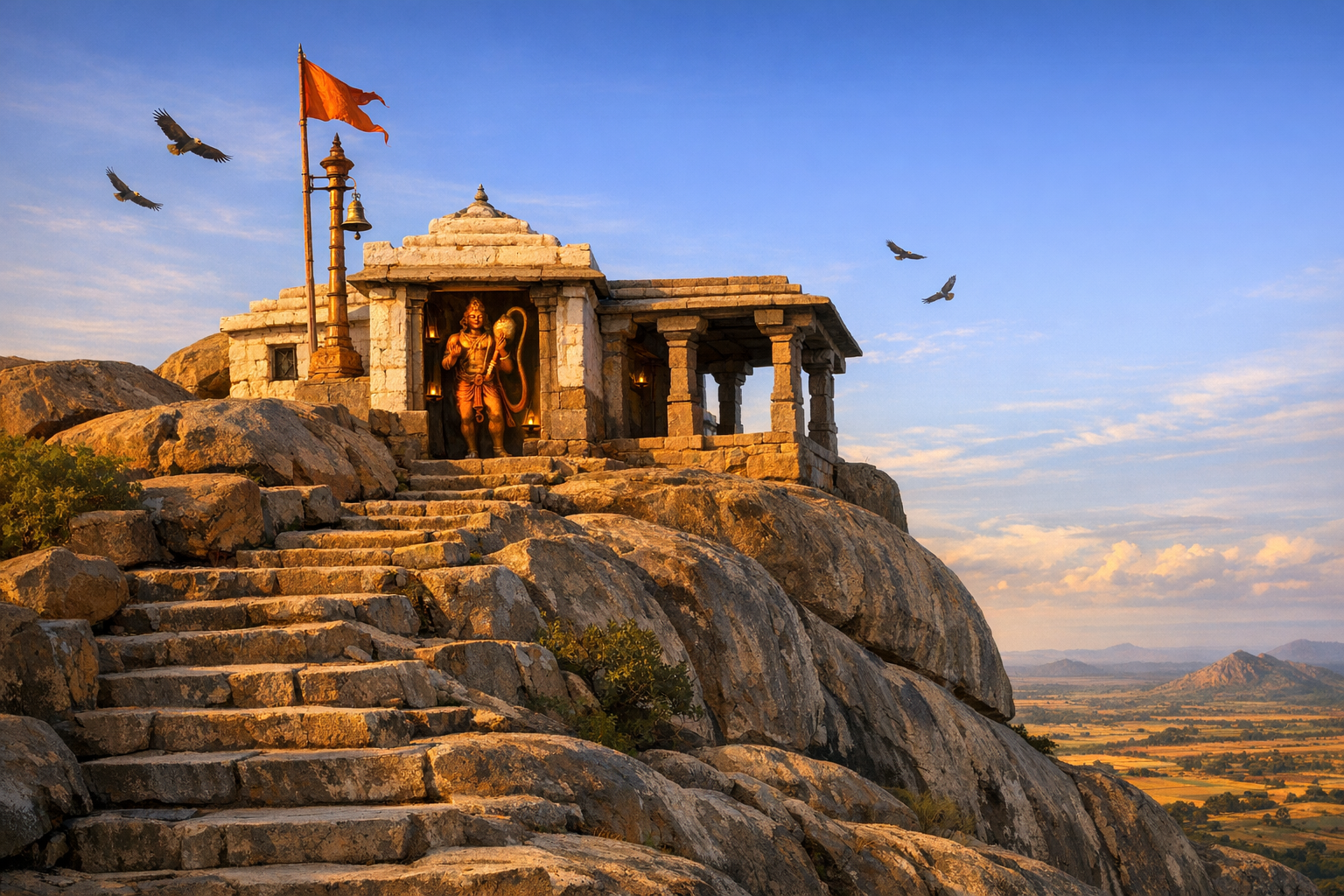
Sri Kshetra Haddinakallu Hanumantharaya Temple, the Eagle Stone Hill Temple in Mandya district, Karnataka, harmonizes sacred geography, early medieval heritage, and living devotion. Local tradition places its origins in the 8th century CE, with subsequent renovations reflecting a continuous culture of stewardship. The modest hilltop plan, intimate sanctum, and elemental setting exemplify a Karnataka kshetra…
-
Chengalvaraya Swami Temple, Thiruthani: History, Architecture, and Darshan Guide

Arulmigu Sri Chengalvaraya Swami Temple in Thiruthani is a serene hill-side sanctuary located behind the renowned Thiruthani Murugan Temple in Tamil Nadu’s Tiruvallur district. The address is Sri Chengalvaraya-Sengashuneer Vinayagar Sannidhi Temple, Kasthuribai St, KK Nagar, Thiruthani Hill, Tamil Nadu 631209, enabling an easy combination of darshans in one ascent. The precinct includes Sri Sengashuneer…
-
Thiruloki Sundareswara Swamy: Akhilandeswari’s Timeless Grace, History, Rituals, Travel

The Sri Akhilandeswari Samedha Sri Sundareswara Swamy Temple at Tiruloki in the Thanjavur region presents a living synthesis of Shaiva theology, Dravidian temple architecture, and community ritual. This guide explains the paired deitiesAkhilandeswari and Sundareswaratheir iconography, and the Agamic framework that shapes daily worship. It outlines major festivals such as Maha Shivaratri, Pradosham, Arudra Darshan,…
-
Tiruloki Sundareswara–Akhilandeswari: Timeless Shaiva-Shakta Rituals and Architecture

Thiruloki Akhilandeswari Samedha Sundareswara Swamy Temple is a Shaiva–Shakta sanctum where devotion, philosophy, and Temple Architecture converge within the living stream of Sanatana Dharma. This long-form guide explains the meaning of the deities’ names, outlines the Agamic framework of worship, and describes daily puja, Pradosha, Karthika masam celebrations, Arudra Darshan, Navaratri, and Maha Shivaratri. Readers…
-
Manasollasa Unveiled: A 12th‑Century Masterwork of Indian Statecraft, Arts, and Cuisine
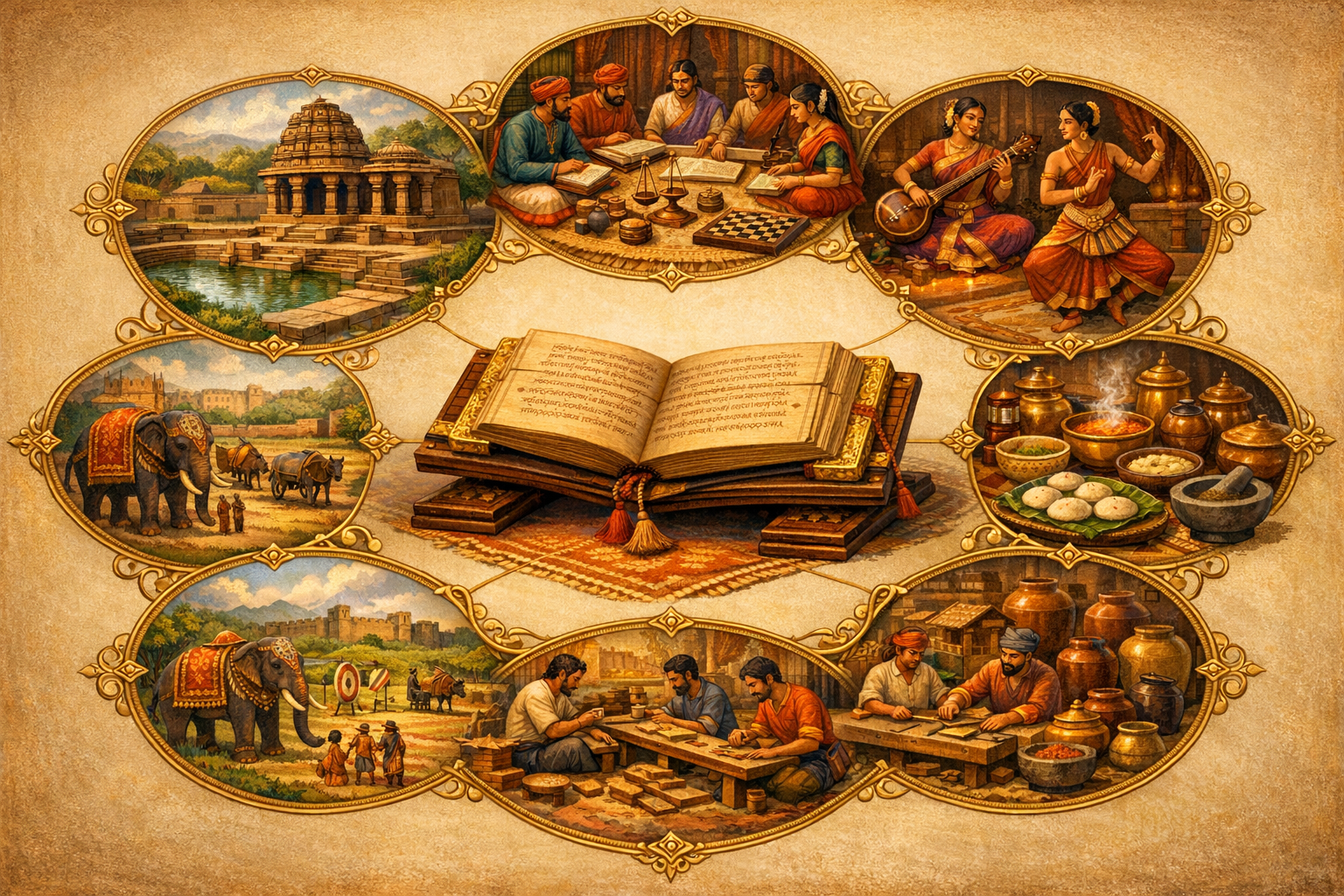
Manasollasa (Abhilashitartha Chintamani) is a 12th‑century Sanskrit encyclopedic treatise by King Someshvara III that integrates statecraft, justice, economy, arts, architecture, music, and culinary science into a single civilizational vision. It details rajadharma, due process, village administration, and fair markets alongside rigorous guidance on hydrology, architecture, and guild regulation. Musicology and dance are situated between Bharata’s…
-
Haddinakallu Hanumantharaya Temple: A Timeless Ascent to Eagle Stone Hill’s Sacred Heritage
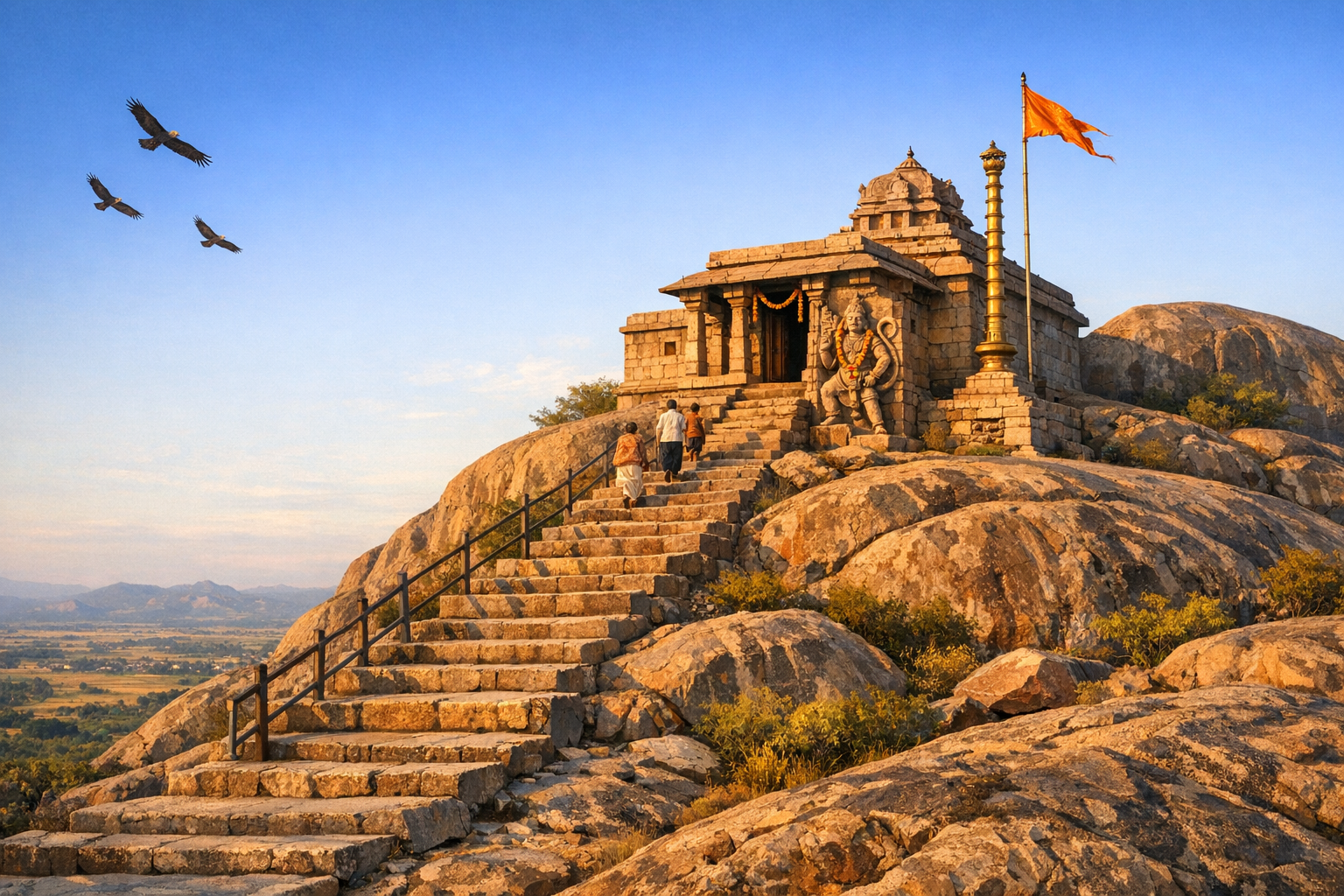
Sri Kshetra Haddinakallu Hanumantharaya Temple, the Eagle Stone Hill Temple in Karnataka, is a hill shrine dedicated to Lord Hanuman (Anjaneya) that unites sacred geography with living ritual. Local tradition attributes its origin to the 8th century CE under a regional ruler, a dating that aligns with broader early-medieval patterns though it awaits epigraphic confirmation.…
-
Timeless Sanctity at Chengalvaraya Swami Temple, Tiruttani: History, Architecture, Travel

Situated on the quiet rear slope of Tiruttani Hill, the Arulmigu Sri Chengalvaraya Swami Temple complements the renowned Thiruttani Murugan Temple with intimate, contemplative worship. The shrine houses Sri Chengalvaraya Swami and a revered Sengashuneer Vinayagar sannidhi, reflecting compact Dravidian architecture and a steady cadence of daily puja. Visitors often experience a palpable calm that…
-
Sadashiva Unveiled: Decoding the Five Faces and Ten Arms of the Pancha Brahma Icon
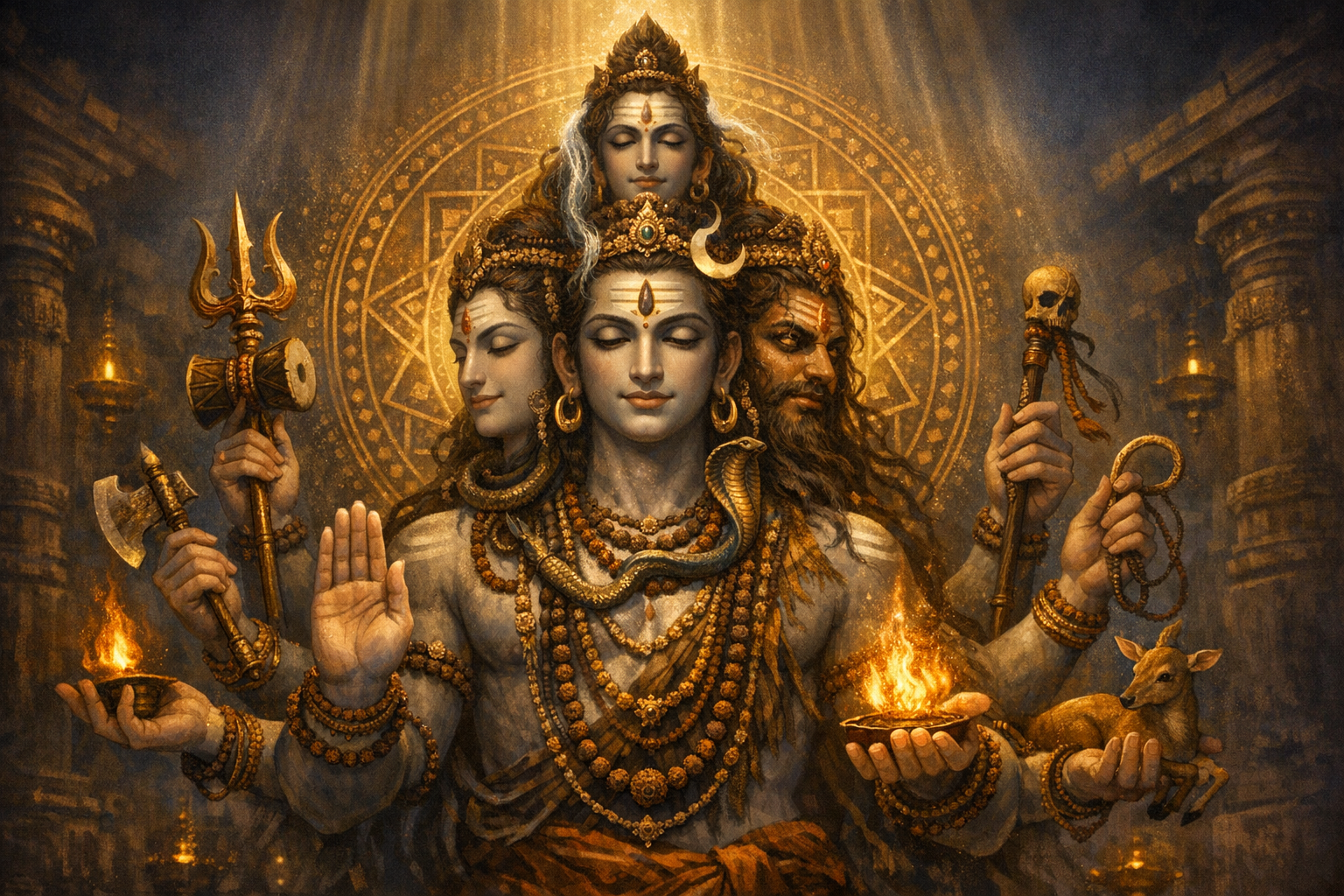
This in-depth guide decodes Sadashiva as Panchamukha (five-faced) and daśa-bāhu (ten-armed), uniting art history with Shaiva metaphysics for a complete, reader-friendly understanding. It clarifies the Pancha Brahma faces, their orientations, and the pañcakṛtya functions they embody. It details the attribute vocabulary (triśūla, ḍamaru, mṛga, pāśa, aṅkuśa, agni, kapāla, akṣamālā) and explains how variations across Agamic…
-
Trichy Rockfort Pilgrimage: Abhishekam, 400 Steps, and Timeless South Indian Heritage
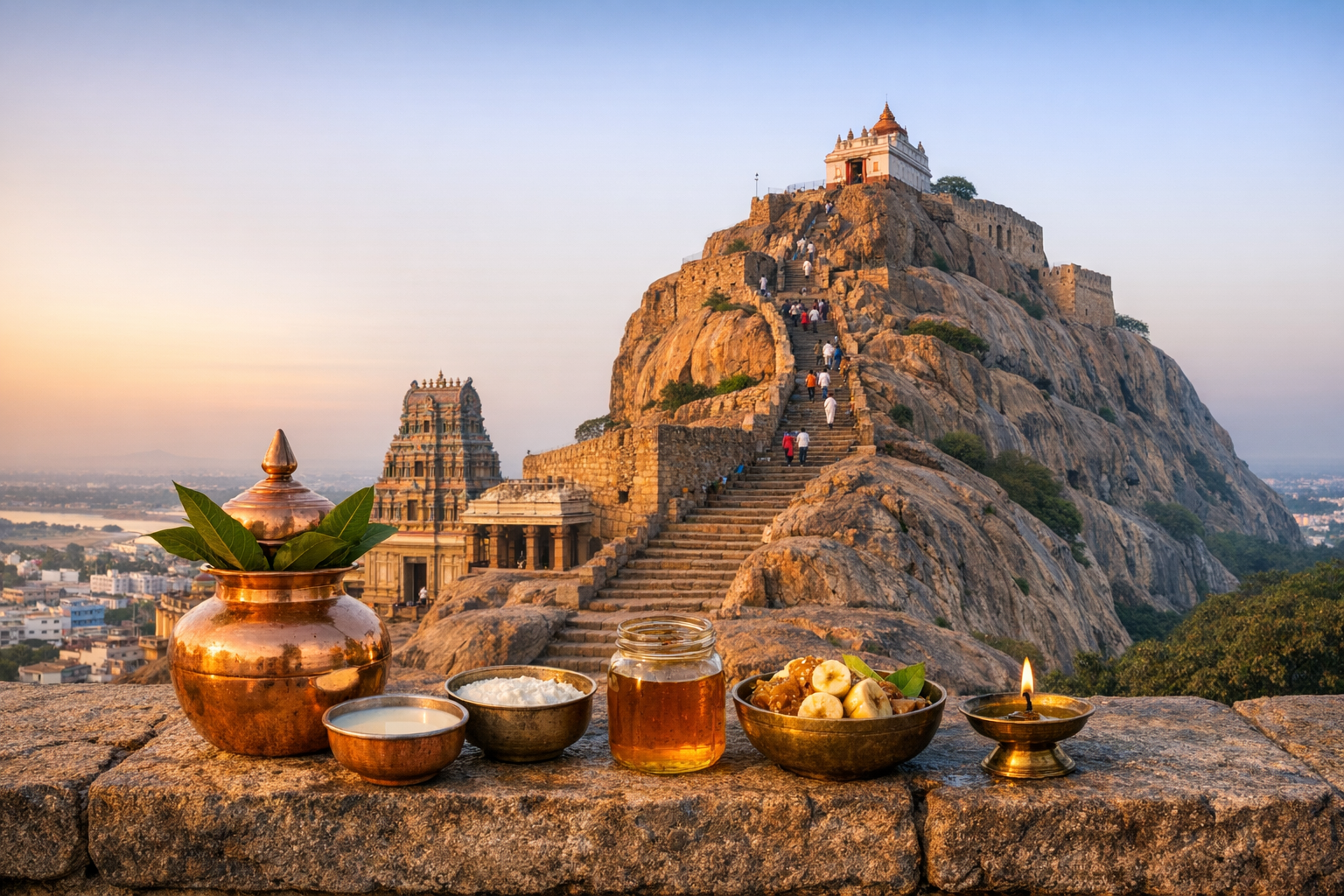
This research-driven account documents a 09.02.2026 pilgrimage to the Trichy Rockfort Temple complex, tracing an early start from Kalyanapuram via Kumbakonam to Tiruchirappalli and culminating in multiple Abhishekham rites with honey, milk, curd, and Panchamirtham. It explains the sacred sequence of Manikka Vinayakar, Thayumanaswami, and Ucchi Pillayar temples, the significance of climbing over 400 steps,…