
-
Why Atharva Veda Appears Monkey-Faced: Unveiling Sacred Simian Symbolism in Temples
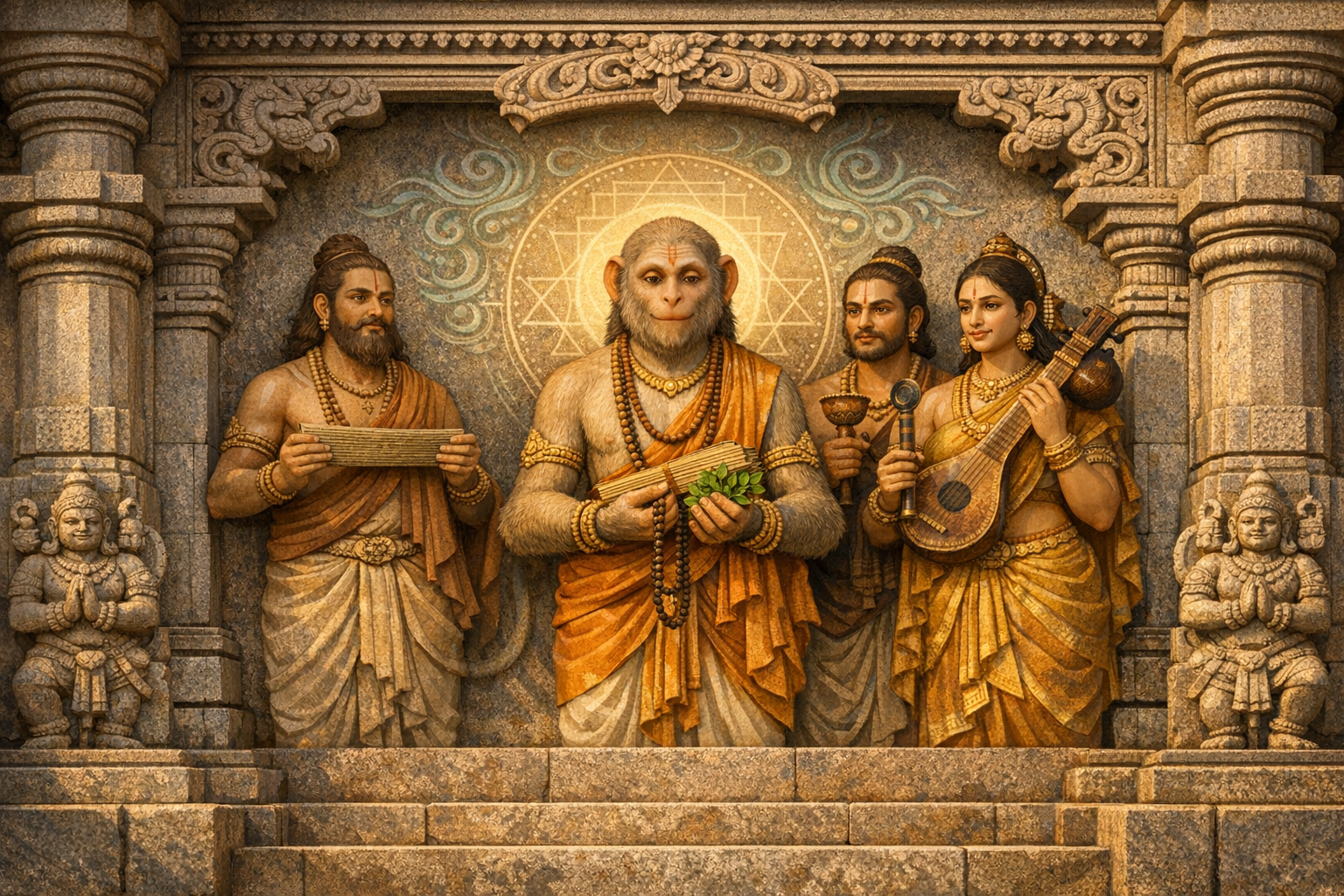
Hindu temple art often personifies the four Vedas as living presences, and in some regional traditions Atharva Veda appears with a monkey-like face. This simian marker is not caricature but a sophisticated code for healing, protection, breath-centered efficacy, and agile, disciplined intelligencequalities deeply associated with Atharvan rites. The discussion situates the motif within flexible Śilpaśāstra…
-
Khandoba’s Idol Decoded: Valor, Protection, and Sacred Kingship in Maharashtra’s Jejuri

Khandobarevered as Martanda Bhairava, Malhari, and Mallariunites Shiva’s protective grace, martial valor, and divine kingship in a compelling idol form central to Maharashtra’s sacred geography. The anthropomorphic equestrian murti and the aniconic linga together encode a complete theology of guardianship, justice, and prosperity. Weapons such as the khanda and spear symbolize Kshatra Dharma and Dharma-Yuddha,…
-
Unveiling Yajur Veda’s Goat-Faced Icon: Sacred Symbolism in Hindu Temple Art
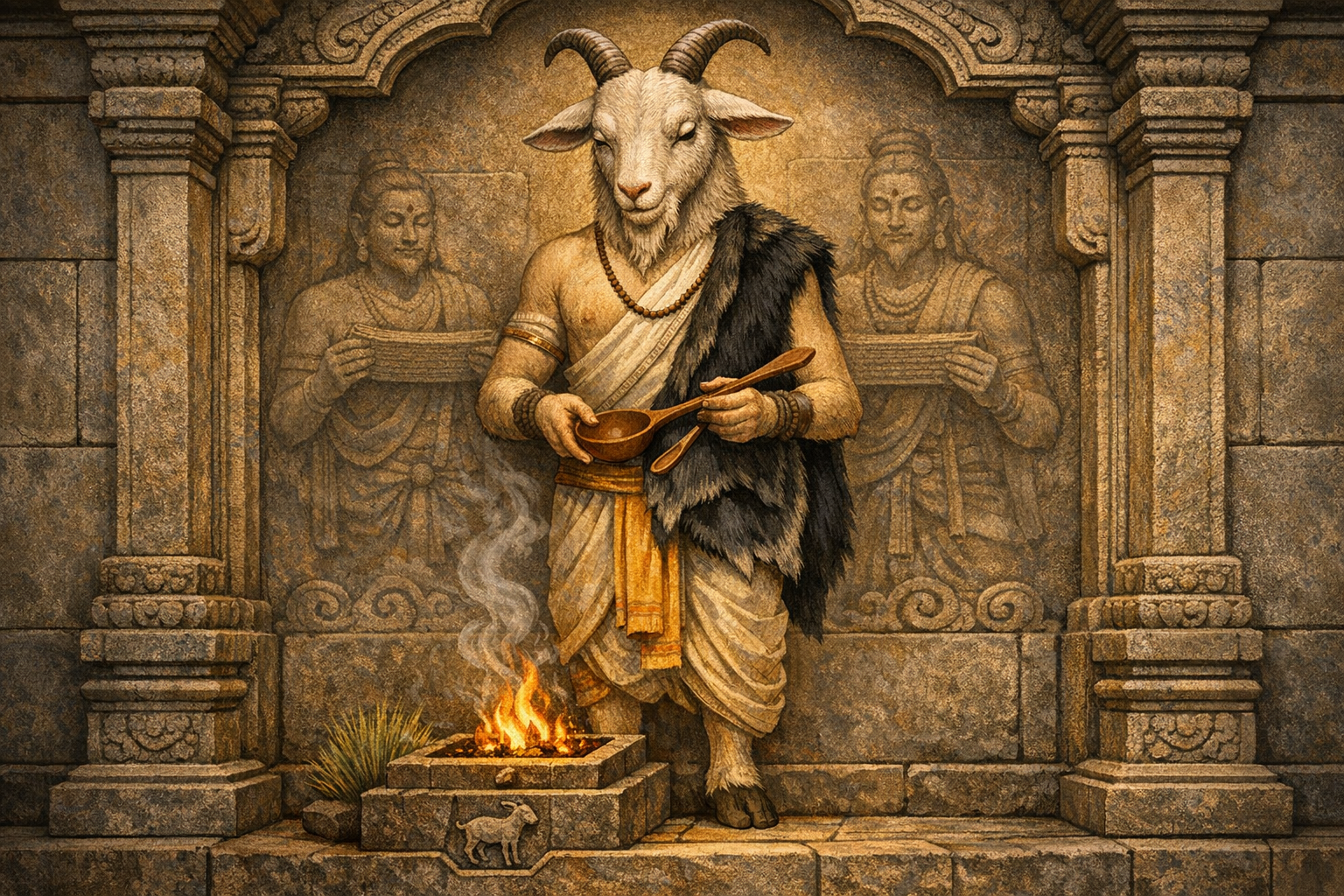
Hindu temple art often personifies the Vedas as living, intentional presences called veda-purushas, and the Yajur Veda is sometimes shown with a goat-faced form. This article explains why: it links ritual practice (yajna), philology (aja as both “goat” and “unborn”), and the Adhvaryu’s tools to a coherent iconographic language. It also clarifies common confusions with…
-
Shoola vs Trishul: Decoding Sacred Weapons, Iconography, and the Timeless Power of Dharma
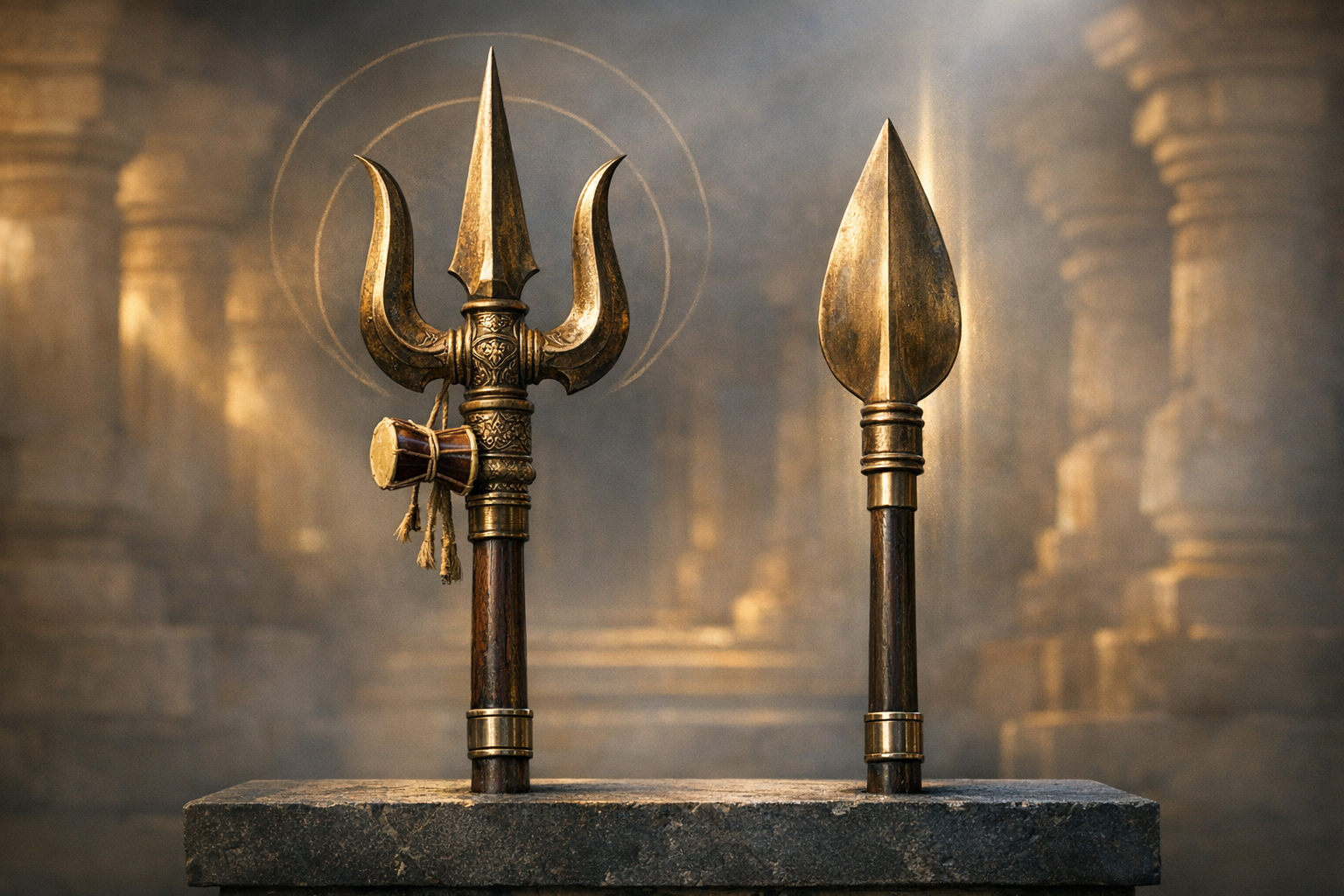
Shoola (single-pointed spear) and Trishul (three-pronged trident) are often confused, yet they carry distinct forms and meanings in Hindu iconography. This article clarifies how a spear encodes one-pointed discernment while a trident integrates triadic powersiccha, jnana, kriya; the gunas; and the three dimensions of time. Readers learn to identify each implement swiftly at temples and…
-
Why Temples Have Doors: Sacred Thresholds that Protect, Purify, and Deepen Darshan
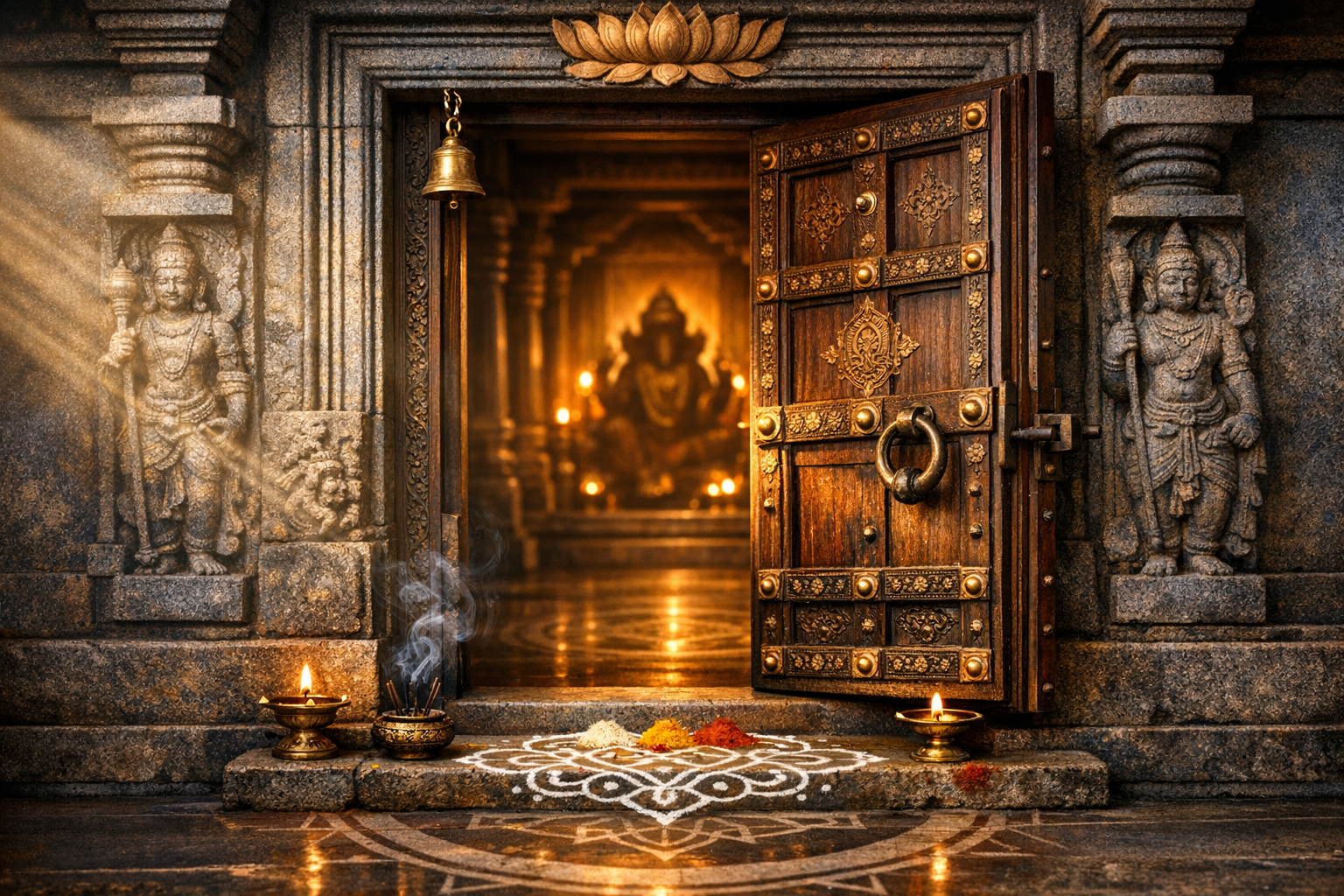
Temple doors are sacred thresholds, not mere barriers. In Hindu temple architecture grounded in Vastu-shastra and Agama-shastra, doors regulate ritual cycles, pace darshan, and uphold sanctity in the garbhagriha. They serve conservation needs by stabilizing microclimates, managing acoustics, and protecting murtis, textiles, and paintings from dust, humidity, and light. Doors also secure community-held heritage such…
-
Kalyana Varada Shasta: Revealing Lord Ayyappa’s Compassionate Ten-Armed Power
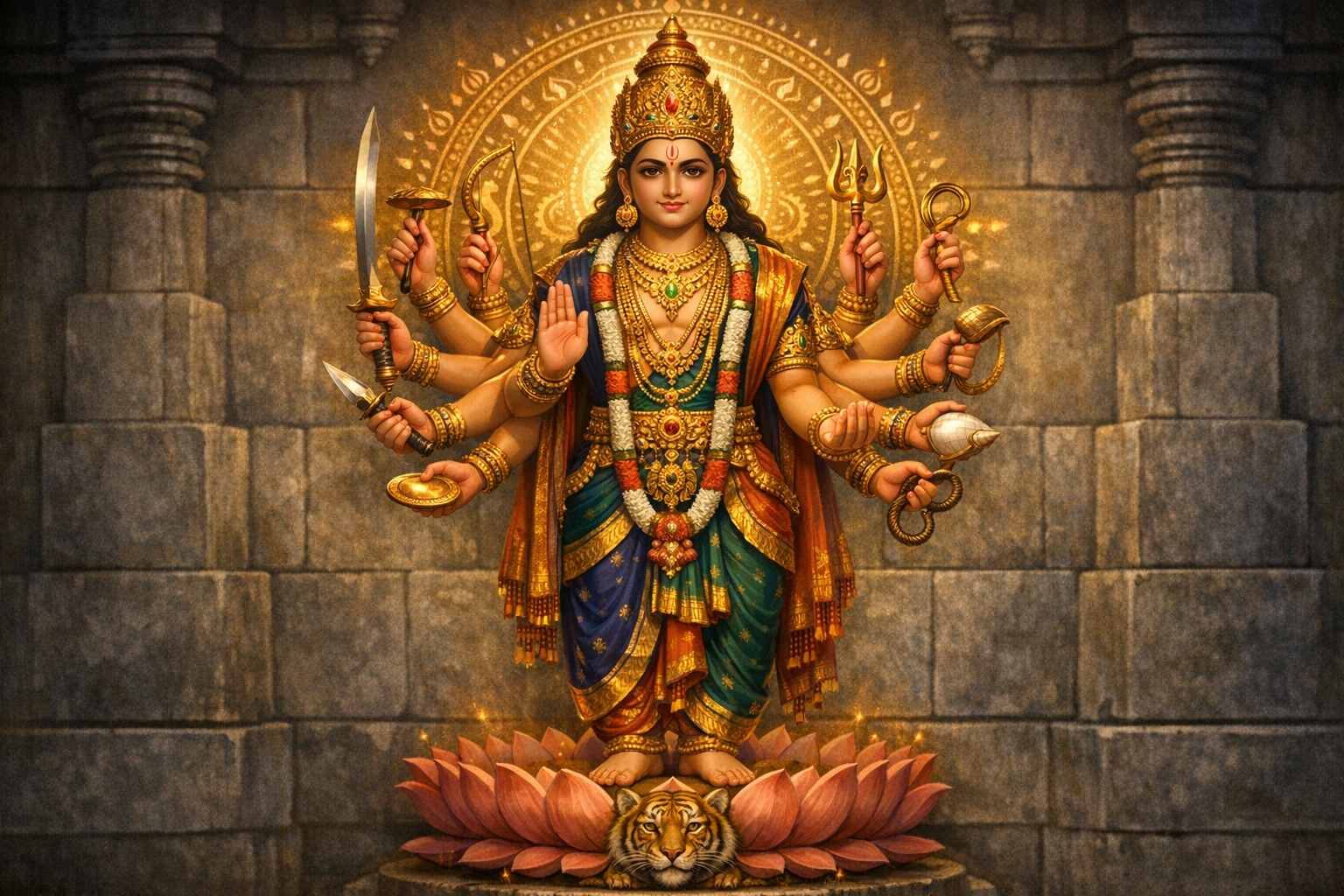
Kalyana Varada Shasta presents a rare and benevolent ten-armed manifestation of Lord Ayyappa (Dharma Shasta, Hariharaputra), uniting compassionate grace with vigilant protection. This iconographic form emphasizes auspicious well-being through the varada mudra and fearlessness through the abhaya mudra, while its attributessuch as sword, shield, bow, noose, goad, conch, discus, and tridentteach an ethic of responsible…
-
Divine Dwarapalakas of Lord Murugan: Sumukha & SudehaVeerabahu’s Fearless Gatekeepers of Dharma

This in-depth exploration examines Sumukha and Sudehathe revered sons of Lord Veerabahuwho serve as the Dwarapalakas (divine gatekeepers) of Lord Murugan. It situates their roles within the wider narrative arcs of the Skanda Purana and Tamil traditions, linking their valor in the Surapadman campaign to their enduring presence at the temple threshold. Readers gain a…
-
Soul in Stone: Classical Hindu Aesthetics, Vishnudharmottara Purana, and Living Sculpture

Classical Hindu aesthetics treats sculpture as a disciplined pathway for making consciousness visible in matter. Drawing on the Vishnudharmottara Purana’s Chitra-sutra, especially Chapter 43 of the third khanda, this article explains how pramana (proportion), bhava (expression), and lavanya (grace) turn craft into living art. It shows how the six limbs of painting inform sculpture, why…
-
Eraiyur Thagam Theerthapureeswarar Temple: Shaiva Heritage, Travel Guide & Architecture

Arulmigu Eraiyur Thagam Theerthapureeswarar Temple in Iraiyur (Erayur), near Vridhachalam, is a living Shaiva kshetra where Shiva as Dhagam Theerthapureeswarar and Goddess Annapurni are venerated. The name evokes a theological image of thirst being quenched at a sacred theertha, aligning with Shaiva Siddhanta’s compassionate vision. Practical access is simple: buses are available, roads are direct,…
-
Ardhoruka in Hindu Bronzes: Decoding the Warrior’s Drape and Ascetic Power in Iconography
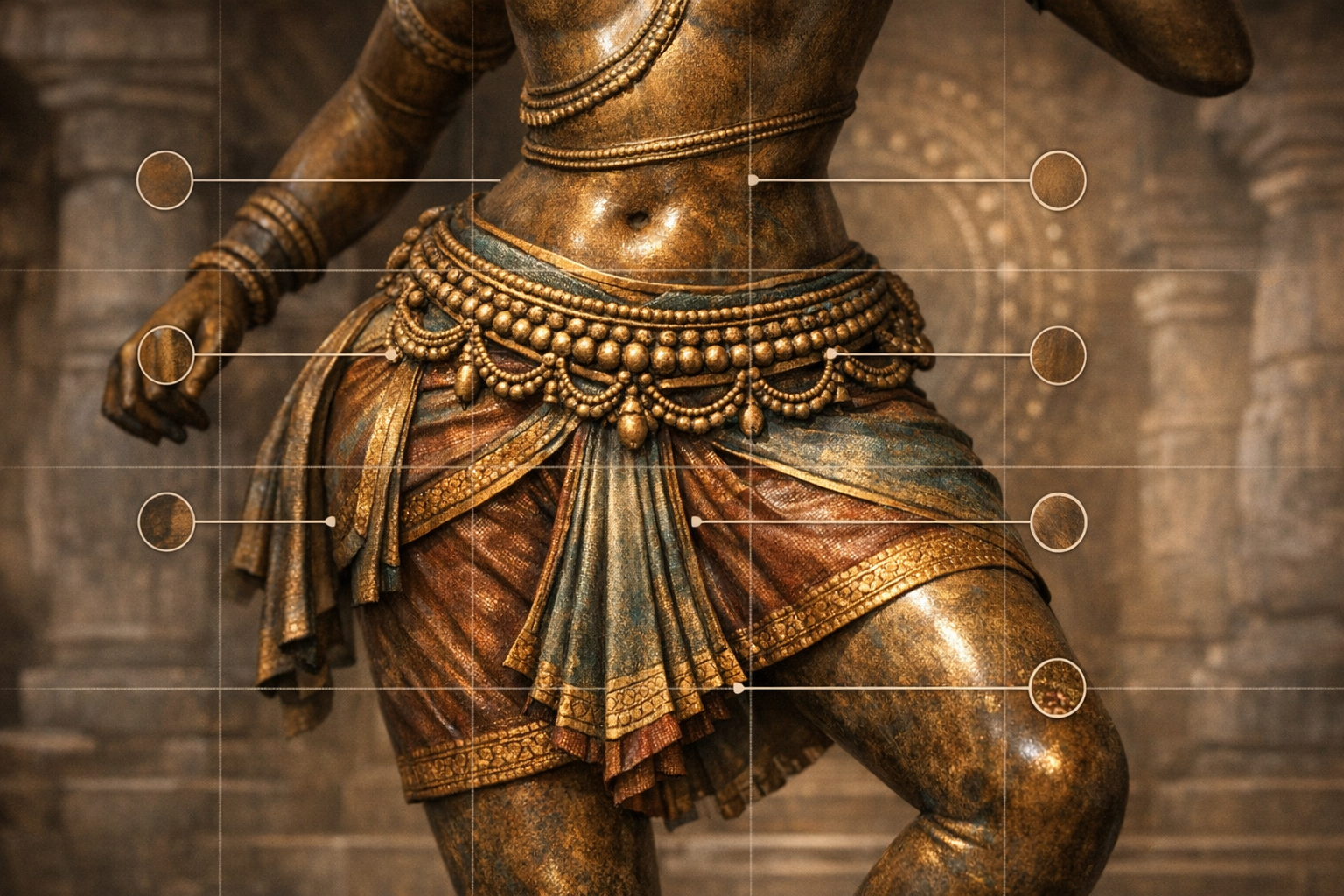
The ardhorukaa short, tightly wrapped lower garmentplays a central role in Hindu bronze iconography, especially in South Indian masterpieces. By exposing the thighs and condensing the silhouette, it signals martial vigor, dance, and ascetic discipline, contrasting with the longer antariya. Canonical texts in the Shilpa Shastras prescribe this form for specific deities, while the lost-wax…
-
Ahilyabai Holkar Jayanti 2026: Punyashlok Ahilyadevi’s Legacy of Temples and Dharma
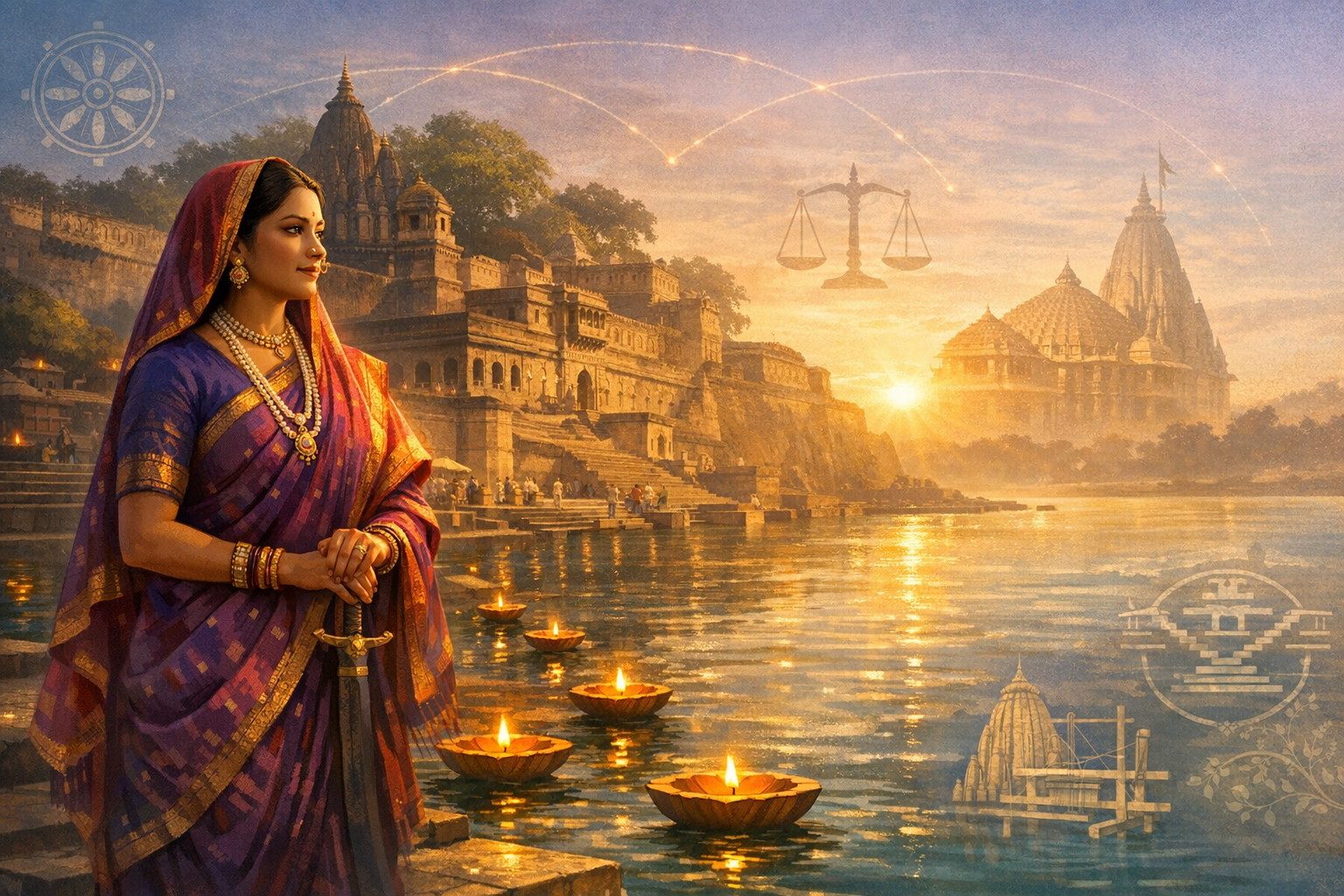
Ahilyabai Holkar Jayanti 2026 (31 May 2026) commemorates Punyashlok Ahilyadevi Holkar, the visionary Maratha sovereign whose governance and temple-building reshaped India’s sacred geography. The observance highlights her reconstruction of Kashi Vishwanath (1780) and Somnath (1783), the development of Maheshwar as a capital, and a justice-centered administrative ethos. Readers gain a historically grounded understanding of her…
-
Nilotpala, the Blue Lotus: Sacred Symbolism and Iconographic Keys Across Dharmic Traditions

This long-form guide decodes the nīlotpala (blue lotus/blue waterlily) as a distinct iconographic attribute across Hindu, Buddhist, and Jain art. It explains how the half-open, slender-petaled bud differs from the full-bloom padma and why that distinction matters in sculpture, painting, ritual, and poetry. Readers learn the botanical correlates (Nymphaea nouchali versus Nelumbo nucifera) and the…
-
Thirunangur’s Eleven Divya Desams: How Shiva–Vishnu Harmony Shaped Tamil Nadu’s Sacred Landscape

Thirunangur near Sirkazhi hosts eleven closely clustered Divya Desams uniquely linked to a single sacred event in which Shiva’s Rudra Tāṇḍava leads Vishnu to manifest in eleven forms. This long-form guide situates the temples within Tamil Nadu’s Kaveri delta, clarifies the puranic and Āḻvār foundations of the tradition, and shows how Shaiva–Vaishnava harmony is lived…
-
Bahubandha Unveiled: How the Sacred Tied Armlet Embodies Power in Hindu Temple Sculpture
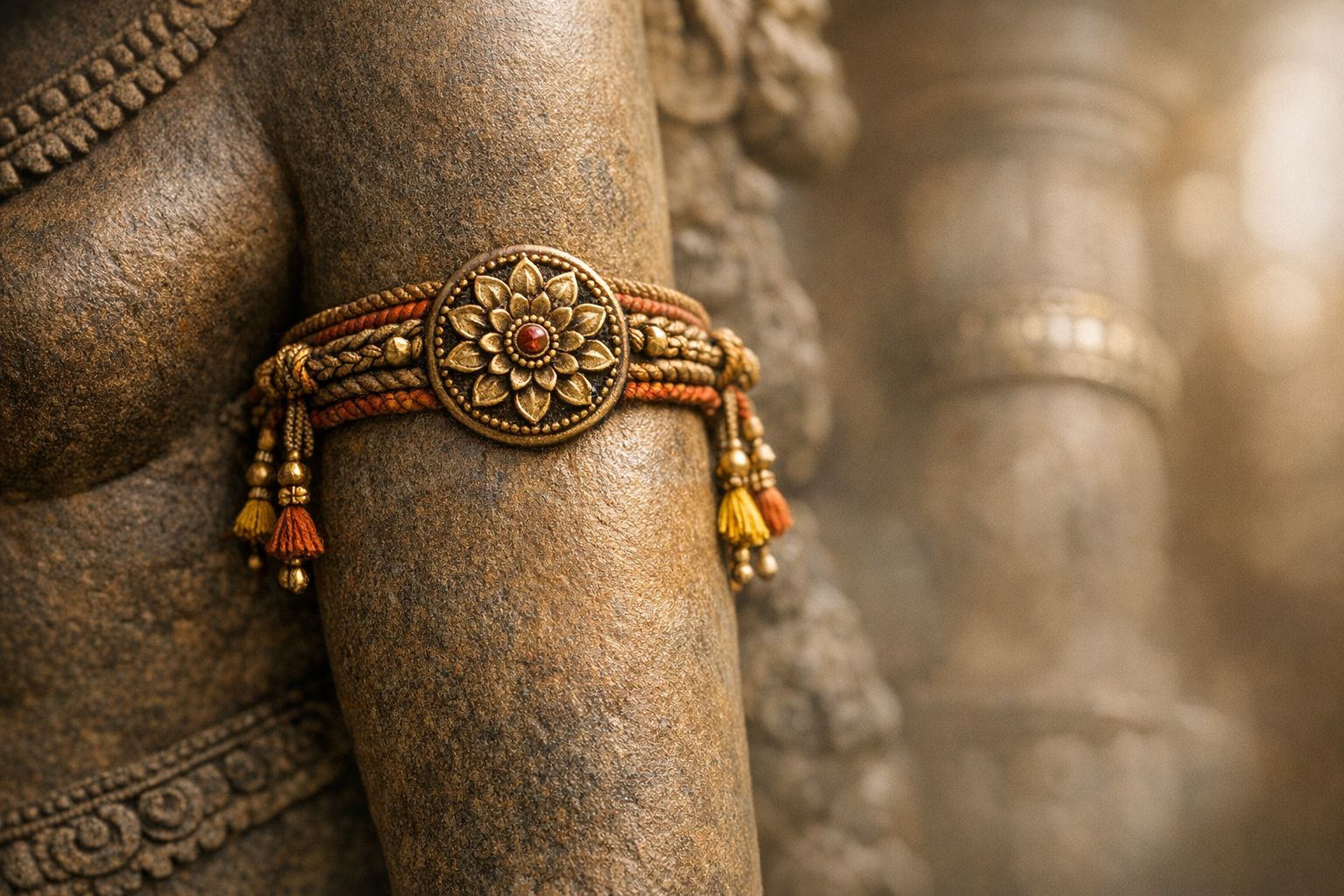
This comprehensive exploration of the bahubandhathe sacred tied armletclarifies how it differs from rigid armlets like the bahuvalaya and keyura in Hindu temple sculpture. Readers gain a clear typology of forms, construction details, and visual cues for identifying tied armlets in stone and bronze across Gupta, Chola, Hoysala, Odisha, and Central Indian traditions. The piece…
-
Unveiling Shiva’s Samharamurtis: Fierce, Compassionate Forms of Cosmic Transformation

This in-depth exploration clarifies why Shiva’s Samharamurtis are not emblems of destruction but precise instruments of compassionate transformation. Grounded in the Panchakritya doctrine and classical sources like the Puranas and Agamas, it decodes how Kamantakamurti, Gajasura Samhara Murti, and Kalari Murti model the sublimation of desire, the mastery of force, and the transcendence of fear…
-
Solid vs Hollow Hindu Bronzes: Lost‑Wax Mastery, Sacred Meaning, and Smart Selection
Hindu bronze icons emerge from a living dharmic craft shared with Buddhist and Jain traditions, where solid and hollow lost‑wax methods serve different ritual, aesthetic, and conservation needs. This in‑depth guide explains how ghana‑bimba (solid) and suṣira‑bimba (hollow) are made, why temples often prefer hollow casting for processional use, and why small domestic images are…
-
Viralimalai Murugan Temple & Arunagirinathar: Hunter-Lord Legend, Art, Rituals, and Peacocks
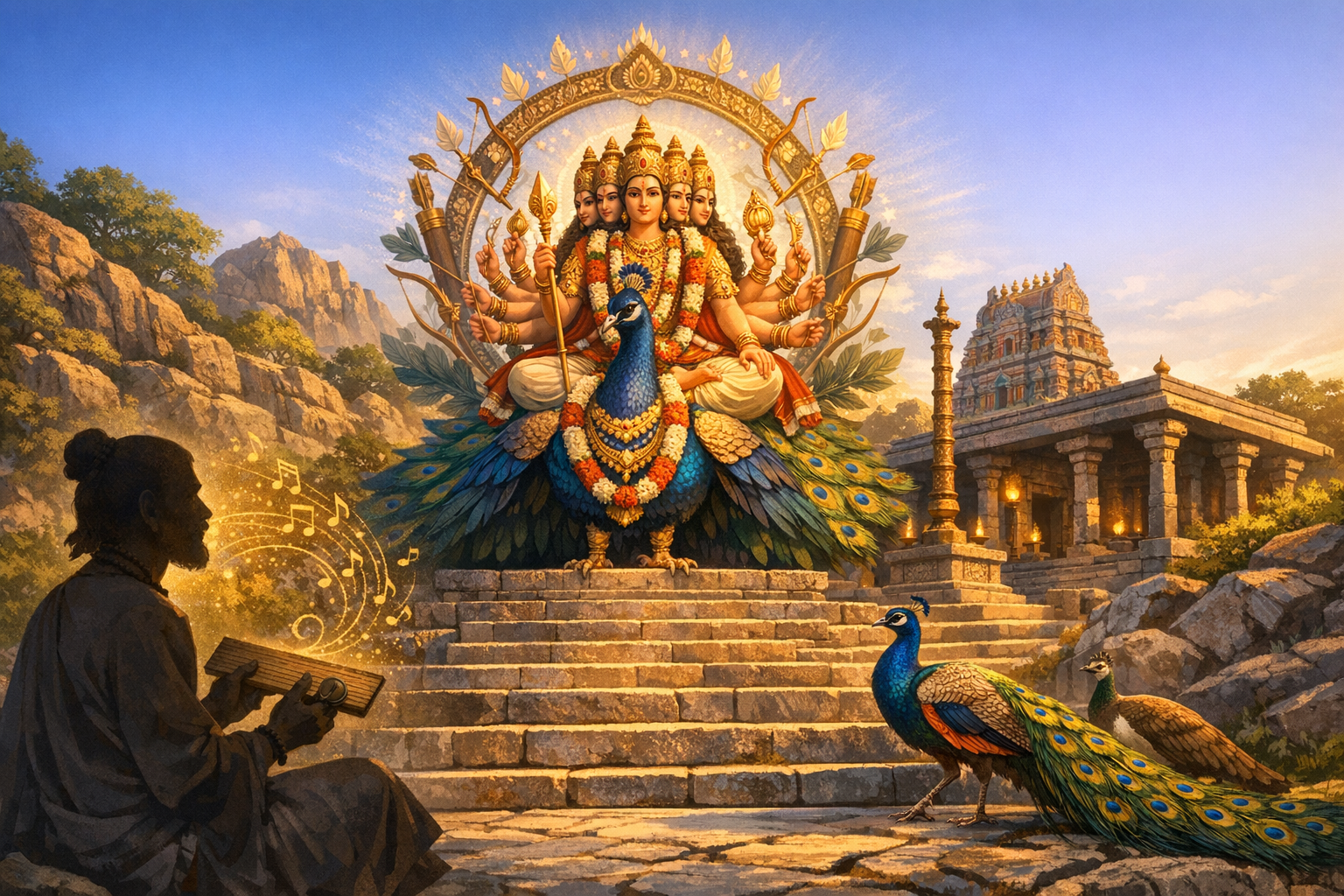
Viralimalai’s Shanmuganathar Temple presents a rare seated-on-peacock icon of Lord Murugan, uniting legend, music, and sacred ecology in a single hilltop experience. The site’s historical layers and South Indian hill-temple architecture encode a living Kaumāra tradition guided by Śaiva āgamas and Śilpa-Śāstra canons. Local memory of “When the Lord became the Hunter” situates Viralimalai within…
-
Ahilyabai Holkar Jayanti 2026: Punyashlok Ahilyadevi’s Legacy of Temples and Dharma
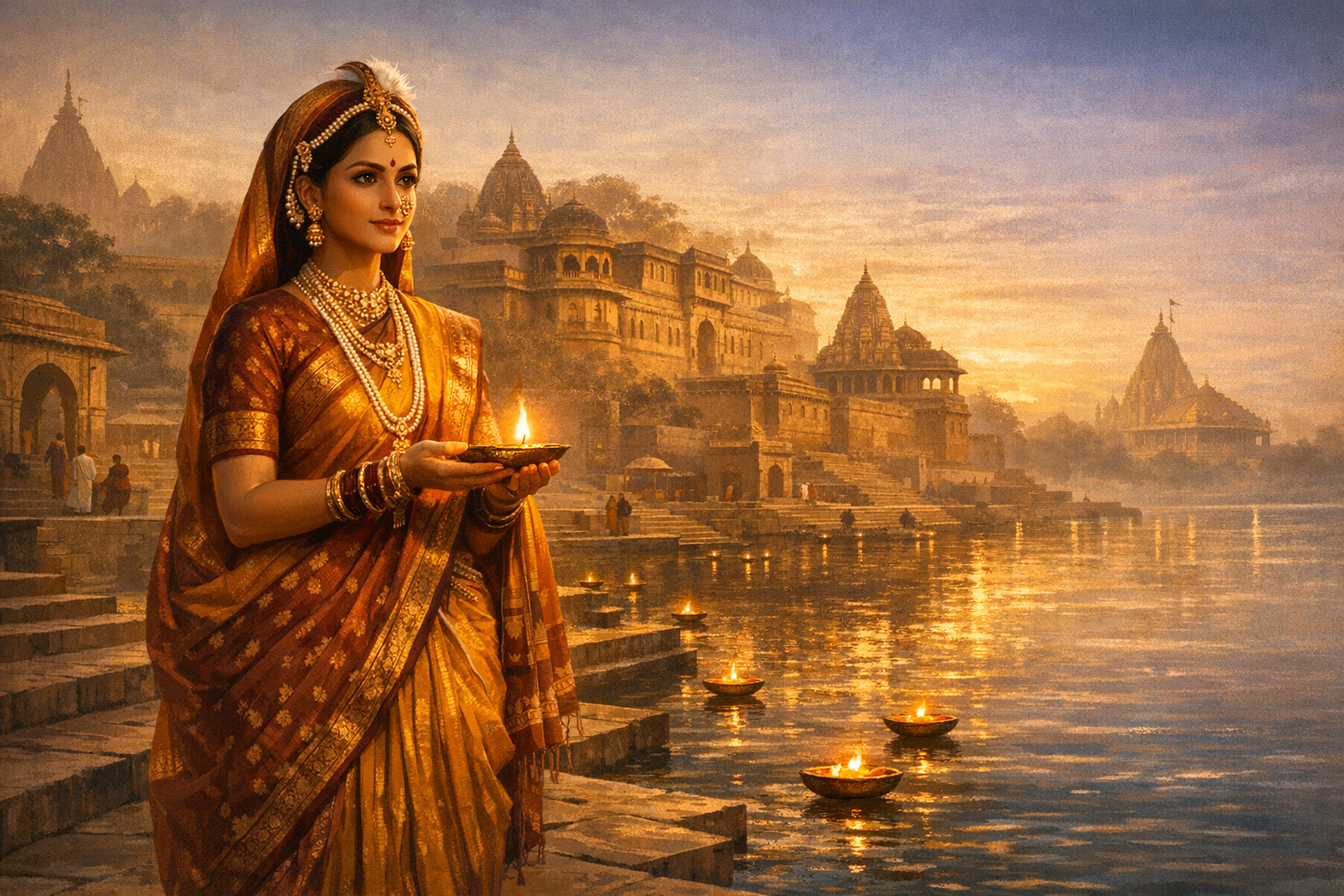
Ahilyabai Holkar Jayanti 2026 (31 May 2026) commemorates Punyashlok Ahilyadevi Holkar, the visionary Maratha sovereign whose governance and temple-building reshaped India’s sacred geography. The observance highlights her reconstruction of Kashi Vishwanath (1780) and Somnath (1783), the development of Maheshwar as a capital, and a justice-centered administrative ethos. Readers gain a historically grounded understanding of her…
-
From War Thunder to Living Gods: Ratha (Chariot) as Weapon, Ritual, and Wisdom in Ancient Hinduism
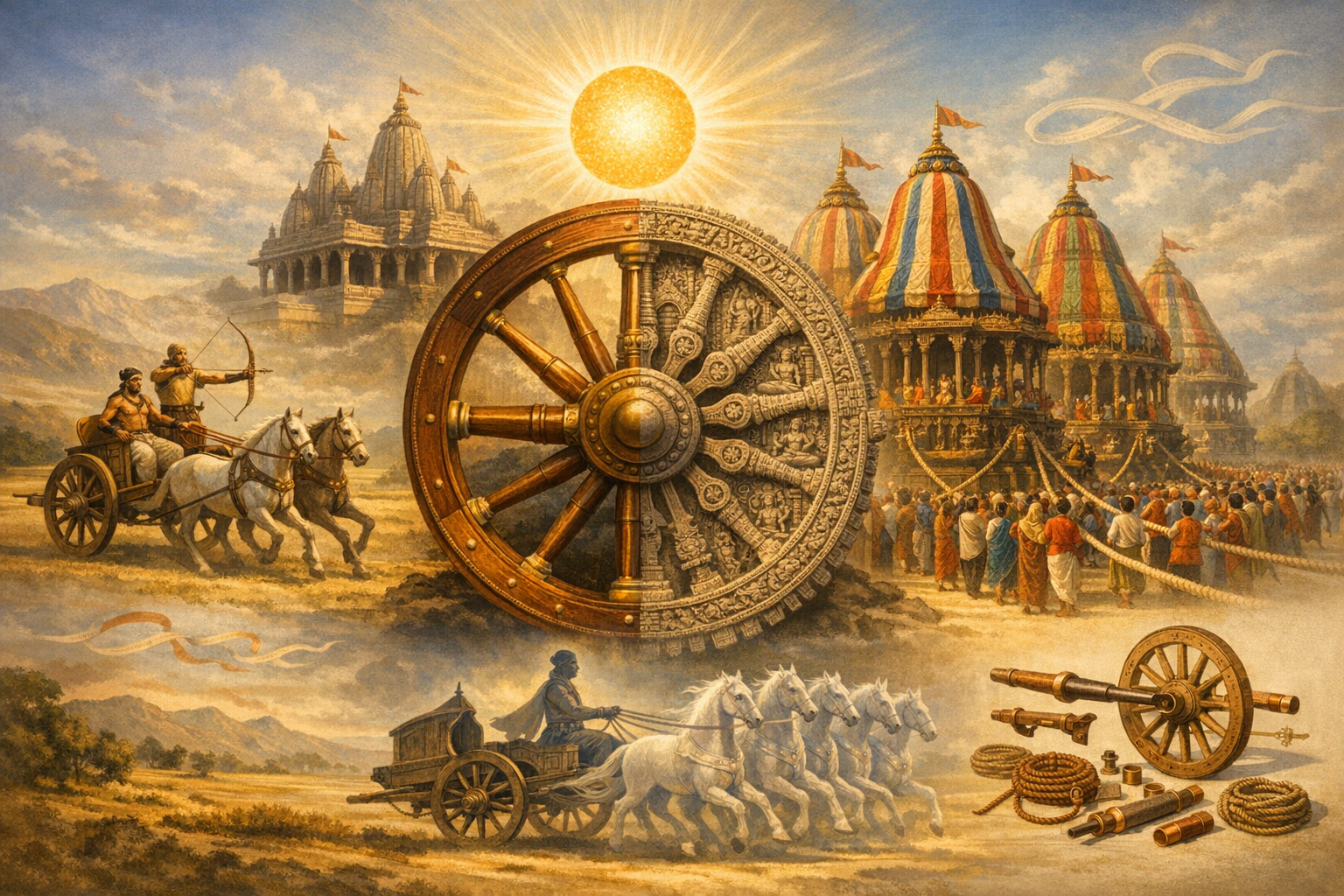
This long-form, research-driven essay follows the ratha (chariot) from its earliest Vedic mentions through epic warfare, temple architecture, and living festivals. Readers gain a balanced view of textual evidence (Rigveda, Mahabharata, Upanishads), archaeological debates (including Sinauli), and the Arthaśāstra’s statecraft, alongside technical insights into chariot design, crew roles, and battlefield tactics. It unpacks the Kaṭha…
-
Haridra Dam to Vijayanagara: Field Evidence, Inscriptions, and Karnataka’s Fading Shrines

A field-based reading of Devarabelakere, near Davanagere in Karnataka, reveals how a modern check dam overlays the footprint of the medieval Haridra Dam attributed to the early Vijayanagara era under Devaraya I. Inscriptions documented by the ASI at Harihara in 1902, along with a 2003 survey by Dr. Jagadisha, help relocate the lost basin of…