
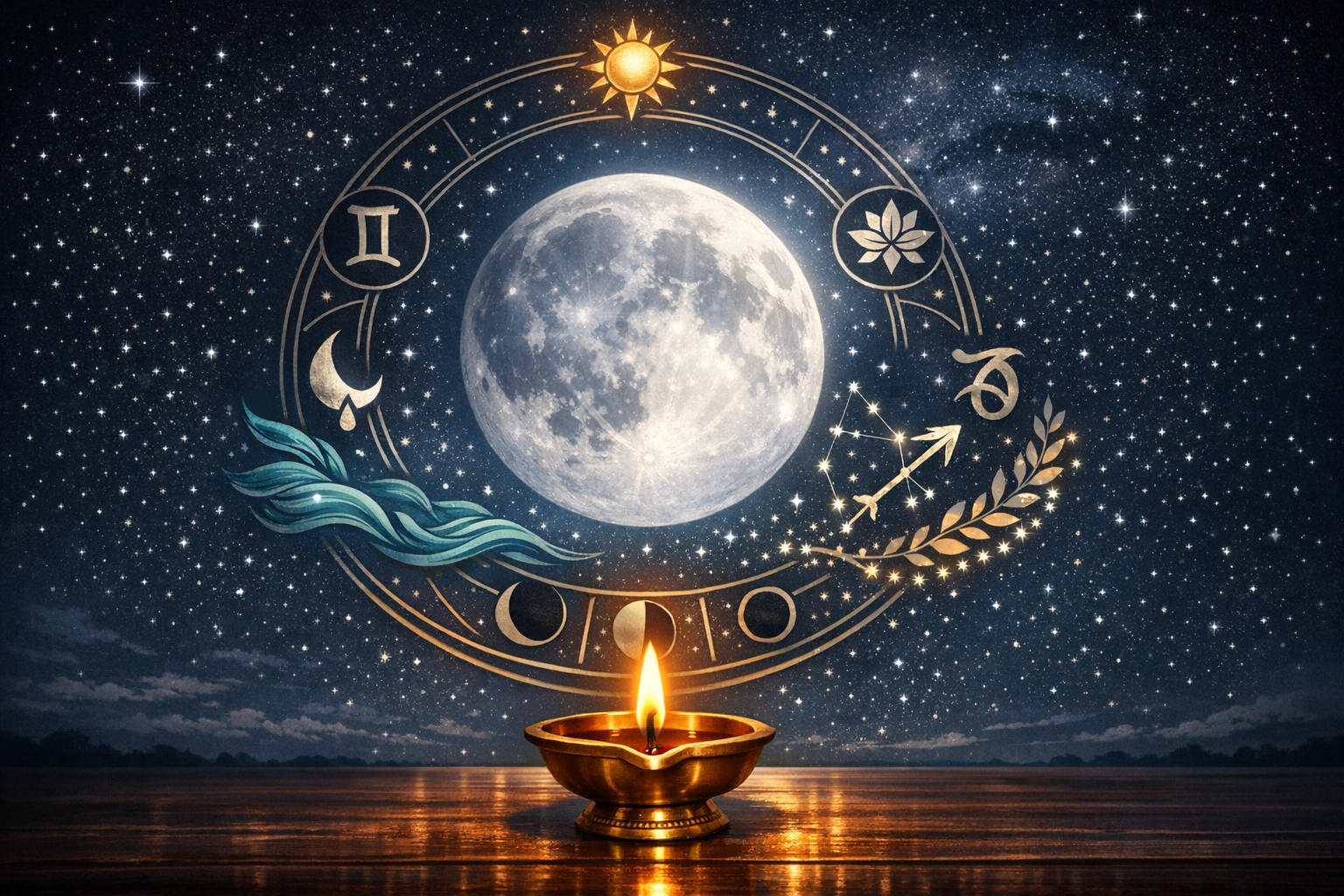
June 28, 2026 (Sunday) in the Hindu calendar is governed by Shukla Paksha Chaturdashi tithi, the fourteenth lunar day of the waxing fortnight. In most regions of India, Shukla Paksha Trayodashi tithi prevails until 12:35 AM on June 28 (IST), after which Shukla Paksha Chaturdashi continues for the remainder of Sunday. This places the day on the eve of the full moon (Purnima), within the Ashadha month across both Purnimanta and Amanta conventions for the majority of almanac traditions.
The tithi sequence and its precise endpoint at 12:35 AM (IST) align with common regional Panchang computations and serve as the anchor for ritual timing. Because Trayodashi ends just after midnight, the Shukla Pradosh for this lunar fortnight would have been observed on the evening of June 27, when Trayodashi was in effect during the Pradosha-kala (around dusk). On June 28, practitioners experience the reflective clarity often attributed to Shukla Chaturdashi, a day regarded as spiritually potent yet generally conservative for large-scale life-cycle muhurta (such as marriage and upanayana).
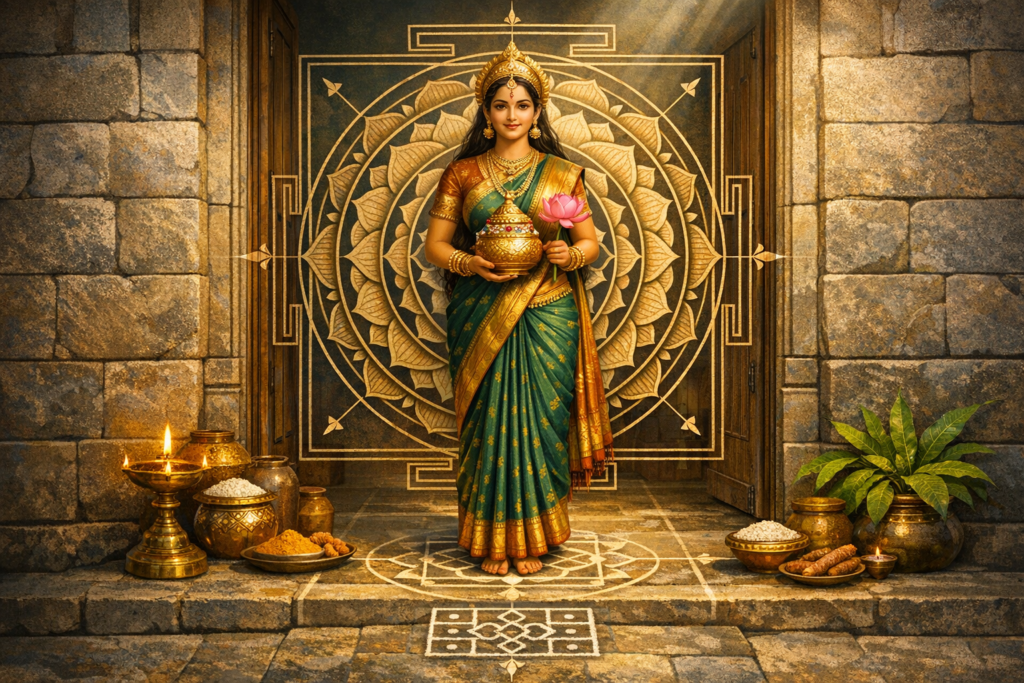
Across the Hindu calendar, the day’s place in Ashadha is significant for devotional practices. Nearing Purnima, many households emphasize satvika observances: japa, dana, deepa, and vrata continuity. While Shukla Chaturdashi is not traditionally preferred for ceremonies like griha-pravesha or vivaha, it remains conducive to meditative sadhana, annadana, and quiet temple seva. Families often find that lighting a simple diya at dusk on Shukla Chaturdashi creates a shared moment of calm that bridges generations.
Nakshatra and Moon-sign (Rashi) are pivotal for nuanced interpretation. With the Sun in Mithuna Rashi (sidereal Gemini) at this time of year, the Moon on Shukla Chaturdashi is typically in Dhanu Rashi (Sagittarius), often traversing Purva Ashadha and, by late night or the following morning, approaching or entering Uttara Ashadha and Makara Rashi (Capricorn), depending on location and local sunrise. For much of June 28, 2026, therefore, the lunar disposition is best understood as Dhanu Rashi with Purva Ashadha predominance, trending toward Uttara Ashadha as the lunar longitude advances. Because these transitions are sensitive to longitude, latitude, and calculation model, local Panchang verification is advised for exact cutover times.
From a Vedic astrology perspective, the sidereal Sun in Mithuna lends an intellectual and communicative tenor to the day, while the Moon in Dhanu emphasizes principled action, dharmic orientation, and a wider perspective. The Purva Ashadha theme—associated with Apas (the Waters) and symbolically linked to invigoration and perseverance—often supports study, mantra recitation, and inner alignment. Should Uttara Ashadha commence late night, its deities (the Vishwadevas) and symbolism of enduring victory underscore resolve, truth-alignment, and responsibility.
Rahu Kaal, Yamaganda, and Gulika are essential daily cautions. On Sundays, Rahu Kaal falls in the eighth segment of daylight; Yamaganda in the fifth; and Gulika in the seventh. To compute precisely for one’s city, divide the local sunrise-to-sunset interval into eight equal parts. For example, if sunrise is at 5:30 AM and sunset at 6:50 PM (a sample 13 hours 20 minutes of daylight), each segment is 1 hour 40 minutes. In that illustrative case, Yamaganda (fifth segment) runs approximately 12:10 PM to 1:50 PM, Gulika (seventh) 3:30 PM to 5:10 PM, and Rahu Kaal (eighth) 5:10 PM to 6:50 PM. Actual windows vary by city and date-specific sunrise/sunset, so local recalculation is essential before commencing new or high-stakes undertakings.
Abhijit Muhurta is the well-known midday auspicious window centered on local solar noon. For many Indian cities around late June, this often falls roughly between 12 noon and 12:50 PM local mean time, though it must be computed from local solar transit rather than clock noon for accuracy. Abhijit is widely considered suitable for general undertakings when other muhurta are unavailable, with the caveat that it should not overlap with Rahu Kaal or Yamaganda.
Karana and Yoga refine the day’s texture further. Shukla Trayodashi and Chaturdashi frequently host sequences that include Vanija and Vishti (Bhadra) Karanas. Because Vishti (Bhadra) is generally avoided for auspicious launches, its presence—if any during local daytime—should be confirmed in a city-specific Panchang, and key activities deferred outside that interval. The day’s Nitya Yoga (one of the 27 yogas like Vyatipata, Vajra, etc.) also requires drik calculation for exact labeling and times. Where local data is accessible, cross-checking Karana and Yoga ensures precise alignment with shastra-based recommendations.
Good time selection for June 28, 2026 thus rests on four pillars: tithi (Shukla Chaturdashi after 12:35 AM IST), nakshatra-rashi (largely Purva Ashadha in Dhanu, trending toward Uttara Ashadha and Makara), midday Abhijit, and the avoidance windows of Rahu Kaal, Yamaganda, and Gulika. For practical planning, many households find success anchoring modest tasks in Abhijit or post-sunset windows free of Bhadra, while reserving major samskara for more universally recommended tithi-nakshatra combinations on other dates.
Ritual and devotional guidance on this day centers on quiet depth rather than display. Offering arghya to Surya in the morning, engaging in japa of one’s ishta-mantra, and performing simple deepa-dana foster inner steadiness. As Purnima follows, many also plan Satyanarayana puja or recitation of Vishnu Sahasranama the next day. Those oriented to Shakta, Shaiva, Vaishnava, Jain, Bauddha, or Sikh practices can harmonize the day’s contemplative mood with their respective traditions—for instance, a mindful Paath or Shabad kirtan among Sikhs on Puranmashi, or Uposatha-oriented meditation among Buddhists close to the full moon.
Unity across dharmic traditions is naturally reflected in this lunar cadence. The shared rhythms of the tithi system—revered in Hinduism, historically utilized in Jain and Buddhist observances, and acknowledged culturally in Sikh communities through Puranmashi—invite mutual respect. Observers from diverse paths can honor the day’s gentle, near-Purnima energy through parallel practices of compassion, self-restraint, and seva, strengthening inter-community harmony while remaining rooted in authentic lineage guidance.
Methodology matters for precision. Contemporary Panchangs commonly use drik (astronomical) calculations aligned to the Lahiri ayanamsha, while some traditional almanacs preserve Surya Siddhanta parameters. Minor differences can shift nakshatra or karana cutovers by minutes or an hour across sources. Time zone (IST vs. local), daylight saving (outside India), and longitude/latitude further affect sunrise, sunset, and thus all day-segmentation computations. When an event must be timed to the minute, consult a trusted local almanac or an astronomy-grade Panchang tool configured to the exact location.
In summary, June 28, 2026 is a Shukla Paksha Chaturdashi day in Ashadha, beginning after Trayodashi ends at 12:35 AM IST. Expect the Moon largely in Dhanu Rashi with Purva Ashadha nakshatra dominating, tending toward Uttara Ashadha and potentially Makara Rashi as the night advances regionally. Favor Abhijit as a flexible auspicious window, compute and avoid Sunday’s Rahu Kaal (eighth daylight segment), Yamaganda (fifth), and Gulika (seventh), and verify any Vishti (Bhadra) Karana locally before initiating sensitive tasks. Used with care, this Panchang framework helps align daily life with cosmic timing while honoring the unity of dharmic wisdom traditions.
Key search references for readers include June 28 2026 Panchang, tithi today, Shukla Paksha Chaturdashi, Nakshatra today, Rashi today, Rahu Kaal, Abhijit Muhurat, Ashadha month, Hindu calendar, and Vedic astrology. Embedding these concepts into personal practice—through measured planning, simple devotion, and interfaith goodwill—transforms calendar data into living guidance.
Inspired by this post on Hindu Blog.


Leave a Reply
You must be logged in to post a comment.