
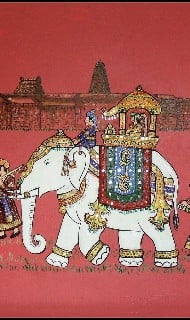
The enduring parable of a prosperous king with four wives is told across Hindu, Buddhist, Jain, and Sikh communities to illuminate the hierarchy of human attachments and the primacy of spiritual cultivation. More than a fable, it functions as a compact model for dharmic ethics, mortality, and meaning, and it remains a compelling doorway into Hinduism, Buddhism, Jainism, and Sikhism for contemporary readers seeking practical Spiritual Insight.
In the story, the king lavishes devotion on the fourth wife, adorning her with fine robes and delicacies. He also delights in the third wife, proudly exhibiting her to neighboring realms while fearing she may one day depart. The second wife is a steady confidant, patient and kind in times of distress. The first wife, though loyal and indispensable in protecting the treasury and the realm, is paradoxically neglected despite unwavering service.
Classical interpretation aligns each wife with a layer of human life: the fourth with the body; the third with possessions, status, and power; the second with family, friends, and counselors; the first with the inner moral-spiritual core—named atman in Hinduism, jiva in Jainism, the karmic continuum of mind in Buddhism, and the God-oriented soul attuned to Naam in Sikhism. The parable asserts that at death the body falls away, wealth stays behind, loved ones can only accompany to the threshold, and only the cultivated inner reality journeys onward.
As a didactic device, this mapping is precise. The emotional priority often given to appearance and comfort (the fourth wife) and to social display (the third wife) tends to eclipse the steady labor of inner growth (the first wife). The narrative exposes a predictable human bias: what seems most urgent in prosperity is often least helpful in crisis, while what is quiet and neglected proves decisive when life meets its non-negotiable horizon.
From a Hindu philosophical lens (Vedanta and the Bhagavad Gita), the body is transient while the knower of the field endures; artha and kama must be disciplined by dharma to culminate in moksha. The tale thus reinforces the purushartha architecture: enjoyments and acquisitions are valid yet subordinate to self-knowledge and devotion (bhakti), ethical action (karma-yoga), and contemplative insight (jnana). In this reading, the first wife symbolizes the atman-oriented life that alone confers lasting freedom.
A Buddhist reading retains the core insight while reframing metaphysics: the body and possessions are anicca; relational consolations are supportive yet conditioned; what proceeds is not a static self but a lawful flow of causes and effects (karma) within the mind-stream. In this frame, the ‘first wife’ represents a well-trained, compassionate mind grounded in sila, samadhi, and panna—the only refuge that meaningfully conditions future experience and alleviates dukkha.
In Jain thought, the distinction between jiva and ajiva clarifies the four wives: the body and material wealth are ajiva; familial bonds are precious but non-inhering; only the jiva, encumbered by karmic matter, travels until purified through ahimsa, aparigraha, tapas, and right knowledge. The parable therefore advocates non-attachment and ethical discipline as genuine self-care for the soul’s ascent.
Sikh teachings describe body and wealth as maya, and ego as haumai; companionship in the sadh sangat and the remembrance of the Divine Name (Naam) purify awareness. Interpreted thus, the first wife is the soul aligned with Shabad Guru; only this alignment accompanies beyond the funeral pyre, while honors, possessions, and renown remain in the world. The emphasis on simran and seva makes the parable an ethical and spiritual guide rather than an abstraction.
Across these dharmic traditions, vocabulary varies yet the prescription converges: care for the body without servitude to it; steward wealth without clinging; cherish relationships without illusion; and cultivate the inner orientation—atman-realization, bodhicitta, jiva-shuddhi, or Naam—that alone confers lasting freedom. This unity in spiritual diversity exemplifies Sanatana Dharma’s inclusive ethos while welcoming Buddhist, Jain, and Sikh pathways as complementary routes to liberation.
Readers frequently observe that illness, bereavement, or career upheaval makes the parable immediately concrete: the fourth and third wives command attention during prosperity, but the second and first determine resilience when conditions change. This emotional arc explains the narrative’s enduring pedagogical power in contemporary spirituality, ethics, and mental well-being. It offers a stable language for navigating impermanence without cynicism.
Practical application can be framed as a fourfold discipline. For the body, pursue balanced diet, sleep, and Yoga while remembering impermanence. For wealth and status, practice right livelihood and generosity (dana) with transparent, ethical governance. For relationships, deepen trust through seva, truthful speech, and kalyana-mitra or satsang. For the inner core, establish a daily rhythm of simran, japa, meditation, scriptural study, and self-inquiry.
The story also mirrors life-cycle rites. In Hindu antyesti, family and friends accompany to the cremation ground yet cannot cross the threshold; the Garuda Purana and allied literature hold that only punya and papa accompany the onward journey. Comparable motifs surface in Buddhist and Jain funerary reflections and in Sikh remembrance that anchors the grieving in kirtan and Ardas, reinforcing the parable’s central claim that only inner cultivation truly travels on.
Ethically, the king symbolizes executive agency. When governance—of a household, organization, or polity—lavishes resources on appearance and display while neglecting inner integrity, fragility accumulates. Aligning policy and conduct with dharma—sustainability, transparency, and fairness—prioritizes the ‘first wife’ and yields resilience under stress, a lesson as relevant to public leadership as to personal life.
The narrative further refines the purushartha calculus for modern professionals. Artha and kama are honored as legitimate aims when pursued within dharma; without that alignment, they readily overshadow the cultivation of wisdom and compassion, delaying moksha. The parable therefore does not condemn the world; it sequences it, ensuring that prosperity enhances rather than obscures spiritual progress.
Pedagogically, the tale condenses advanced philosophy into an image accessible to children and scholars alike. It invites reflective journaling: Which ‘wife’ consumes most time and resources? Which ‘wife’ is thanked daily? What deliberate rebalancing would honor dharma without rejecting the world? Such inquiry transforms a memorable story into measurable change.
Ultimately, the king’s four wives teach unity in spiritual diversity: whether spoken as atman, jiva, karmic continuity, or soul guided by Naam, dharmic traditions agree that inner realization alone accompanies beyond impermanence. Nurturing that first wife—through study, practice, and service—turns the fable into a roadmap for a life both prosperous and free, harmonizing the insights of Hinduism, Buddhism, Jainism, and Sikhism.
Inspired by this post on Dandavats.





Leave a Reply
You must be logged in to post a comment.