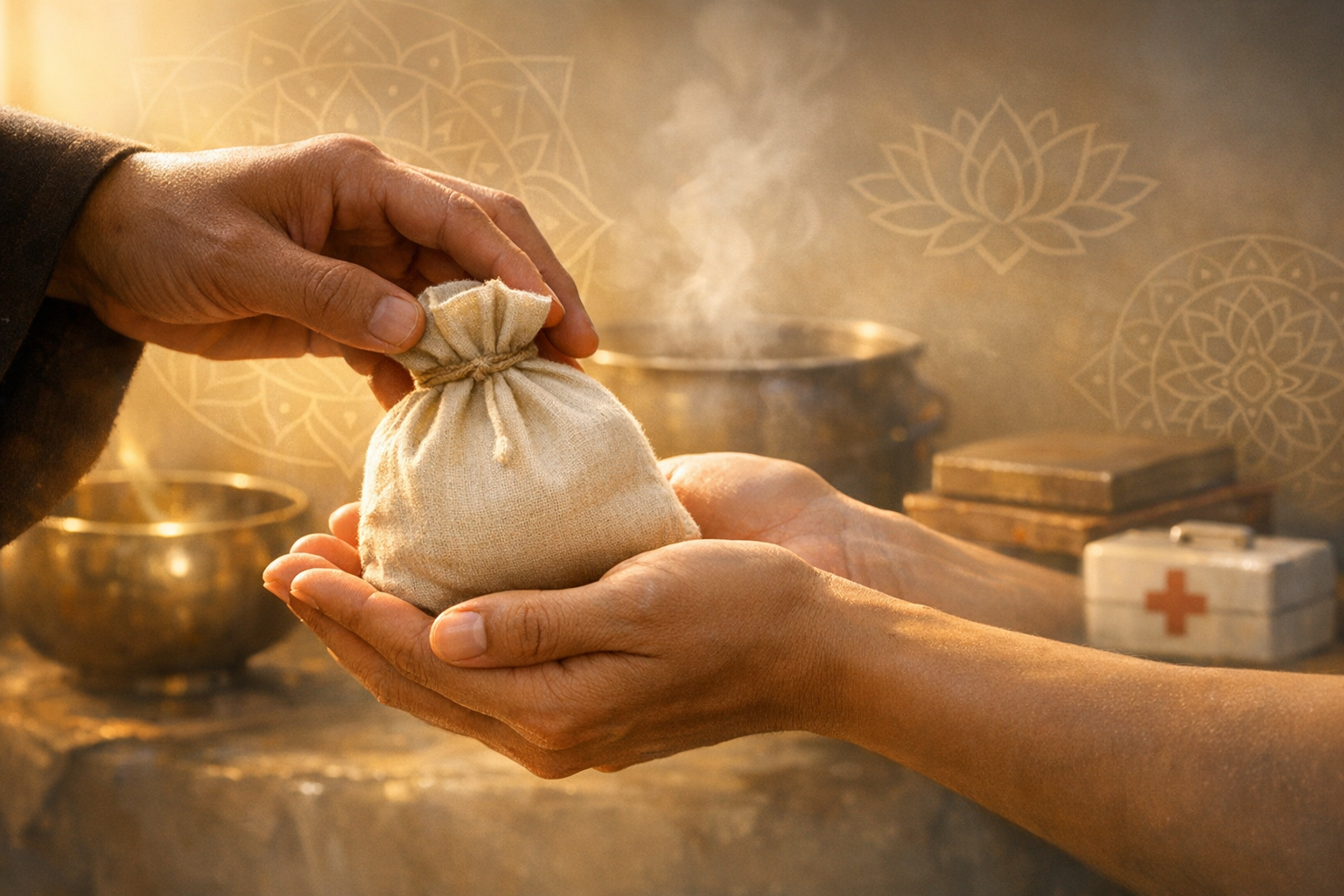
Gupt Daan, literally the “secret gift,” refers to the intentional practice of giving without public recognition, credit, or disclosure of identity. It is a disciplined form of anonymous donation anchored in the ethics of selflessness, where the act of offering is separated from the desire for praise. The idea is simple yet powerful: when generosity is kept private, the gift serves its purpose without inflating ego or diminishing the dignity of recipients.
Etymologically, “Gupt” connotes concealed or protected, and “Daan” signifies gift or charity. Across the dharmic sphereHinduism, Buddhism, Jainism, and Sikhismthis ethos appears as a shared current beneath diverse practices of dāna and seva. What unifies these traditions is a common insistence on intention, humility, and the primacy of human dignity. Anonymous giving thus becomes a spiritual discipline as much as a social good.
Gupt Daan is distinct from ceremonial or commemorative giving that seeks legacy-building through nameplates and dedications. While public philanthropy can be valuable for mobilizing resources, Gupt Daan emphasizes purity of motive: it safeguards the act of charity from becoming a transactional exchange for status or influence. In modern settingsfrom community food programs and scholarship funds to medical relief and disaster responsethis framework offers a quiet, dignified way to serve.
In the Hindu tradition, scriptural thought provides clear guidance on ethical giving. The Bhagavad Gita’s taxonomy of charity is particularly instructive. Sāttvika charity is defined as a gift made at the proper time and place, to a worthy recipient, and without expectation of return or recognition. By removing the performative dimension of generosity, Gupt Daan aligns naturally with this sāttvika ideal. The classical counsel of deśa–kāla–pātraattending to the right place, time, and recipientfurther refines the practice, ensuring that the help reaches where it is ethically and practically most beneficial.
Beyond the Gita’s categories, the wider dharma literature repeatedly praises modesty in service, careful discernment of beneficiaries, and the avoidance of harm. The principle of Gupt Daan integrates these strands: it honors the giver’s shraddhā (sincere resolve) while upholding the recipient’s honor. It also resonates with Karma Yoga, where action is performed skillfully and selflessly, without attachment to outcomes or accolades.
In Buddhism, dāna is the first of the perfections (pāramitā), and intention (cetanā) is central to its ethical quality. Anonymous giving can function as a practical training in non-attachment, reducing clinging to identity and reputation. When generosity is offered without personal inscription, the giver cultivates humility and insight into anattā (non-self), while the recipient experiences support free of social pressure. In many Sangha communities, the understated style of offeringleaving provisions unobtrusively, supporting monastic or lay welfare without announcementembodies this orientation.
Jain thought treats dāna as a disciplined vow for householders, expressed through forms such as annadāna (food), aushadhadāna (medicine), jñānadāna (knowledge), and abhayadāna (protection). The principle of aparigraha (non-possessiveness) is integral: giving is organized to reduce attachment, not to enlarge one’s social footprint. Anonymous charity is a natural extension of aparigraha, minimizing the subtle accumulations of prestige and entitlement while maximizing compassion (anukampā). In practice, many Jain community initiatives reflect this ethic by quietly sustaining hospitals, animal shelters, and educational efforts without personal publicity.
Sikh ethics center seva (selfless service), vand chhako (share what you have), and the disciplined practice of dasvandh (a portion of one’s earnings for common good). The spiritual emphasis on nimrata (humility) and the removal of haumai (ego) aligns closely with Gupt Daan. Across gurdwaras worldwide, langar (the community kitchen) is nourished by contributions and labor that are often deliberately unadvertised, allowing the nourishing act itselfnot the donor’s identityto remain at the heart of service.
When viewed across these dharmic traditions, a unifying theme emerges: Gupt Daan refines the inner posture of giving. It transforms charity from a visible performance into a contemplative disciplinequiet, careful, and recipient-centered. The spiritual rationale is clear: concealing the giver removes a major source of egoic reinforcement and keeps attention on alleviating suffering.
From an ethical perspective, anonymity protects the recipient’s dignity. It avoids creating social hierarchies of obligation, reduces the possibility of donor-driven influence, and prevents the subtle coercion that can arise when gifts are publicized. In sensitive contextsaid to marginalized groups, medical assistance, or scholarshipsGupt Daan allows beneficiaries to receive support without stigma, labels, or loss of agency.
Insights from behavioral science complement these principles. Research on “warm-glow” giving and “image motivation” suggests that while public recognition can increase donations in the short term, it can also distort motives and create competitive displays. Anonymous giving, by contrast, tends to reinforce intrinsic motivation and ethical intent. In practical terms, this shift stabilizes programs: communities rely more on long-term commitment and less on visibility-driven spikes in philanthropy.
Gupt Daan also strengthens social cohesion. When communities experience help arriving without stringsno endorsements demanded, no allegiance expectedtrust grows. This is particularly important in plural settings where Hindus, Buddhists, Jains, and Sikhs collaborate on annadāna, health camps, education drives, and disaster relief. The anonymity of the benefactor helps keep the focus on shared dharma valuescompassion, restraint, and responsibilityrather than group identity.
Implementing Gupt Daan in contemporary life benefits from clear, practical protocols. First, clarify intent: commit to giving without reputational incentives. Second, identify needs using deśa–kāla–pātra: ensure the right help reaches the right place at the right time. Third, use trusted intermediariestemple or gurdwara committees, monastic or lay community trusts, and reputable social organizationsto preserve privacy while maintaining proper stewardship. Fourth, protect confidentiality through data-minimization: collect only what is needed to deliver help effectively.
Accountability remains essential even when the donor is not visible. Quiet mechanismsthird-party audits, sealed donor records, or trustee oversightcan verify that funds and materials are used as intended, without turning giving into a spectacle. Many dharmic institutions have long practiced this balance, keeping donor identities discreet while publishing impact summaries and independent financial reviews.
Digital tools can support Gupt Daan when used thoughtfully. Direct bank transfers to institutional accounts, anonymous contribution portals managed by community trusts, and voucher systems that preserve recipient privacy are effective methods. At the same time, prudence is required: safeguard against fraud, ensure compliance with local regulations, and avoid creating digital trails that could compromise either donor or recipient in sensitive circumstances.
There are contexts where limited transparency is ethically or legally necessarysuch as statutory reporting for public trusts or financial compliance. In such cases, identity can be known to a small circle of fiduciaries while remaining confidential to the wider public. This layered approach respects both the law and the spirit of Gupt Daan.
Robust guardrails help preserve the practice’s integrity. Evaluate beneficiaries carefully to prevent misuse, avoid dependencies by supporting capacity-building where possible, and prioritize low-overhead models that deliver direct relief. When safety is a concern, route aid through institutions that can operate discreetly and responsibly.
In everyday life, Gupt Daan often looks ordinary yet profound. A family quietly keeps aside a portion of monthly groceries for neighbors in need; a professional funds a student’s fees through a school trust without disclosure; a small group supports medical bills through a hospital’s indigent fund with no public announcement. Practitioners consistently describe a quiet, expansive joythe sense that compassion has been allowed to do its work without becoming anyone’s personal possession.
At its best, Gupt Daan is both spiritual practice and social technology. It disciplines intention, honors recipients, and anchors initiatives in humility rather than publicity. For communities seeking unity across dharmic traditions, it provides common ground: shared values expressed through discreet, effective service. In times that reward visibility, Gupt Daan restores a timeless balancedoing the right thing, in the right way, for the right reasons, and letting the good speak for itself.
Inspired by this post on Hindu Pad.