
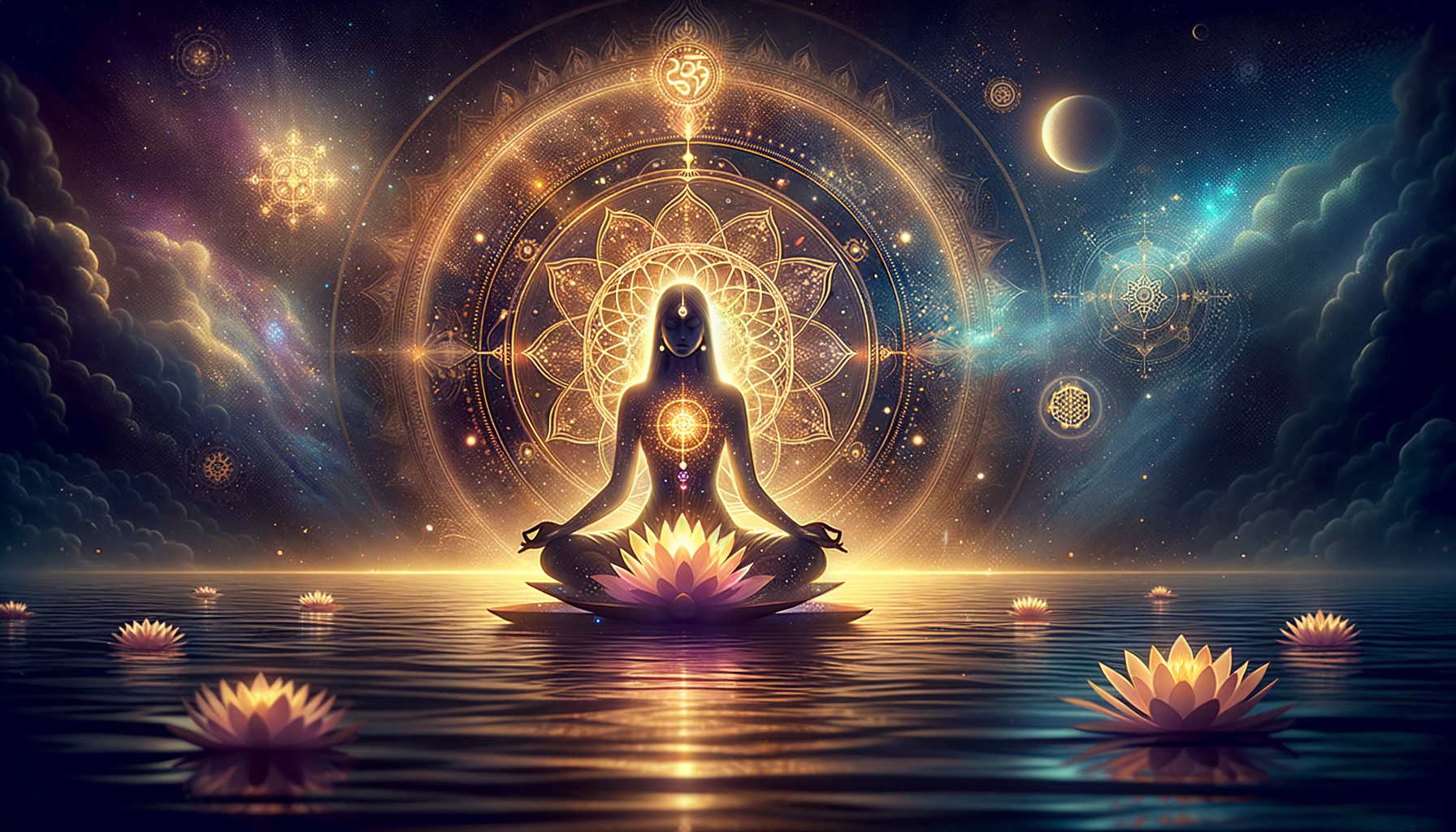
Hindu cosmology poses a profound question that invites both inquiry and awe: if Brahma is celebrated as the creator of worlds, who, then, is the creator of Brahma? Tracing this question through the Purāṇic and philosophical traditions reveals an elegant hierarchy of emanation in which the Divine MotherDevi, the Mahāśaktistands as the inexhaustible source from which creation unfolds.
In this vision, Devi is not merely a deity among many, but the primordial creative potencyShaktithrough whom the formless absolute is made manifest. The maternal metaphor conveys immediacy and intimacy: creation is not a mechanical output but a compassionate emergence. Thus, “Mother” signifies the sustaining, protective, and nurturing dimensions of cosmic order as understood in Hindu cosmology.
Across Purāṇic narratives, the sequence of manifestation varies in imagery yet remains consistent in principle. A widely known account describes Nārāyaṇa reclining upon the cosmic waters, from whose navel arises the lotus bearing Brahma, the architect of worlds. Behind and within this vision is Shaktithe energizing presence without which no form, function, or faculty can operate. In other traditions and Tantric expositions, the same truth is framed as the interplay of Brahman and Māyā, Purusha and Prakriti, all signifying an ultimate source whose dynamic aspect is Devi.
Scriptural strands reinforce this understanding. The Devi Mahatmya honors Devi as the all-pervading power“ya devi sarvabhuteshu shakti-rupena samsthita”affirming her as the animating principle in all beings. Srimad-Bhagavatam 3.20.3 outlines the stages of creation emanating through Brahma, situating the creative act within a larger metaphysical procession. Symbols such as the lotus and the Śri Yantra, common across Hindu art and worship, function as contemplative diagrams that encode this passage from the unmanifest to the manifest.
Philosophically, this hierarchy clarifies rather than complicates the question of origins. In Sāṁkhya, Prakriti unfolds in the presence of Purusha, while in Vedānta, Brahman reflects through Māyā to project names and forms. Tantra articulates the same principle as the inseparability of Shiva and Shakti. In all, Devi is the generative, sustaining, and transformative energyHindu cosmology’s way of speaking about the possibility and continuity of creation.
Parallels across the dharmic family further illuminate this insight. Mahāyāna traditions revere Prajñāpāramitā as “the Mother of the Buddhas,” honoring wisdom as the womb of awakening. Jain philosophy, while non-theistic, emphasizes an eternal order of principles (tattvas) through which reality unfolds, resonating with the idea of a timeless foundational ground. Sikhism proclaims Ik Oṅkār, the one, all-pervading creative reality experienced through Hukam. Together, these perspectives affirm a shared civilizational intuition: an ultimate, compassionate ground of being from which life emerges and towards which it orients.
This understanding is not merely abstract. During Navaratri and Durga Puja, many experience the symbolism of the Mother as protection, courage, and renewal. Temple rituals and home worship, with their familiar rhythms of mantra, lamp, and offering, translate metaphysics into lived reassurance. The Divine Mother, as ideal and experience, bridges scholarship and devotion, concept and compassion.
Framed this way, the question “Who created Brahma?” is not an infinite regress but a doorway into metaphysics. Brahma’s role as creator is intelligible within a graded procession of reality: the manifest arises through a creative intelligence that itself rests upon a boundless, sentient potencyDevi, the Supreme Mother. This is Hindu cosmology’s way of affirming that the universe is not an accident, but an expression of meaning, care, and order.
Such a reading encourages unity across Hinduism, Buddhism, Jainism, and Sikhism by highlighting convergent insights: the reality behind forms, the creative law that sustains them, and the compassionate wisdom that guides human life. In honoring Devi as the source of creation, the traditions honor, together, the principle that makes all paths possible and meaningful.
Inspired by this post on Hindu Blog.










