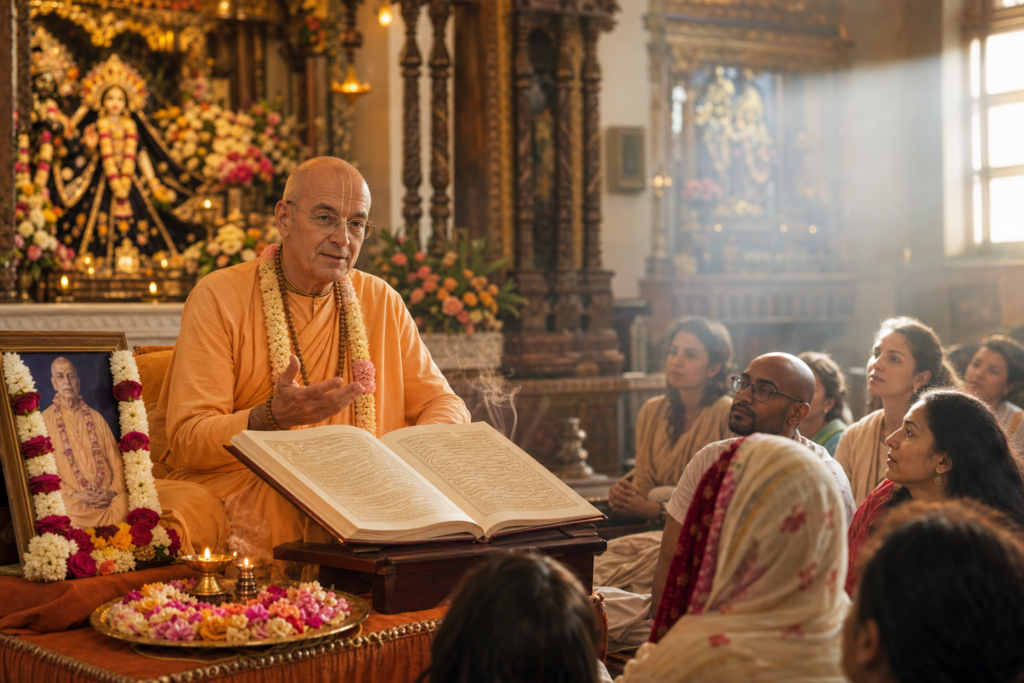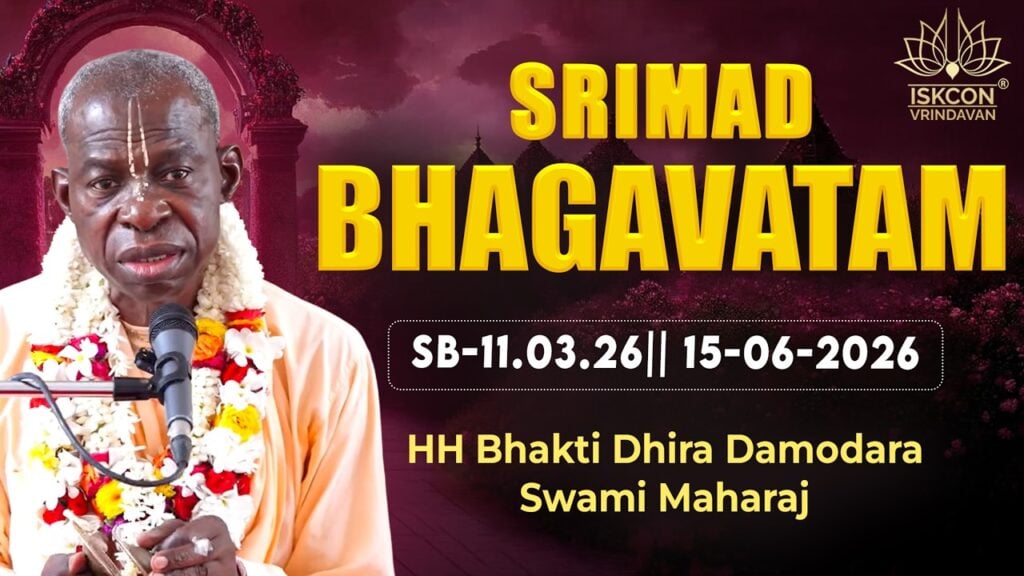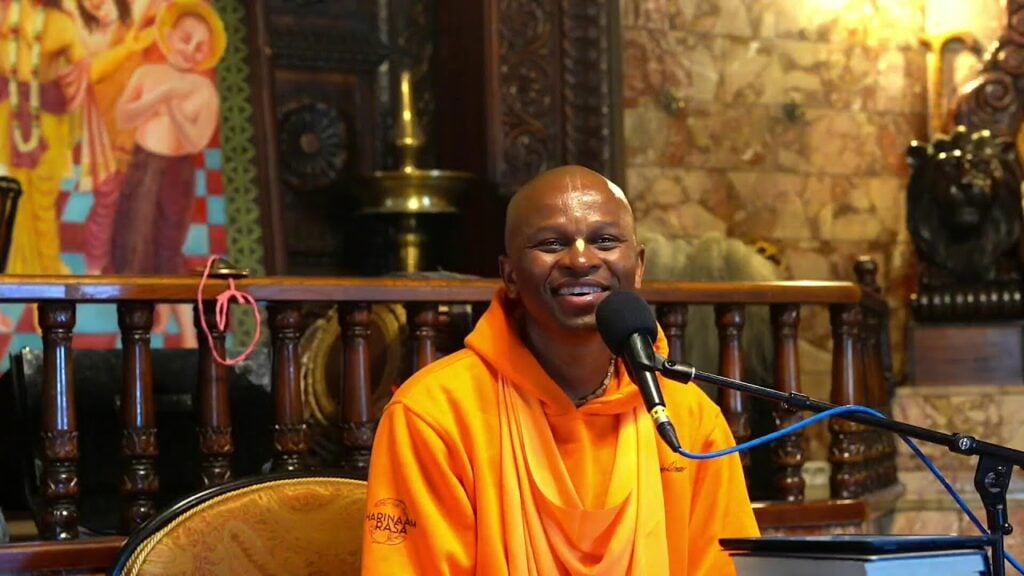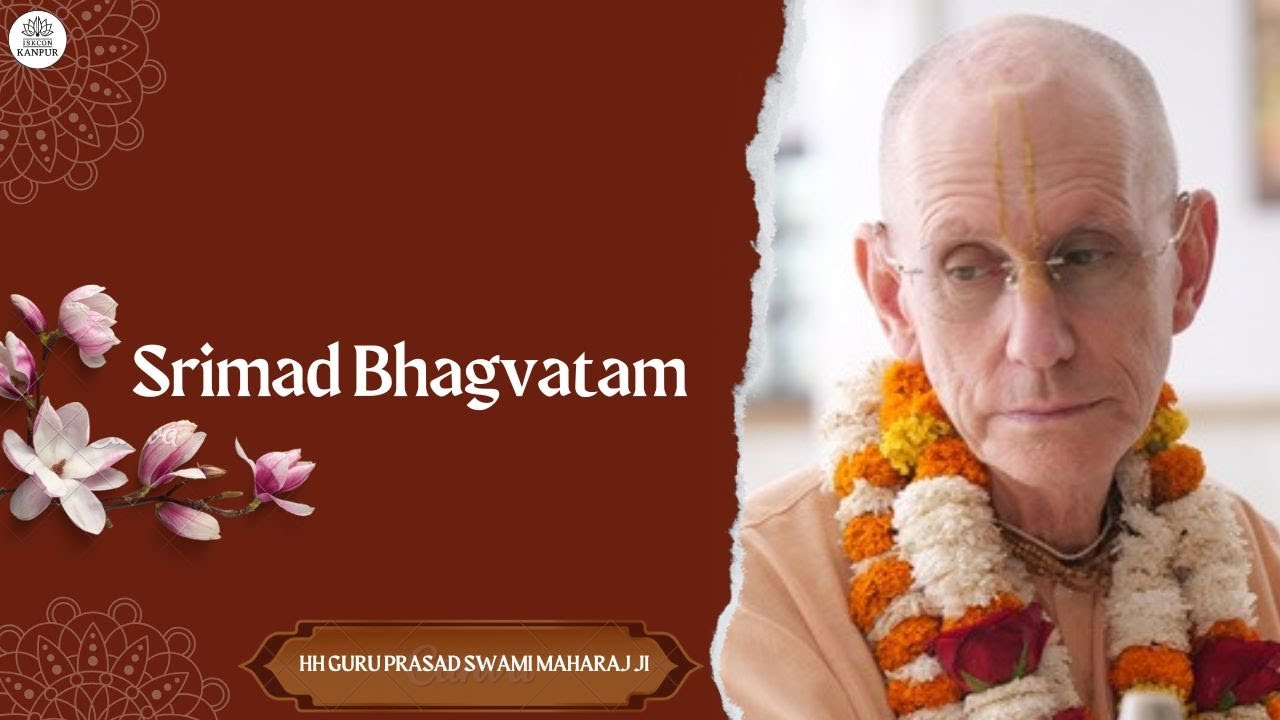
Drawing on the Srimad-Bhagavatam and the Gaudiya bhakti tradition, a recent discourse by HH Guru Prasad Swami at ISKCON Kanpur emphasized a central insight: in Kali-yuga, chanting the holy name of Krishna (nama-sankirtan) stands as the most accessible and exalted spiritual process. This practice is presented not merely as ritual, but as a comprehensive path to inner peace (shanti), liberation (moksha), and premapure love of the Divine.
The teaching underscores a refined devotional ethic: a true devotee does not primarily seek relief from suffering, but the privilege of lifelong sevaloving service to God and to all beings. Such an orientation transforms distress into dedication, aligning daily life with the Bhagavatam’s vision of devotion as both means and goal.
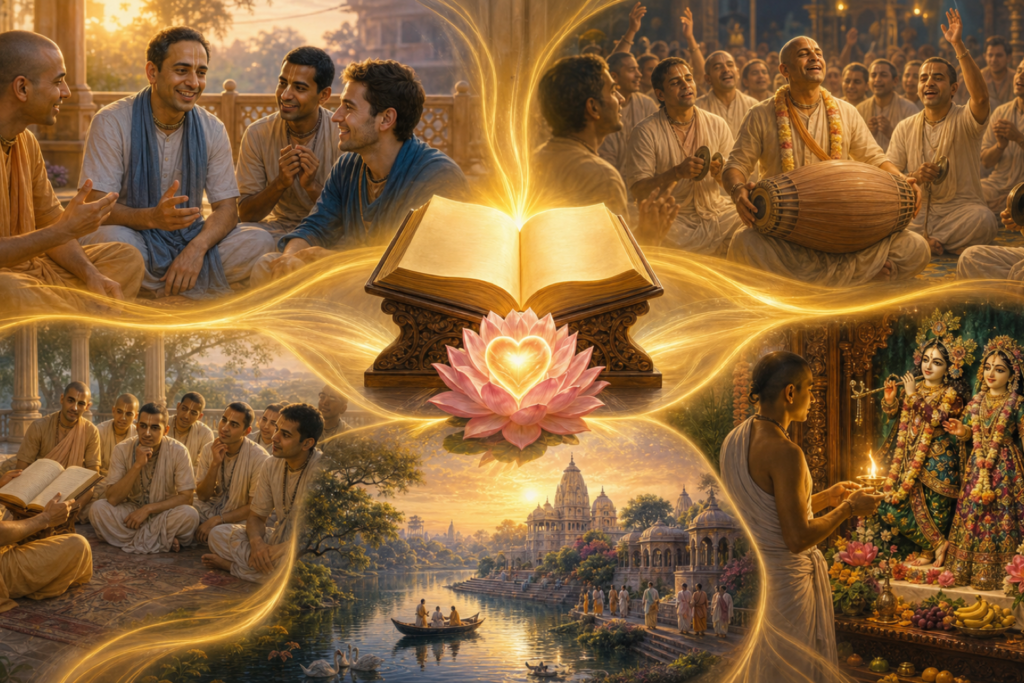
The simplicity of sankirtan is not simplistic; it integrates theology, practice, and community. Regular chanting attunes the mind, refines intention, and softens the heart, while group kirtan cultivates belonging and steady discipline. Observers in communities such as ISKCON Kanpur often report that collective chanting eases anxiety, nurtures compassion, and makes spiritual focus sustainable amidst contemporary pressures.
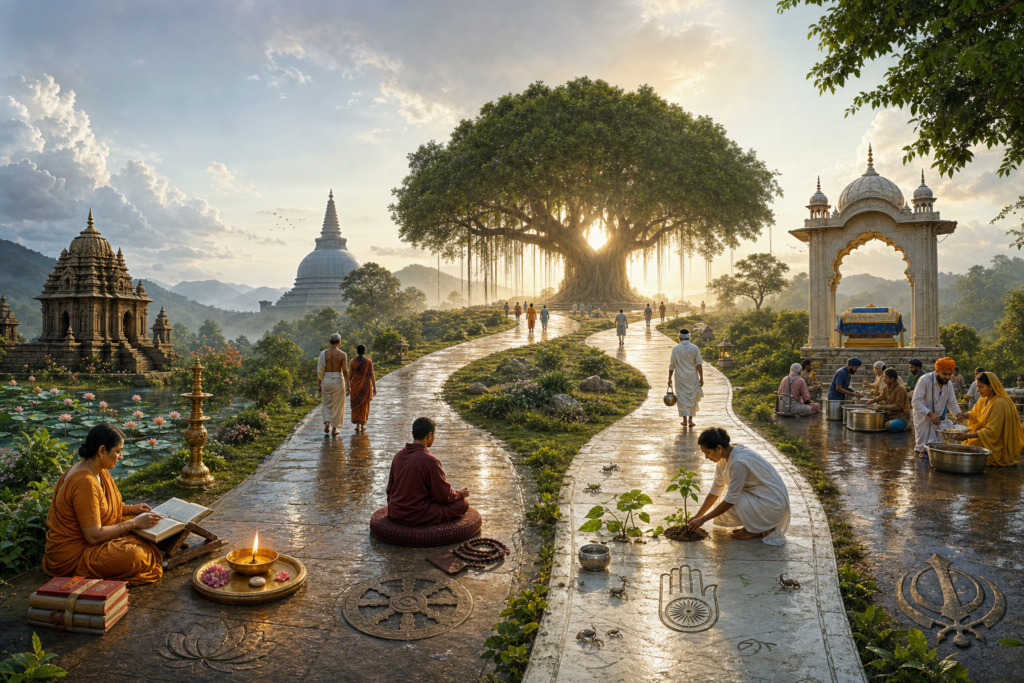
These insights harmonize with the broader unity of dharmic traditions. While centered here on Krishna-bhakti, the emphasis on the Divine Name resonates with Sikh Naam Simran and seva, with Buddhist mantra recitation and compassion (karuna), and with the Jain Namokar Mantra and ahimsa-inspired service. Across Hinduism, Buddhism, Jainism, and Sikhism, the shared movement toward inner purity, ethical living, and reverent remembrance affirms a common goal: awakening love and wisdom for the welfare of all.
Srimad-Bhagavatam presents nama-sankirtan as the yuga-dharma for Kali-yugasimple in practice yet profound in outcome. It does not demand elaborate prerequisites; rather, it invites steady engagement: mindful chanting, daily service, and cultivation of humility, gratitude, and kindness. This universality allows householders and monastics alike to participate meaningfully, making spiritual progress inclusive and practical.
In this framing, sankirtan becomes both contemplative and participatoryan inward purification and a social act of harmony. When approached with sincerity and respect for diverse paths, it strengthens unity in spiritual diversity and enriches the shared heritage of Sanatana Dharma. The message from ISKCON Kanpur thus speaks beyond sectarian lines, offering a bridge from personal devotion to collective well-being.
By highlighting chanting as a direct way to cultivate peace, liberation, and love, the discourse honors the Srimad-Bhagavatam’s ethos while encouraging interfaith respect among dharmic communities. Such practice-centered unity affirms that many streamsbhakti, mindfulness, mantra, and sevacan converge in a single ocean of compassion and truth.
Inspired by this post on Dandavats.