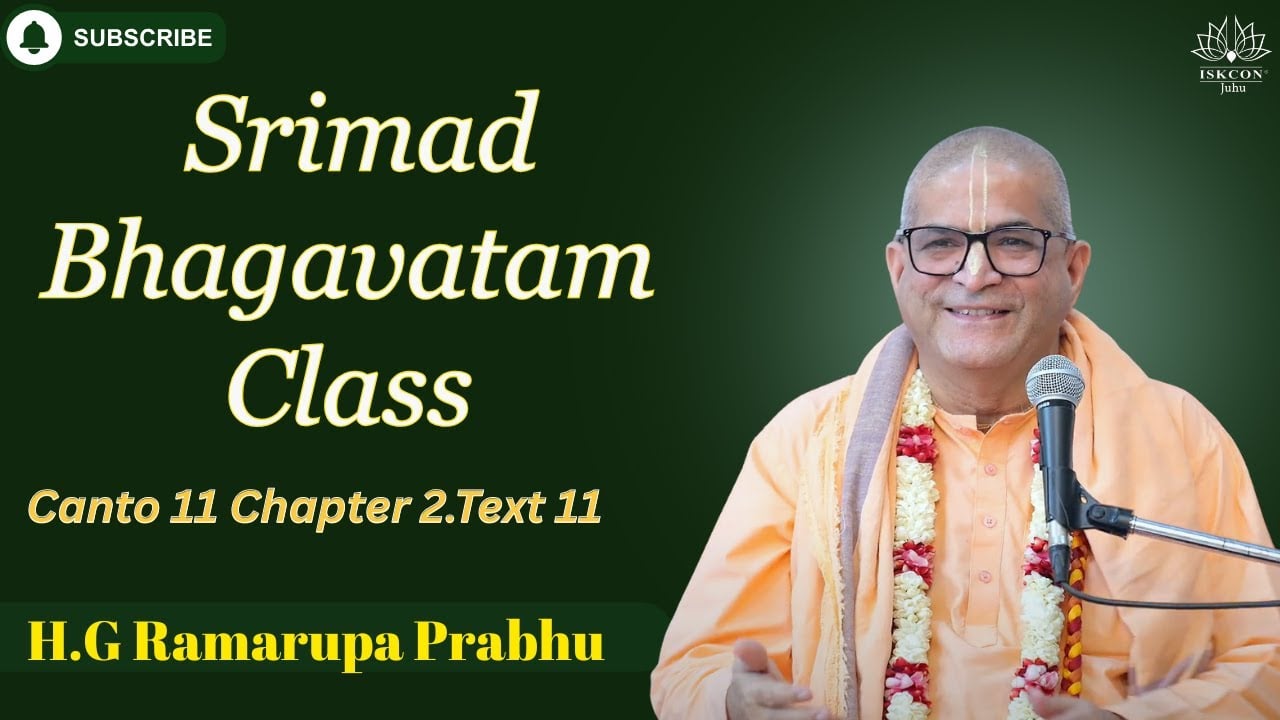
On 30 December 2025 at ISKCON Juhu, H.G. Ramarupa Prabhu presented a focused exposition on Srimad Bhagavatam, Canto 11, Chapter 2, verse 11 (11.2.11). The session situated the verse within the celebrated dialogue between Maharaja Nimi and the Nine Yogendras, while drawing supporting insights from the teachings of Narada Muni. The analysis emphasized how śāstric inquiry, especially questions about Krishna and devotional service (bhakti), refines understanding and anchors practice in scriptural wisdom.
The lecture highlighted a core principle of Vedic wisdom: sincere questions asked in a spirit of service constitute the highest use of intelligence. Such inquiry benefits the entire assemblyspeaker, questioner, and listenerby clarifying doctrine, deepening contemplation, and aligning daily conduct with the aims of devotion. In this way, satsanga becomes a shared laboratory of realization rather than a one-way transmission of information.
Within the Nimi–Navayogendra dialogue, questions function as gateways to discernment about the nature of bhakti, the qualities of a devotee, and the practical markers of spiritual progress. By carefully situating questions in scripture and tradition, the discussion model demonstrated how to connect timeless principles to contemporary challenges faced by practitionerswhether in household life, community service, or personal spiritual discipline.
Listeners often recognize, from experience, that a single well-formed question voiced in a sabha can resolve months of private doubt. When one participant asks how to cultivate steadiness in chanting, or how to transform routine seva into heartfelt devotion, others find immediate resonance. The collective relief and renewed motivation that follow such moments illustrate the triadic benefit: the speaker refines articulations of śāstra, the questioner receives practical guidance, and the audience gains shared clarity.
The lecture also situated this method of inquiry within a broader dharmic ethos. Hinduism, Buddhism, Jainism, and Sikhism all value respectful questioning that seeks truth with humility and compassion. The spirit of vichara in Hinduism, the disciplined examination found in Buddhist traditions, the anekantavada of Jainism that honors multiple perspectives, and Sikh sangat-vichaar together affirm that intelligent, service-oriented inquiry strengthens unity in spiritual diversity while preserving fidelity to each tradition’s scriptures.
Practical guidelines emerged clearly: frame questions with sincerity and respect; ground them in śruti–smṛti where possible; seek answers that enhance service (seva) rather than argument; and apply responses through steady practice. Hearing (śravaṇam), thoughtful reflection, and practical assimilation transform information into realization. Compassion, patience, and humility safeguard the atmosphere, ensuring that understanding grows without sectarian friction.
Key insights therefore include: devotional questions catalyze realization; inquiry conducted in community multiplies benefits; and the ethos of respectful questioning is a shared strength across dharmic traditions. By returning to Srimad Bhagavatam 11.2 and engaging in living dialogue, practitioners harmonize knowledge and action, deepen love for Krishna, and contribute to a culture of learning that is both rigorous and compassionate.
In sum, the ISKCON Juhu discourse by H.G. Ramarupa Prabhu modeled how scriptural study, guided inquiry, and communal reflection converge to advance bhakti. When questions are offered with devotion and answered with scriptural fidelity, understanding matures, relationships strengthen, and unity in spiritual diversity is naturally affirmed.
Inspired by this post on Dandavats.