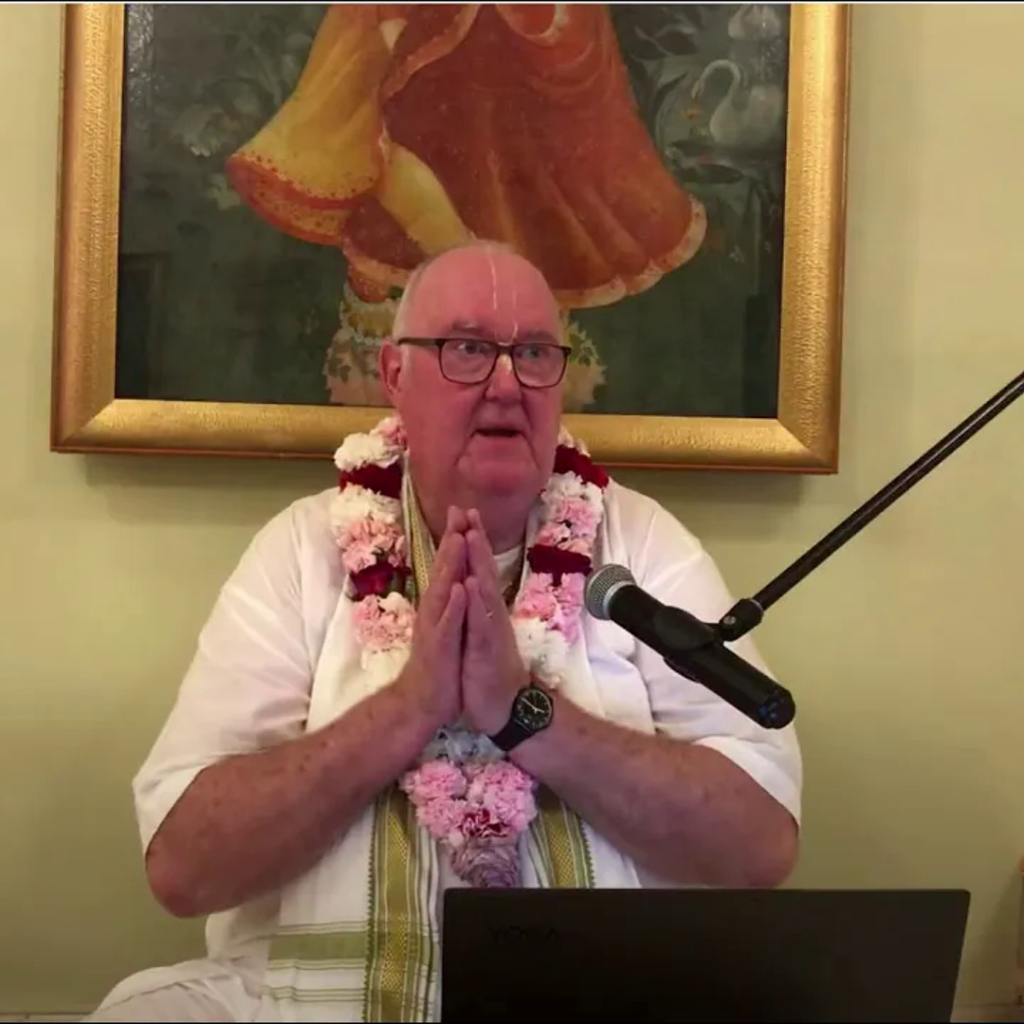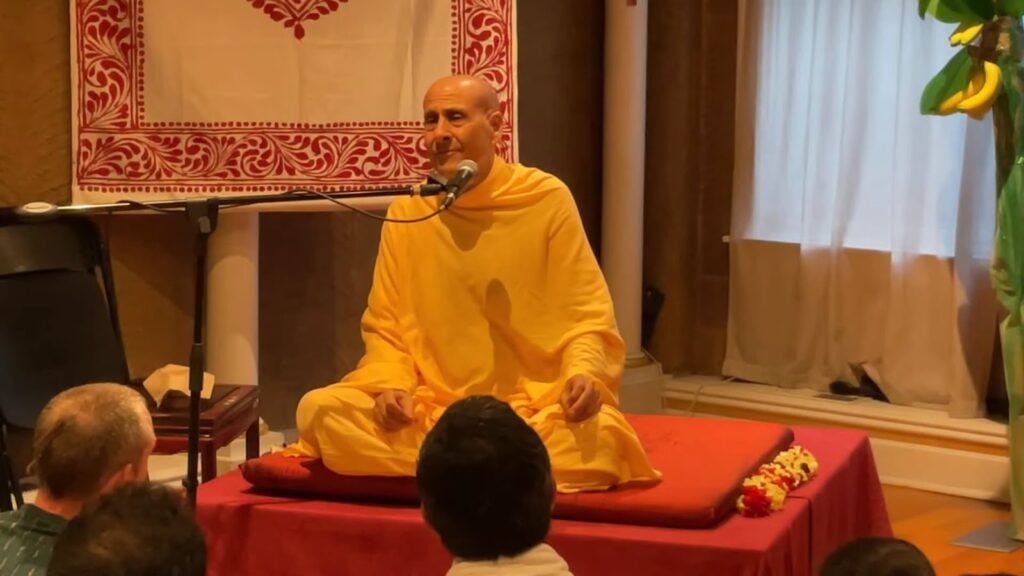
Presented in the context of “S.B 10.66.21-24 ~ Sriman Anuttama Dasa acbsp (15/5/2026)” and shared via Villa Vrindavana ISKCON Live“LIVE streaming dal Tempio di SRI SRI RADHA❤︎VRAJASUNDARA (Villa Vrindavana – ISKCON Firenze)”this analysis examines Srimad Bhagavatam 10.66.21–24 with a focus on historical narrative, ethical reasoning, and the shared philosophical commitments of the broader dharmic family. The verses occur within the account of Paundraka Vasudeva’s imposture, the ensuing conflict with Śrī Krishna, and the political-religious fallout in Kāśī (Vārāṇasī). Across commentarial traditions, this episode is consistently framed as a study in the dangers of false ego (ahaṅkāra), the responsibilities of rulers (rājadharma), and the karmic consequences of weaponizing ritual for harm (abhicāra).
Textually, the chapter (Bhāgavata Purāṇa 10.66) situates Paundraka Vasudevaan ambitious ruler who publicly claimed Krishna’s identityas the catalyst of adharma. Following confrontation and defeat, the political ally of Kāśī is eliminated, and verses 21–24 trace a retaliatory turn in Kāśī: the royal successor, in grief and anger, enlists brahmin specialists to perform an abhicāra rite, generating a kṛtyā (a conjured destructive agency) intended to strike Dvārakā. The narrative then depicts the Sudarśana (Sudarshana) ChakraKrishna’s disc, emblematic of divine discernmentneutralizing the conjuration, reversing its trajectory, and devastating the aggression’s source. The city of Kāśī faces a conflagration, dramatizing a classic Purāṇic lesson: violence and deceit, once set in motion, rebound upon their originators.
A close reading of 10.66.21–24 reveals a compact moral architecture. First, rage and humiliation tempt leadership toward ritualized violence. Second, an aggressor’s means (abhicāra) reveals motive (dveṣa, hostility), which in turn defines karmic outcome. Third, Sudarśana, literally “good vision” or “right-seeing,” functions not only as a weapon but as a theological cipher for enlightened discrimination (viveka) that dissolves delusion (avidyā). In many bhakti commentaries, Sudarśana is read as the luminous force that clarifies truth, turns false claims inside out, and protects society by restoring dharmic order.
Ethically, the Paundraka episode interrogates the psychology of imposture. Paundraka’s claim to be “Vāsudeva” is a paradigmatic case of inflated identity: attempting to appropriate sacred insignia without the inner realization those symbols signify. In Vedāntic vocabulary, this is ahaṅkāra untethered from tattva (reality), an attachment to form (liṅga) without substance (svarūpa). The Bhāgavata’s didactic thrust is not sectarian triumphalism but a sober warning: conflating authority with costumedivine status with external regaliabreeds harm for the individual and disorder for the polity.
Read through the prism of comparative dharma, this critique of false identity strongly resonates beyond Vaiṣṇava theology. Buddhist thought on anattā (non-self) delineates the peril of rigid, performative ego-identity; Jain anekāntavāda (the many-sidedness of truth) counsels epistemic humility against absolutist self-claims; Sikh teachings emphasize nimratā (humility) and honest labor (kirat karni) over hollow spiritual posturing. These convergences underline a pan-dharmic ethic: accurate self-understanding and intention (cetanā) matter more than outward signs; power without inner truth corrodes persons and institutions alike.
The polity of Kāśī, as portrayed in these verses, dramatizes lessons in rājadharma. Legitimate rule cannot rest on ritual intimidation or magical coercion. Smṛti traditions situate the ruler as guardian of lokasaṅgraha (the world’s welfare) through justice, restraint, and truth. By commissioning a kṛtyā assault, the royal successor mistakes fear for strength and spectacle for statecraft, confusing esoteric know-how with ethical right. The Bhāgavata exposes this category error: technologies of power devoid of dharma boomerang.
Ritual theory in the Indic sphere recognizes that praxis is ethically inflected. Abhicāra belongs to the taxonomy of rites explicitly oriented toward harm; its presence in scripture is descriptive, not prescriptive. Across dharmic traditions, intention is axiomatic: the Gītā’s yoga of action, Buddhist assessments of wholesome/unwholesome volition, Jain vows of ahiṃsā and aparigraha, and Sikh seva-centered living all insist that methods and motives align with compassion and truth. Thus the kṛtyā of 10.66 functions narratively as the embodiment of mal-intent; Sudarśana’s counteraction symbolizes the primacy of clear vision and ethical order over occult power.
Theologically, Sudarśana may be read at three levels. At the narrative level, it is the divine discus that protects Dvārakā. At the symbolic level, su-darśana is right-seeing, the awakened intelligence (buddhi) that cuts through delusion and re-establishes equilibrium. At the contemplative level, it is the inward instrument of viveka-vairāgya (discrimination and dispassion), indispensable in bhakti-sādhana for aligning love with truth. These layers allow the episode to instruct practitioners not only about history but about the interior work of spiritual clarity.
Psychologically, the arc from imposture to catastrophe models a common human pattern: identity inflation, defensive aggression, and eventual collapse. Contemporary analogues aboundbranding that outpaces substance, performative piety, and the instrumentalization of sacred idioms for political theater. By highlighting how symbolic appropriation fails when divorced from realized meaning, the text invites rigorous self-audit: Where do role, costume, or slogan substitute for inner transformation?
Practical responses emerge naturally from a dharmic unity perspective. From bhakti-yoga: sādhana that steadies the mind (japa, kīrtana), service that softens ego (seva), and śāstra-reflection that clarifies purpose. From Buddhist praxis: mindfulness (sati) that tracks reactive impulses before they harden into wrongdoing. From Jain discipline: pratikramaṇa (ethical review) to course-correct harmful tendencies. From Sikh tradition: simran and seva to align remembrance with social responsibility. Each stream converges on the same correctivehumility, clarity, and compassionate action.
Community experience at Villa Vrindavana often corroborates these insights in lived form. Participants describe the atmosphere of the temple during pravachansacred sound moving through marble halls, the serene presence of the Deities, and a sense of shared aspirationas fertile ground for interior clarity. Hearing 10.66.21–24 in that setting tends to evoke both ethical sobriety and devotional confidence: sobriety about the consequences of untruth, confidence that sincere practice is protected by truth-centered intelligencewhat the narrative names Sudarśana.
Historically, acbsp appended to Sriman Anuttama Dasa’s name signals disciplic linkage to A.C. Bhaktivedanta Swami Prabhupāda, underscoring a paramparā emphasis on fidelity to text and application. Within such a line, these verses are neither sectarian polemic nor antiquarian curiosity; they are working principles for civic and spiritual life. The instruction is exacting yet inclusive: cultivate right-seeing, renounce pretension, align power with ethics, and prefer transformation to display. When interpreted through a dharmic-unity lens, the same principles remain intelligible and actionable across Hindu, Buddhist, Jain, and Sikh contexts.
In sum, Srimad Bhagavatam 10.66.21–24 advances a rigorous thesis. False ego distorts judgment; misusing sacred means for harmful ends accelerates downfall; and only su-darśanaclear, ethical visionsustains persons and polities. The narrative is memorable for its dramatic imagery, yet its deepest contribution is methodological: spiritual life, social order, and governance thrive when intention, means, and truth are integrated. Read alongside the wider dharmic canon, these verses call for an unpretentious search for reality and a compassionate exercise of power.
Inspired by this post on Dandavats.