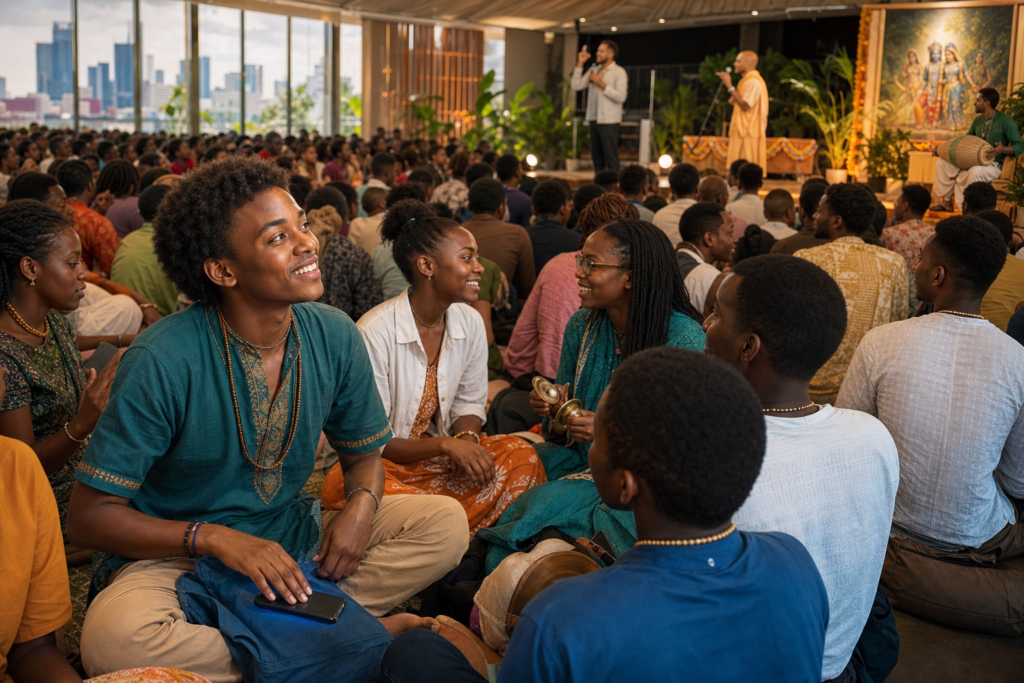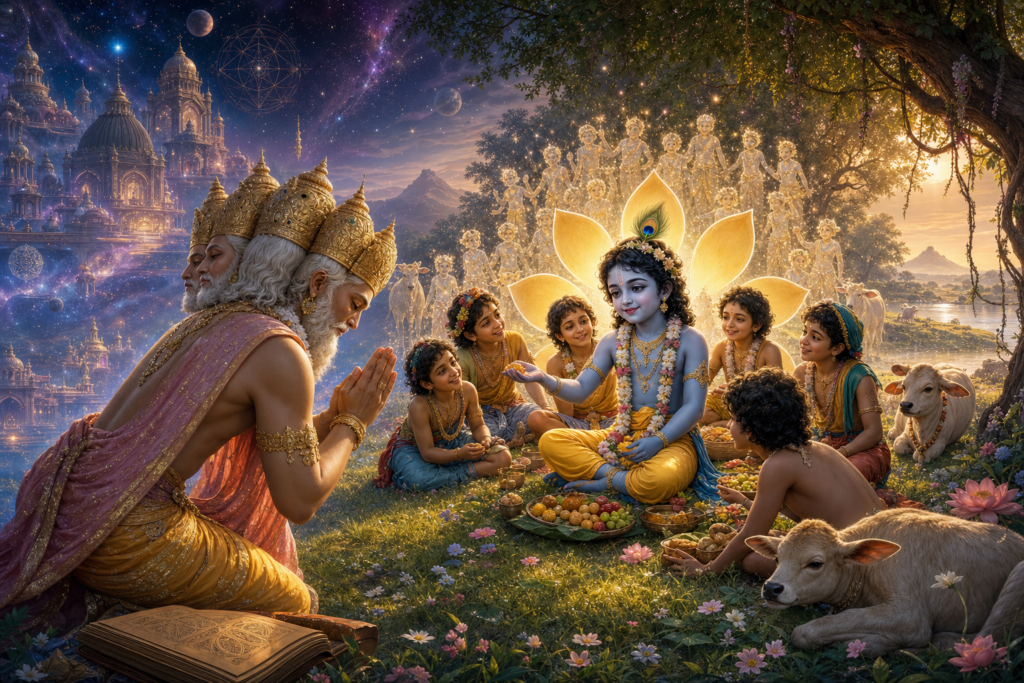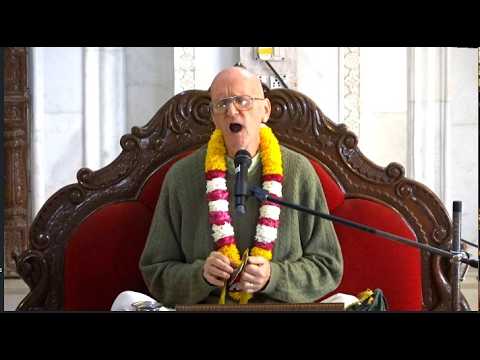
Delivered at ISKCON Ujjain on 10 February 2026, the lecture by HG Gaurashakti Prabhu examines Srimad Bhagavatam 1.10.26–27, clarifying that Krishna’s appearance and activities are transcendental. The discussion underscores that Krishna does not take birth like an ordinary conditioned soul; rather, He appears and disappears by His own internal potency, a principle that affirms divine agency beyond material causality.
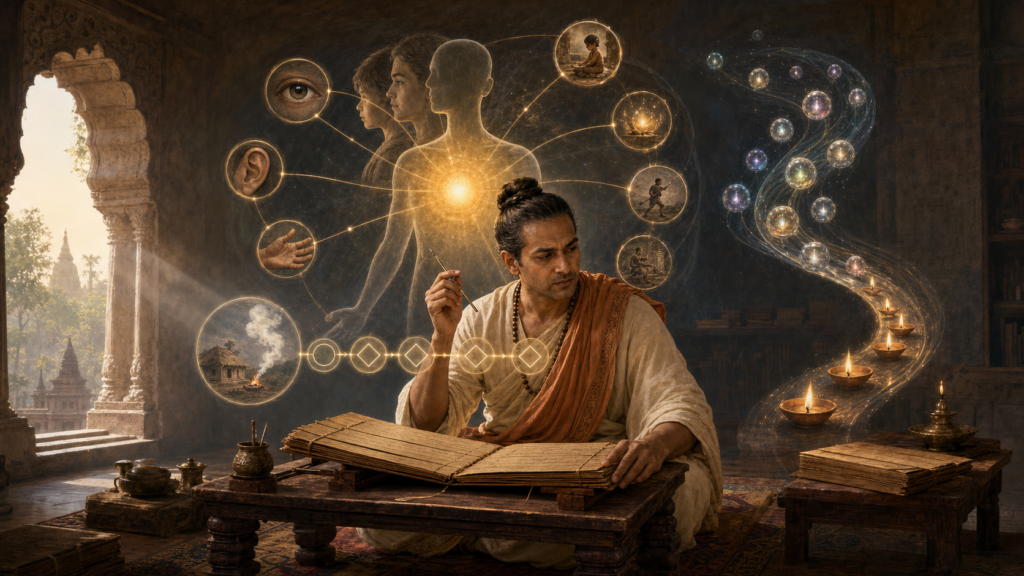
A striking analogy anchors the explanation: just as the sun appears to rise and set without being born or dying, Krishna’s presence remains constant despite visible manifestations in the world. This analogy refines understanding by distinguishing empirical perception from ontological reality, reinforcing the Vedic insight that the Supreme remains eternally existent while periodic appearances serve instructive and compassionate purposes.
The theological implication is direct and liberating. When the truth of Krishna’s transcendental birth and pastimes is understood in tattva, devotion matures and material bondage loosens. Bhagavad-gita echoes this with precision: “janma karma ca me divyam evam yo vetti tattvataḥ; tyaktvā dehaṁ punar janma naiti mām eti so ’rjuna.” The lecture emphasizes that such realization inspires humility, steadiness in practice, and gratitude for the grace that guides ethical and spiritual life within Sanatana Dharma.
Listeners resonated with the sun metaphor in practical, everyday terms. The daily rhythm of dawn and dusk illustrates that apparent absence does not negate presence; it encourages steady sadhana irrespective of shifting moods or circumstances. In this light, the discourse connects Vedic wisdom with lived experience, affirming that consistent remembrance of Krishna illumines decision-making, relationships, and responsibilities.
The lecture also advances a unifying perspective across dharmic traditions. The motif of an ever-present, unoriginated truth aligns with core insights in Hinduism, Buddhism, Jainism, and Sikhismsuch as the recognition of an ultimate reality beyond birth and death, the aspiration for freedom from conditioning, reverence for compassion, and dedication to dharma. This shared orientation fosters inter-traditional respect, dialogue, and harmony without collapsing distinctive doctrines.
Practical reflections follow naturally: attentive hearing (śravaṇa), considered reflection (manana), congregational chanting (kīrtana), and compassionate service (seva) provide accessible means to internalize the message. By engaging these disciplines with sincerity, practitioners cultivate clarity and resilience, transforming routine activities into purposeful expressions of bhakti and strengthening community bonds.
In conclusion, the exposition of Srimad Bhagavatam 1.10.26–27 presents Krishna’s divine appearance as an invitation to live with insight and courage. Like the sun that steadily illumines the world, the Supreme guides those who turn the inner gaze toward transcendence. The result is a life oriented by wisdom, responsibility, and joyqualities that enrich spiritual practice and advance unity within the wider dharmic family.
Inspired by this post on Dandavats.