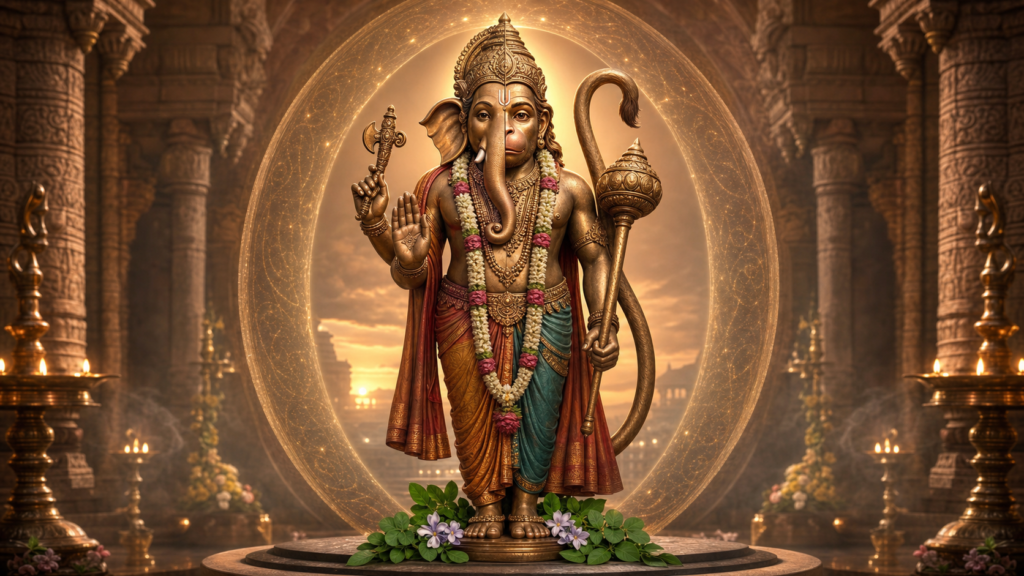
Tulasi Puja, the worship of the sacred Tulasi tree, is honoured across Hindu households throughout the year and observed with special devotion during Kartik month and Shravan month. The Mahatmyam of this practice, preserved in various Puranas, highlights Tulasi as a living symbol of bhakti, purity, and household harmony, guiding daily life toward sattva and spiritual steadiness.
Across the Padma Purana, Skanda Purana, Garuda Purana, Narada Purana, and Brahma Vaivarta Purana, Tulasi is exalted as Vishnu-priya and identified with Vrinda. These texts extol planting, nurturing, and worshipping Tulasi; offering Tulasi leaves in Vishnu puja; and integrating japa, deepa, and pradakshina around the Tulasi vrindavan as acts that refine character, deepen devotion, and accrue punya.
In daily observance, families traditionally light a deepa at dawn and dusk, offer arghya, perform pradakshina, and engage in japa near Tulasi. During Kartik month, these practices intensify, aligning with vrata, simple living, and acts of service. The Puranas frame such worship not merely as ritual performance but as cultivation of shraddha, ahimsa, and inner clarity.
Skanda and Padma traditions particularly emphasize the sanctity of Tulasi leaves in Vaishnava worship, noting that mindful offerings to Vishnu, accompanied by stotras and slokas, uplift one’s orientation toward dharma. By situating devotion within the home, Tulasi Puja transforms domestic spaces into loci of learning, reverence, and peaceful conduct.
Many households recount the quiet assurance that arises from lighting a lamp by the Tulasi vrindavan each evening: a gentle pause amid daily tasks that invites reflection and shared rhythm. While the observance has often been led by Hindu women as a daily samskara, participation today is inclusive and intergenerational, reinforcing family bonds and communal cohesion.
The season of Kartik especially foregrounds Tulasi’s role in elevating bhakti through deepa-dana, vrata, and the cherished Tulasi Vivah. In these observances, scriptural narratives present Tulasi as a bridge to steady devotion, inviting practitioners to unify external worship with inner transformation.
Viewed ethically and ecologically, caring for Tulasi nurtures reverence for life and the environment. This sensibility resonates across Dharmic traditionsHinduism, Buddhism, Jainism, and Sikhismthrough shared values of compassion, restraint, mindful living, and stewardship. In this way, Tulasi Puja exemplifies a unifying Dharmic ethos, affirming harmony with nature and respect for diverse spiritual paths.
The Mahatmyam described in the Puranas highlights accessible yet profound disciplines: watering Tulasi with care, maintaining cleanliness, avoiding excess, and offering leaves in worship with attention and gratitude. The texts repeatedly connect such acts with purification of intent and alignment with Sanatana Dharma’s ideals of self-discipline and service.
Practical observance benefits from placing Tulasi where it receives sunlight, maintaining a clean base (vrindavan), and following local parampara for plucking leaves and festival-day practices. As Kartik and Shravan invite heightened devotion, practitioners often add daily stotras, quiet japa near Tulasi, and evening lamps to deepen concentration and serenity.
In essence, Tulasi Puja stands as a time-tested spiritual discipline: accessible, home-centered, and scripturally grounded. Rooted in the Puranas yet relevant to contemporary life, its Mahatmyam encourages devotion to Vishnu, ecological reverence, and domestic harmonyoffering a steady pathway toward clarity, compassion, and unity within the broader Dharmic family.
Inspired by this post on Hindu Pad.