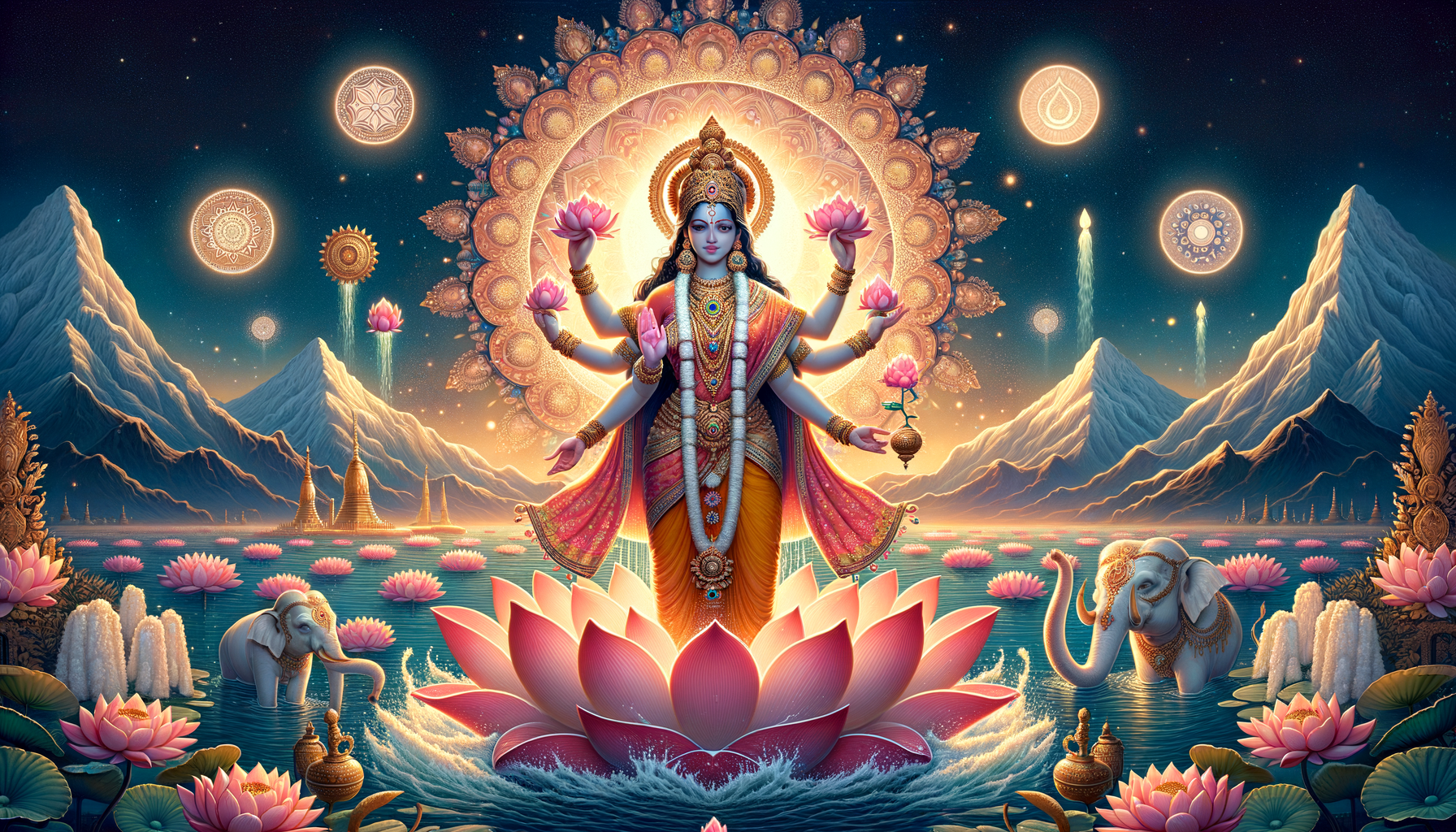
The Brahma Purana preserves a revered account of the manifestation of Maa Lakshmi, narrated as Bhishma inquires of the sage Pulastya about the origins of the goddess of prosperity and grace. The narrative begins with the devas, having been defeated by the asuras, approaching Lord Vishnu for guidance. In response, Lord Vishnu advises a profound and collaborative undertaking: the churning of the Kshira Sagara, the Ocean of Milka cosmic effort that would restore balance, vitality, and righteous order.
This Samudra Manthan unfolds with Mount Mandara serving as the churning rod and the serpent Vasuki as the rope, symbolizing the disciplined alignment of opposing forces. From the churned ocean emerge many treasures and auspicious beings, culminating in the radiant appearance of SriGoddess Lakshmiseated upon a lotus (Padma), the emblem of purity and abundance untouched by turmoil. In a gesture of cosmic harmony, Lakshmi chooses Lord Vishnu, signifying that enduring prosperity rests upon dharma, order, and compassionate guardianship.
Read as sacred history and symbolism, the episode articulates that true wealth (Lakshmi) arises when effort is guided by wisdom and ethics. The devas and asuras together represent the tension of virtues and impulses within every community and individual; the ocean signifies consciousness; and the churning stands for sustained sadhana, collective discipline, and patient cooperation. In this light, the story advances a universal insight: prosperity is not mere accumulation but the fruit of right intention, shared responsibility, and moral clarity.
Devotees and communities frequently draw strength from this account in times of uncertainty, seeing in Maa Lakshmi’s manifestation a reminder that hope, resilience, and balanced action nurture lasting well-being. Rituals such as Lakshmi Puja during Deepavali echo the same teachinginviting purity, generosity (dāna), and clarity (sattva) into homes and public life. This devotional culture aligns with the broader Dharmic ethos across Hinduism, Buddhism, Jainism, and Sikhism, which together elevate compassion, self-discipline, right livelihood, and seva as the pathways to collective flourishing.
Ethically, the narrative encourages practices that welcome Lakshmi: truthfulness (satya), non-harm (ahimsa), self-restraint, and mindful stewardship of resources. In daily life, this translates into fair dealings, gratitude, and community servicehabits that harmonize material success with spiritual maturity. When prosperity is approached as a sacred trust rather than a private prize, it becomes a force for cohesion, dignity, and social uplift.
The Brahma Purana’s portrayal of Lakshmi’s emergence thus functions as both sacred memory and practical guidance. It affirms that when human effort aligns with dharma and the protection of all beings, Sri naturally abides. In honoring Maa Lakshmi, traditions across the Dharmic spectrum converge on a shared vision: prosperity anchored in virtue, sustained by cooperation, and dedicated to the common good.
Inspired by this post on Hindu Pad.