
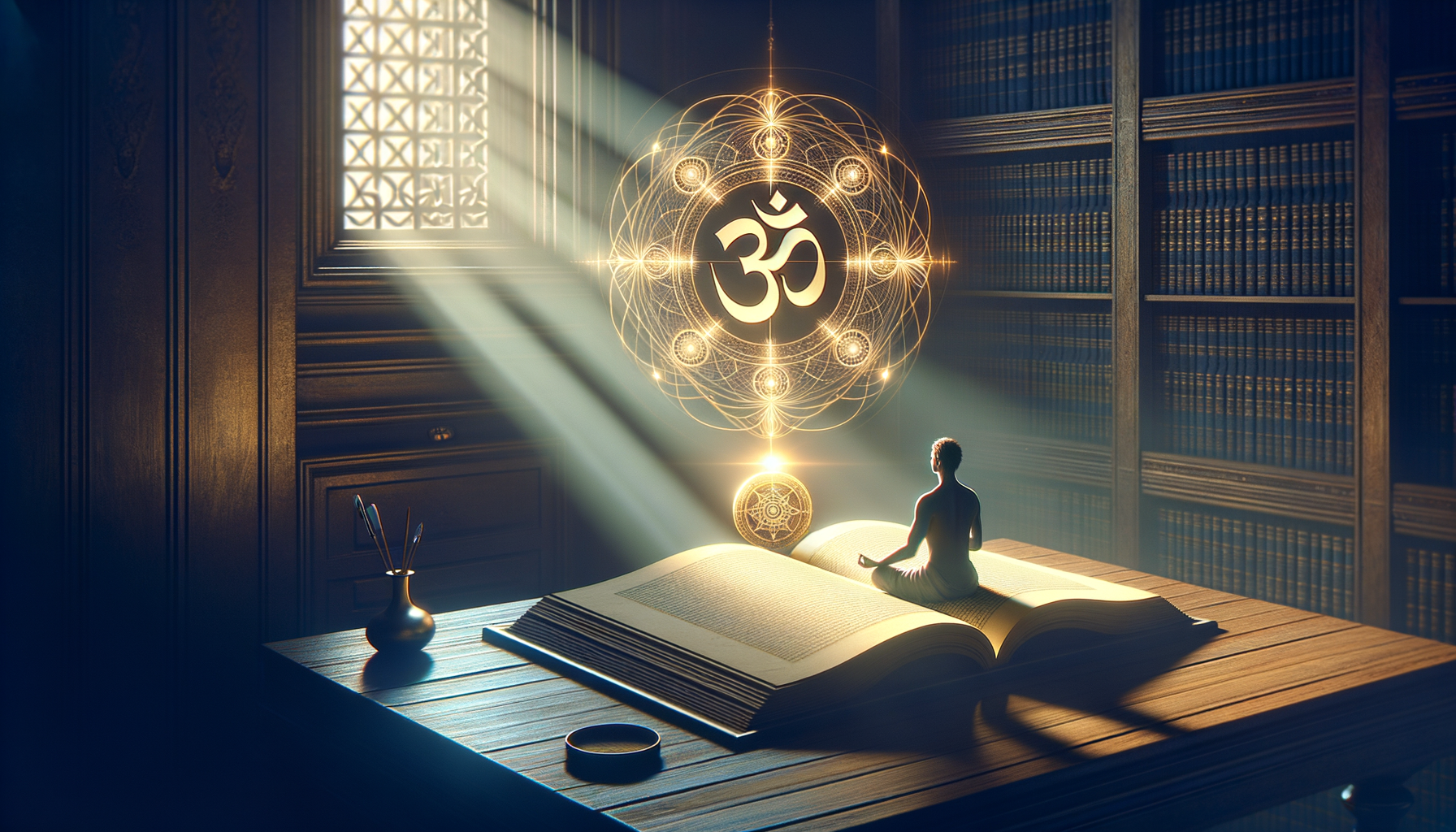
The Panchadasi, composed by Sage Vidyaranya in the 14th century CE, is a landmark of Advaita Vedanta, comprising 1,571 verses across fifteen chapters. As the pontiff of the Sringeri Sharada Peetham, Vidyaranya synthesizes rigorous metaphysics with contemplative practice, offering a comprehensive roadmap from inquiry to realization. Within this corpus, the fifth chapterMahavakya Vivekastands out for its precise analysis of the Upanishadic “great sentences” (mahavakyas) and their role in revealing non-dual reality.
Mahavakya Viveka (“Discernment of the Great Sentences”) examines how declarations such as “Prajnanam Brahma,” “Tat tvam asi,” “Aham Brahmasmi,” and “Ayam Atma Brahma” function as direct means of knowledge (pramana) for the identity of Atman and Brahman. Rather than resting at a purely textual level, the chapter demonstrates how these Upanishadic mahavakyas, when properly interpreted, remove ignorance (avidya) and unveil the substratum of consciousness that is self-luminous and ever-present.
In terms of content, the chapter explicates the interpretive methods that reconcile apparent differences between the individual self (tvam) and the Absolute (tat). Vidyaranya clarifies the use of primary meaning (abhidha) and implied meaning (lakshana), culminating in the bhaga-tyaga-lakshana (a method of “retaining the essential and discarding the limiting adjuncts”). By negating upadhissuch as body, mind, and the cosmic conditioning of mayathe teachings resolve “Tat tvam asi” without contradiction, revealing a non-dual, partless reality that is not an outcome of synthesis but a recognition of what always is.
Methodologically, Mahavakya Viveka aligns with the Advaita discipline of sravana (systematic listening to the teaching), manana (rational reflection), and nididhyasana (deep contemplative assimilation). The chapter reinforces the Advaitic principle that knowledgenot actionis the direct means to moksha. It also gestures to the traditional Advaita approach of adhyaropa-apavada (provisional superimposition followed by methodical negation), a pedagogical strategy that gradually refines the seeker’s understanding until only pure awareness remains self-evident.
The teachings of this chapter emphasize the identity of the individual self with Brahman, the ultimate reality. By dissolving superimpositions through inquiry and contemplation, the practitioner recognizes consciousness as non-objectifiable and self-revealing. Ethically and existentially, this recognition matures into equanimity, compassion, and inner freedomqualities that Advaita Vedanta regards as the natural fragrance of Self-knowledge rather than imposed moral obligations.
In practical terms, readers and practitioners often find that sustained engagement with the mahavakyas stabilizes attention and clarifies lived experience. Study guided by a competent teacher, followed by reflective analysis and contemplative practice, can translate lofty principles into steady insight. Many report that quiet moments of non-reactive awarenessduring meditation, ritual, or daily workbecome intuitive confirmations of the text’s central claim: the Self is ever free, and realization is a matter of clear seeing.
Mahavakya Viveka also contributes to a broader dharmic conversation. While remaining faithful to Advaita Vedanta and Hindu scriptures, its non-dual insight resonates with the wider ethos of the dharmic familyHinduism, Buddhism, Jainism, and Sikhismin its shared emphasis on inner freedom, humility of perspective, and the unity underlying diversity. This alignment nurtures inter-traditional harmony: Jain anekantavada encourages intellectual openness, Buddhist analyses of non-clinging illuminate the limits of conceptual fixation, and the Sikh affirmation of Ik Onkar underscores the reality of oneness. Read in this light, Vidyaranya’s inquiry supports unity in spiritual diversity without erasing doctrinal distinctions.
For students of Hindu scriptures and comparative philosophy alike, the chapter’s importance is threefold. Conceptually, it offers a precise framework for understanding the Upanishadic revelations. Practically, it provides methodologies that help seekers convert knowledge into lived clarity. Culturally, it deepens a shared civilizational vocabulary that supports mutual respect and unity across dharmic traditions.
In summary, the fifth chapter of PanchadasiMahavakya Vivekaserves as a proven, textually grounded guide to non-dual realization. By uniting scholastic rigor with contemplative depth, it helps readers discover how the “great sentences” function as direct pointers to what cannot be objectified: pure awareness. Its insights remain timely, offering a steady compass for spiritual growth, ethical poise, and inter-traditional harmony in contemporary life.











