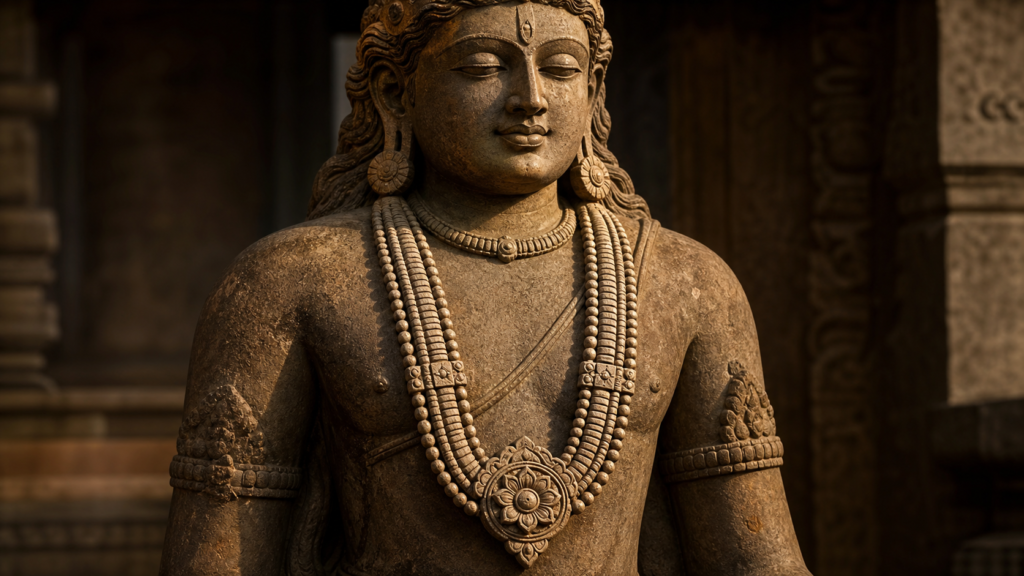
Vanara General Rambha is remembered in certain regional and popular retellings of the Ramayana as a lion-hearted commander whose presence unsettled the defenders of Lanka. Within the vast tapestry of this epic and its many living traditions, such a figure is evoked to embody courage, discipline, and unwavering commitment to dharma during Sri Rama’s righteous war against Ravana.
From a textual perspective, the Valmiki Ramayana does not prominently enumerate a Vanara general named Rambha among the principal leaders, where names such as Hanuman, Sugriva, Angada, Nala, and Nila are well attested. Yet, across the plural landscape of Ramayana literature and oral lore, especially in regional narrations and folk ballads, the roster of the vanara army often expands to include additional exemplars of valor. In that broader cultural memory, Rambha functions as an archetype of the devoted warrior aligned with the cause of righteousness.
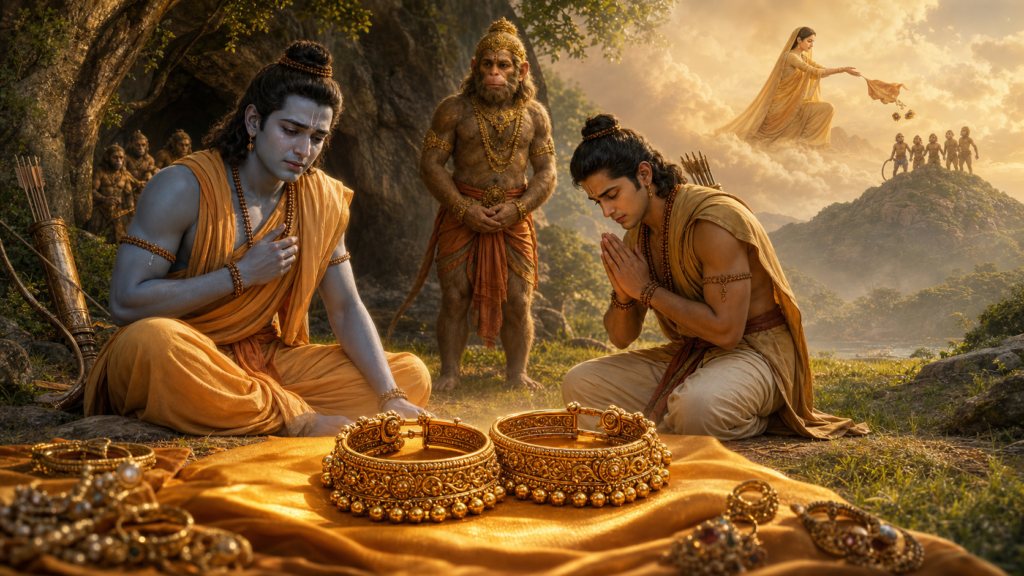
Placed alongside renowned allies of Sri Rama, Rambha is portrayed as a commander who inspired cohesion and fearlessness among vanara ranks. The image of a steadfast leader coordinating with Hanuman and other captains to breach the defenses of Lanka reinforces core epic themes: strategic clarity, moral purpose, and the primacy of duty in the face of adversity. Even where explicit canonical citation is debated, the narrative role attributed to Rambha highlights how communities use exemplars to teach enduring virtues.
Symbolically, Rambha represents kshatra in the service of dharma, aligning martial strength with ethical restraint in a Dharma-Yuddha. This alignment reflects the Ramayana’s moral center, where victory is meaningful only when attained through just means. In this light, the fall of Lanka is not framed as mere conquest, but as the restoration of moral order against Ravana’s adharma.
The resonance of such a figure extends across dharmic traditions. The commitment to righteousness and selfless service reflects values cherished in Hindu thought, while the emphasis on inner discipline and compassion echoes the Buddhist pursuit of dhamma. Jain reflections on self-mastery and non-violence remind that true victory is over the passions that cloud judgment, and Sikh teachings on dharam yudh underscore the ethical responsibilities of strength. Read together, these perspectives affirm unity in spiritual plurality and a shared reverence for virtue.
For many readers, encountering a less familiar name within the Ramayana tradition becomes an invitation to revisit the epic with fresh attention. Discovering figures like Rambha can deepen appreciation for how narratives evolve as they are retold, sung, and enacted. That living quality is precisely what has allowed the Ramayana to guide communities across centuries, cultures, and languages.
Scholarly care remains essential. Variations between the Valmiki Ramayana, Kamba Ramayanam, Ramcharitmanas, and regional kathas demonstrate how different milieus highlight distinct virtues and exemplars. While the specific attestation of Rambha varies, the educational function of such characters is clear: they teach courage, fidelity, and the disciplined pursuit of justice within and beyond the battlefield of Lanka.
In sum, Vanara General Rambha stands as a concise symbol of the Ramayana’s ethical teachings. Whether read as a historical name within certain retellings or as an archetype drawn from the epic’s moral imagination, the figure reinforces a unifying message: strength guided by dharma safeguards communities, uplifts the vulnerable, and forges harmony among the diverse paths of the dharmic family.
Inspired by this post on Hindu Blog.