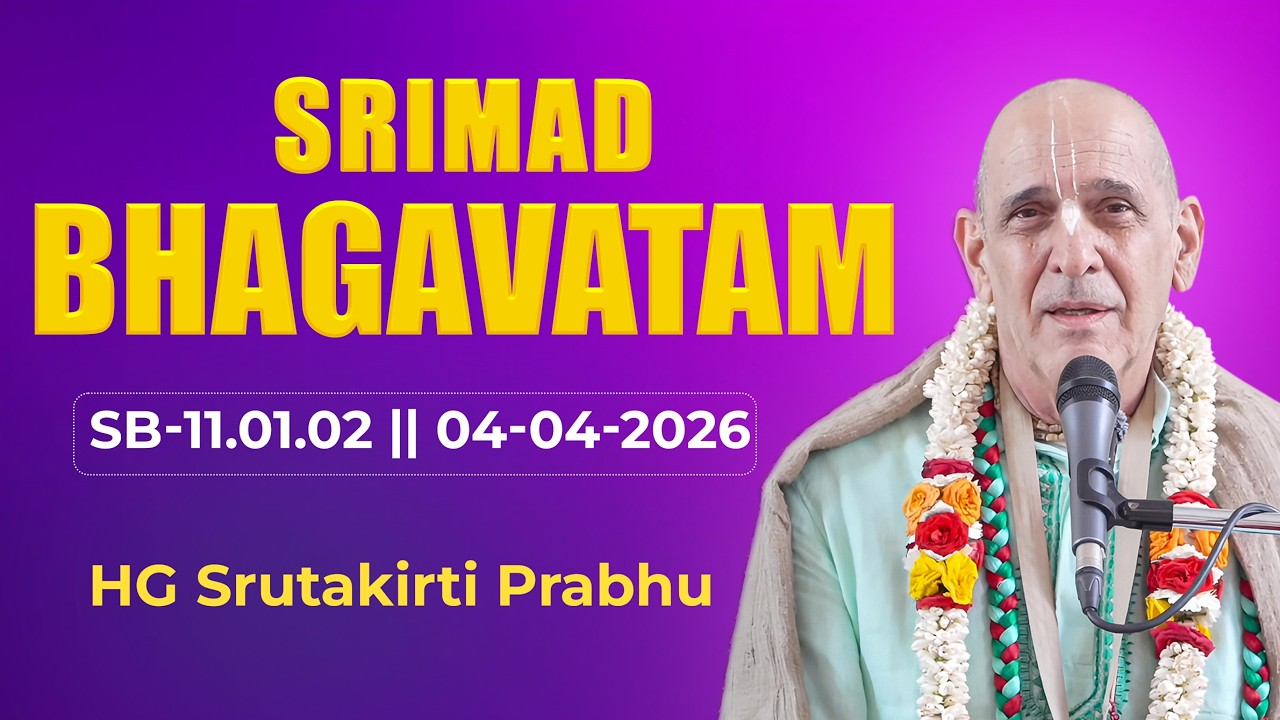
On 04-04-2026, reflections inspired by HG Srutakirti Prabhu on Srimad Bhagavatam 11.1.2 underscored a central axiom of the Bhakti Tradition: spiritual life matures through sharanagatifull surrender and heartfelt service to Krishnaguided by the Guru-Shishya Tradition, with special fidelity to the mission and methods of A. C. Bhaktivedanta Swami Prabhupada. Within this Gaudiya Vaishnava reading, the Bhagavata Purana offers not merely consolation but a coherent metaphysic for living meaningfully amid flux.
Srimad Bhagavatam 11.1 frames a critical historical-spiritual inflection point that culminates in the Uddhava Gita. Verse 11.1.2, situated in this transitional canvas, points to a paradox that runs throughout the Bhagavata Purana: events that appear catastrophic from a human vantage are intelligible within a higher, benevolent teleology. The dissolution that follows is not divine neglect but divine orchestration; it clears karmic entanglements and re-centers Dharma.
In this theological grammar, Krishna’s Absolute Plan does not trivialize suffering; it contextualizes it. The Bhagavata Purana and the Bhagavad-gita together affirm that material causality proceeds under the supervision of the Supreme, even as individual agency remains real and ethically charged. This is a form of spiritual compatibilism: karma unfolds within a field sustained and steered by the Supreme Person, yet conscious beings are accountable for intention and action.
Read in this light, even large-scale upheavalssocial unrest, ecological distress, economic shocksare not random. They belong to a moral universe where consequences educate, purify, and redirect. A classical Bhakti inference follows: adversity becomes formative when viewed as the Lord’s pedagogy rather than as absurd misfortune. This is why acceptance, patience, and steadfast devotion are treated as spiritual technologies, not passive resignation.
The canonical illustration within the Eleventh Canto is the unraveling of the Yadu dynasty. What appears as internecine tragedy serves several elevated purposes simultaneously: it lightens the earth’s burden, resolves accumulated karma, and prepares the stage for Krishna’s visible departure while intensifying the devotees’ longing and remembrance. The narrative thereby teaches that divine compassion may operate through difficult, even dismantling, events.
Sharanagatithe practice of sacred surrenderis the operative response. It is classically described as embracing what is favorable for devotion, rejecting what is unfavorable, trusting Krishna’s protection, accepting Him as sole maintainer, offering oneself without reservation, and cultivating profound humility. These six dispositions reorganize the inner life around Krishna, reshaping perception and priorities, especially under pressure.
The Guru-Shishya Tradition is the safeguard that renders sharanagati concrete and balanced. The Bhagavad-gita’s directive to approach a realized guide through inquiry, service, and respectful submission ensures that surrender is grounded in knowledge, discernment, and accountability. HG Srutakirti Prabhu’s emphasis on practical discipline reflects this lineage standard: the parampara translates lofty ideals into daily vows and habits that can be sustained.
Service to Krishna under the guidance of A. C. Bhaktivedanta Swami Prabhupada remains pivotal in contemporary practice. Prabhupada institutionalized a curriculum that binds scriptural study, nama-japa, kirtana, deity worship, and service to community into a life-architecture that supports purification. In this framework, devotion is not sentiment alone; it is a method with defined inputs, processes, and verifiable transformations in character.
The Bhagavata Purana advances a sophisticated account of causation. Individual experience is shaped by the interplay of the three gunas, by personal choices, and by the Lord’s overarching plan. The result is a world at once lawful and purposeful. Recognizing this architecture makes equanimity rational: one acts vigorously for lokasangrahasocial uplift and dharmic cohesionwithout the anxiety of absolute control.
Importantly, faith in Krishna’s plan is never a warrant for quietism. The Bhagavad-gita’s model of engaged devotion requires ethical action aligned with scriptural guidance and realized counsel. The surrender of outcomes coexists with intensity of effort. When calamity strikes, this pairing of surrendered heart and disciplined agency produces resilience rather than paralysis.
Many practitioners attest that regular immersion in the Bhagavata Purana stabilizes attention and softens reactivity during crises. Household devotees have described how steady japa and systematic hearing shift the inner monologue from panic to prayerful resolve, reframing challenges as opportunities for purification and service. Such testimony, though personal, is consistent with the text’s stated transformative intent.
From a comparative dharmic perspective, the Gaudiya account resonates with parallel insights in the wider family of Indian traditions. The Sikh articulation of Hukam, or alignment with the Divine Will, echoes sharanagati’s trust in purposeful order. Buddhist training in equanimity and insight into impermanence reframes loss without denial. Jain aparigraha, or principled non-attachment, reduces the friction of clinging. These pathways differ in metaphysical commitments, yet they converge in practical wisdom that honors discipline, compassion, and inner freedom.
This convergence supports unity in spiritual diversity. Ishta, as recognized in Hindu traditions, affirms that individuals approach the Supreme Truth through forms and practices suited to their nature. Strong fidelity to Krishna-bhakti thus coexists with deep respect for other dharmic disciplines. The result is a shared ethical field conducive to harmony, dialogue, and mutual uplift.
Technically, the soteriology of the Bhagavata Purana privileges bhakti-yoga as the means that integrates and consummates karma and jnana. Devotional practice purifies anarthas, awakens a stable taste for hearing and chanting, and ripens into steady devotion and love. The process is diagnostic as well as prescriptive: progress is visible in greater humility, steadiness, compassion, and freedom from envy.
Practical sequencing matters. Daily study of scripture, attentive nama-japa, congregational kirtana, and concrete seva create a virtuous loop. Scriptural hearing informs practice, practice deepens insight, and insight strengthens ethical resolve. This cycle is accelerated in holy company, where modeling and mentorship compress learning time and reduce avoidable error.
Decision-making under uncertainty is likewise clarified. The traditional triadshastra, sadhu, and gurufunctions as an epistemic filter for discerning Krishna’s will. Scriptural principles set boundaries, realized practitioners provide context, and one’s initiating and instructing gurus connect universal guidance to personal circumstances. This threefold test reduces self-deception and aligns choices with the Absolute Plan without presumption.
A frequent objection asks whether belief in an Absolute Plan negates free will. The Bhagavata Purana answers by distinguishing levels of causation. The Supreme oversees and fulfills the purposes of the cosmos; the jiva operates meaningfully within that field, and is accountable. Far from breeding fatalism, surrender to Krishna strengthens conscientious effort by relocating identity from the anxious doer to the willing servant.
Ethically, this vision expands the radius of care. If apparent disorder still belongs to a benevolent order, then response must be dignified: protect life, relieve suffering, speak truth without malice, and steward resources responsibly. Ahimsa, daya, and dana follow naturally from devotion; they become not mere virtues but expressions of loving service to Krishna manifest in all beings.
The psychological payoffs are nontrivial. Viewing hardship as educative mercy rather than senseless harm facilitates cognitive reappraisal, reduces rumination, and sustains hope. Bhakti practices regulate attention and affect, building the capacity to sit with uncertainty while moving forward with clarity. Such stability is especially valuable in periods of global stress.
In summary, Srimad Bhagavatam 11.1.2 invites a disciplined trust in Krishna’s Absolute Plan alongside vigorous, compassionate action. Sharanagati under bona fide guidance integrates metaphysical conviction with practical method. The outcome is a life of purposeful service that makes sense of suffering without denying it, honors unity in spiritual diversity across dharmic traditions, and contributes tangibly to social harmony.
For contemporary seekers navigating complexity, the Bhagavata Purana thus remains both map and medicine. It illuminates why events unfold as they do, how to respond without despair, and where to locate an unshakable center. Through guru-guided bhakti-yoga, adversity becomes refinement, duty becomes devotion, and the world itself becomes a field for loving service to Krishna.
Inspired by this post on Dandavats.