Was Indrajit truly Shiva’s son? The question opens a window into how Hindu scriptures, especially the Ramayana, intertwine divine relationships, cosmic justice, and layered meanings. Exploring this claim offers a measured way to distinguish between canonical verses and later retellings while appreciating the epic’s spiritual depth and its unifying resonance across dharmic traditions.
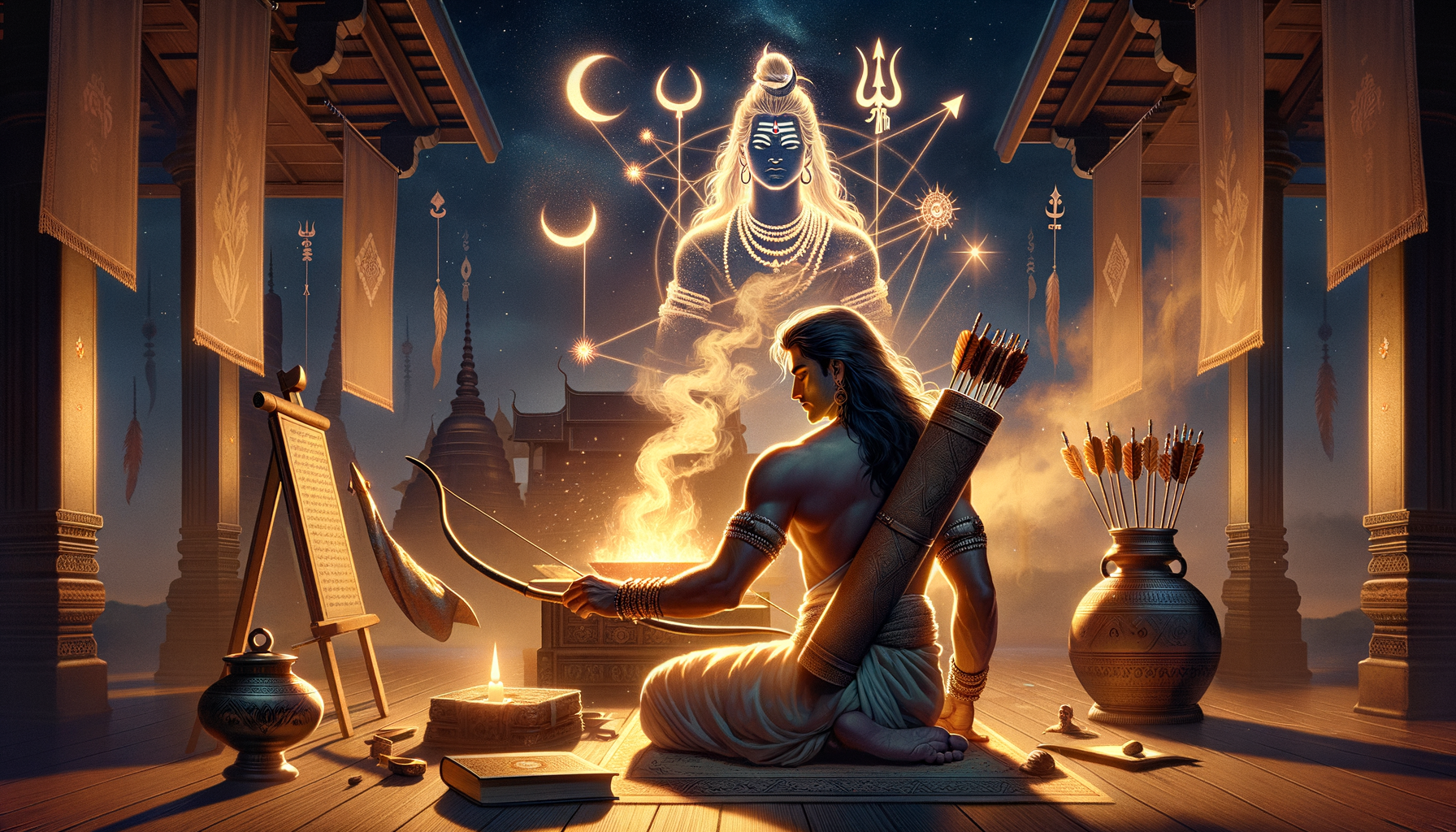
In the canonical Vālmīki Rāmāyaṇa, Indrajitalso known as Meghnadis explicitly the son of Rāvaṇa and Mandodarī. His renown arises from exceptional prowess in warfare, mastery of astras, and disciplined ritual practice. He acquires formidable powers through tapas and boons, including favor received from deities such as Brahmā, and he conducts a decisive yagna at Nikumbhilā that augments his battlefield advantage. This textual foundation establishes his biological lineage within the house of Lanka’s ruler.
The narrative that portrays Indrajit as Shiva’s son emerges in later and regional traditions, poetic retellings, and devotional imaginations that emphasize his Śaiva affiliations. These accounts generally do not seek to overturn the Ramayana’s genealogical record; rather, they elevate Indrajit’s spiritual identitypresenting him as an amsha (a manifested portion), a dīkṣā-putra (a ritual or initiatory ‘son’), or a devotee transformed by Shiva’s grace. In this interpretive register, “son” signifies spiritual kinship and divine empowerment, not a literal biological bond.
Understanding the term “putra” is crucial. In Sanskrit and Purāṇic idiom, filial language can denote spiritual lineage, initiation, and participation in a deity’s power or family (parivāra). This broader semantic field explains how traditions can honor Indrajit as Śiva’s ‘son’ in a theological sense while the primary epic preserves his birth to Rāvaṇa and Mandodarī.
Indrajit’s Śaiva associations are thematically consonant with his rigorous discipline and ritual observances. His battlefield use of powerful astras, his strategic reliance on yagna, and his reputation for austerity align with the Ramayana’s portrayal of a warrior whose strength flows from sadhana as much as skill. Read in this light, the “Shiva’s son” motif underscores the idea that grace and discipline can elevate a seekeryet responsibility for one’s choices remains inescapable within the moral grammar of dharma and karma.
This distinction between biological lineage and spiritual affiliation clarifies the ethical complexity at the heart of the Ramayana. Indrajit’s valor is undeniable; his loyalty to Rāvaṇa, however, ties his fate to adharma. The epic thereby illustrates that divine favor and great ability do not exempt anyone from the consequences of moral alignmentan insight that resonates across Hindu, Buddhist, Jain, and Sikh reflections on actions, intention, and accountability.
Approached through a dharmic lens, this layered interpretation invites contemplative reading rather than polemical debate. It honors the plurality of Hindu scriptures while nurturing unity among dharmic traditions: shared respect for disciplined practice, devotion, and ethical responsibility becomes the bridge between diverse schools and stories.
For readers, the takeaway is twofold. First, the Vālmīki text presents Indrajit as Rāvaṇa’s son; second, later devotional currents elevate his Śaiva identity through concepts such as amsha and dīkṣā-putra. Recognizing both levelshistorical-canonical and spiritual-symbolicdeepens understanding of the Ramayana’s narrative architecture and its enduring capacity to inspire self-reflection and inter-traditional harmony.
In sum, the proposition that Indrajit was “Shiva’s son” is best read as a spiritual truth within later interpretive traditions, not as a biological fact in the Ramayana. This balanced view preserves textual accuracy while embracing the devotional richness that has long enabled the epic to speak to seekers across Hinduism, Buddhism, Jainism, and Sikhismsustaining unity through shared values of wisdom, discipline, and compassion.
Inspired by this post on Hindu Blog.