In the vast tapestry of the Mahabharata, the account of Prince Uttara of the Matsya Kingdom stands as a compact yet profound meditation on courage, pride, and the life-changing force of wise guidance. Often overshadowed by legendary figures, his journey illuminates how fear, when met with humility and mentorship, can be transformed into steadfast resolve. This portrayal also exposes the fragility of masculine pride when it is built on bravado rather than grounded valor.
Set in the Virata Parva, the narrative unfolds during the Pandavas’ incognito exile in the court of King Virata. When the Kaurava forces raid Matsya’s cattle, Prince Uttara boldly vows to confront them. Yet the sight of the formidable Kuru army overwhelms him, and he falters. The moment is psychologically incisive: it distinguishes external posturing from inner preparedness and reveals how fear can surface precisely when reputational stakes are highest.
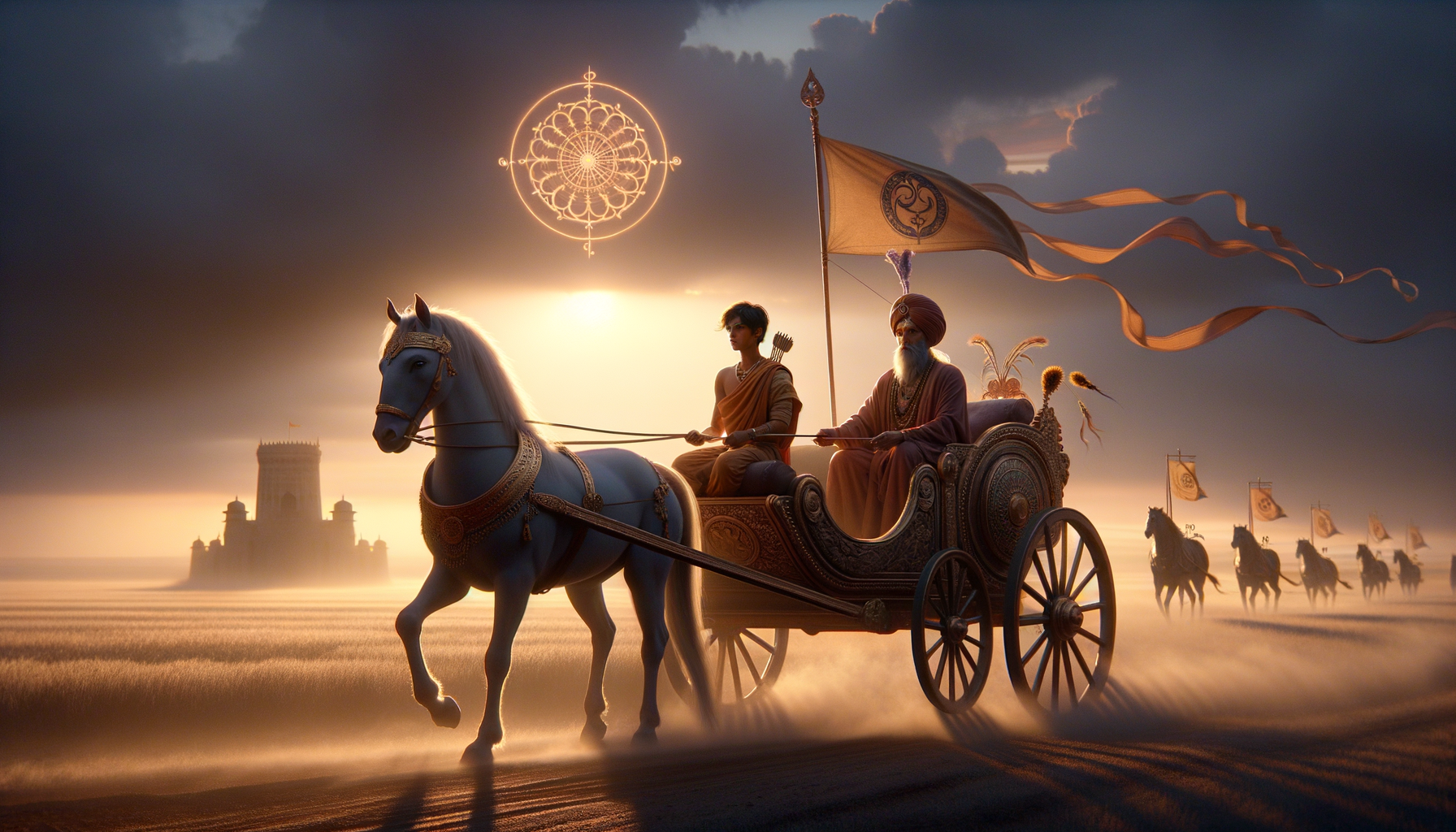
At this critical juncture, BrihannalaArjuna in disguisesteps in as charioteer and mentor. Through calm counsel, disciplined instruction, and unwavering composure, Brihannala reframes the crisis as a training ground for Uttara’s growth. The reversal that follows is emblematic: the prince, no longer driven by image, accepts the role of charioteer while Arjuna battles, illustrating that humility is often the first move toward genuine strength.
The episode clarifies that courage in the Mahabharata is not the absence of fear but the alignment of skill, purpose, and guidance. In terms of Kshatra Dharma, it underscores that valor must be harnessed to discretion and tutelage. Masculine pride, when untethered from discipline, becomes brittle; when tempered by mentorship, it matures into resilient character.
Subsequent references suggest that Prince Uttara internalizes this lesson, participating in the Kurukshetra War and meeting an early end on the battlefield. Though his life is brief, the arc is complete: from an impulsive display of confidence to a chastened, teachable warrior shaped by lived experience and the guru–shishya ethic embodied by Brihannala and Arjuna.
This narrative offers enduring insights for readers across dharmic traditions. In Hindu thought, the scene models dharma guided by wisdom; in Buddhism, it resonates with the cultivation of vīrya (energetic effort) informed by right view; in Jainism, it reflects fearlessness born of self-mastery and non-attachment rather than ego; in Sikh tradition, it aligns with the saint–soldier ideal, where humility and discipline ground courage. Across these streams, a unifying principle emerges: character is forged where guidance meets self-surrender to higher purpose.
For contemporary life, the lesson is practical and relatable. Many recognize the dissonance between public confidence and private readiness. Prince Uttara’s turning point suggests a path forward: seek qualified mentorship, practice deliberately, admit limitations without self-reproach, and allow responsibilityrather than impressionto define action. Such a stance transforms anxiety into competence and spectacle into substance.
As a study in leadership and learning, Prince Uttara’s story demonstrates that the most decisive victories occur within. Proper guidance converts fear into fortitude; humility stabilizes identity; and courage, once anchored in dharma, endures. In the Mahabharata and beyond, that is the quiet, powerful standard by which heroism is measured.
Inspired by this post on Hindu Blog.