Within Hindu mythology, the Earth carries two entwined namesBhumi and Prithvieach signaling a distinct layer of meaning. The Puranic narrative of how Bhumi came to be known as Prithvi presents a powerful meditation on Dharma, compassionate governance, and ecological stewardship. In this account, the Earth’s transformation from withheld bounty to nurturing abundance is not merely a tale of divine intervention but a study in ethical leadership and social harmony.
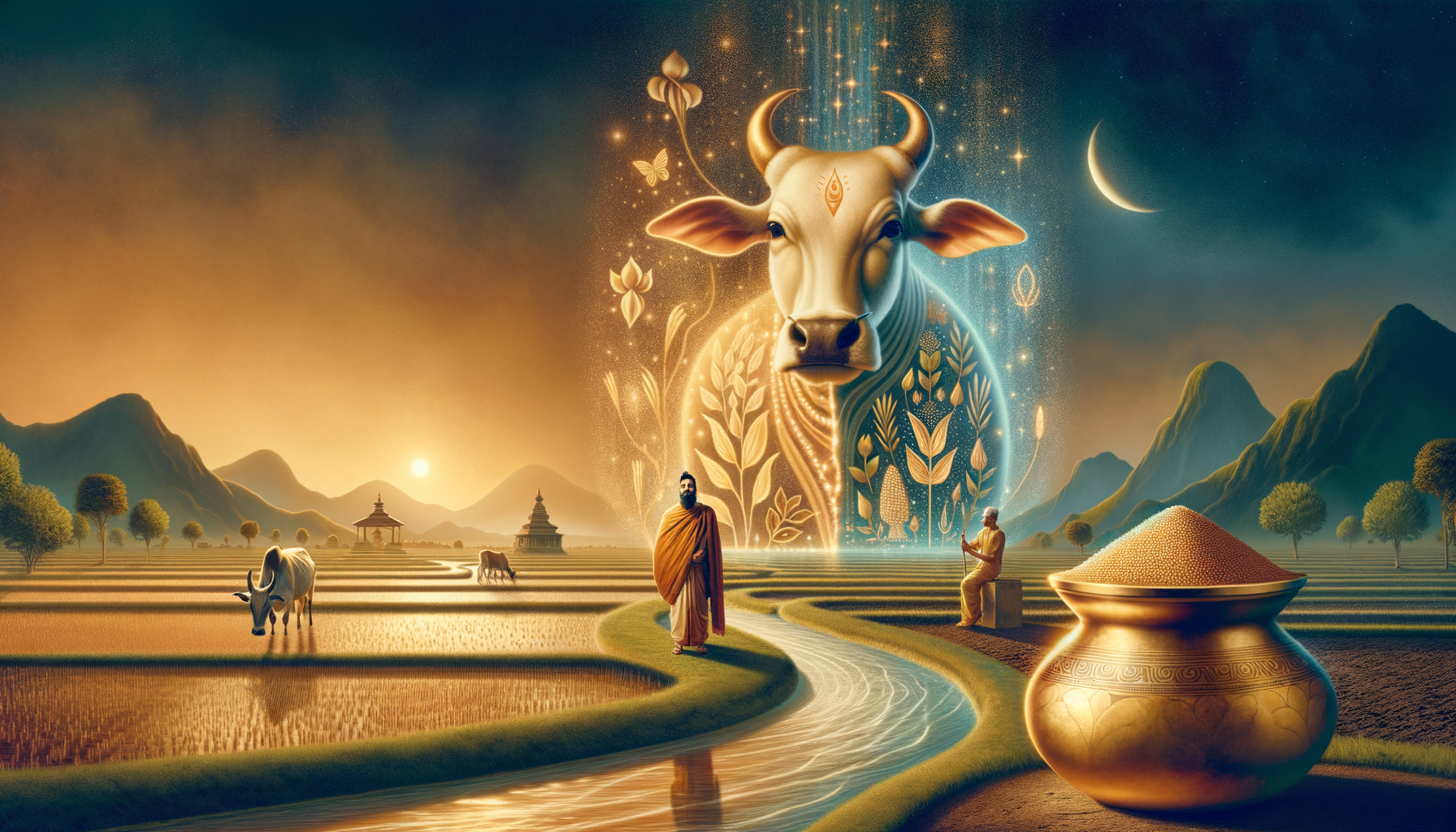
According to the Bhagavata Purana, a period of disorder followed the tyranny of King Vena, when the Earth withheld her produce and beings suffered scarcity. From this crisis emerged King Prithu, born through the sages’ rite to restore order. When Prithu pursued Bhumiwho had taken the form of a cowhe did so not to subjugate but to negotiate the conditions of a just world. With consent and reverence, he “milked” the Earth of her latent abundance, establishing agriculture, social norms, and prosperity. In honor of this righteous kingship, Puranic tradition remembers the Earth as Prithvi, signifying the ethical covenant between ruler, people, and nature.
The symbolism is multilayered. The cow-form of Bhumi encodes the principle of ahimsa, reminding that true prosperity arises without violence against nature. Prithu’s role exemplifies rajadharma: authority is legitimate only when exercised as sevacare, service, and protection of all beings. The “milking” of the Earth stands for learning, discipline, and cooperative effort that draw out potential without exploitation. Abundance, in this vision, is sustained by restraint, gratitude, and responsibility.
Philologically and historically, the name Prithvi is already attested in Vedic hymns as Prithivī, the vast, life-supporting Earth. Puranic accounts deepen this meaning by associating the name with King Prithu’s exemplary stewardship, thereby bridging Vedic praise with later ethical narrative. The convergence of these strands underscores a civilizational insight: names in the Hindu tradition are living vessels, capable of holding both ancient cosmology and evolving moral vision.
The narrative resonates across dharmic traditions. In Hindu thought, Dharma aligns human action with cosmic order; in Buddhism, compassion and mindfulness guide conduct that reduces suffering; in Jainism, ahimsa extends to meticulous care for all life; and in Sikhism, seva sanctifies service to creation and community. Together, these principles offer a unifying ethic: the Earth is not a resource to be consumed, but a sacred relationship to be honored.
For contemporary readers, the story speaks to everyday experience. Harvest celebrations such as Onam and other regional festivals embody gratitude for Prithvi’s gifts. Farmers, householders, and urban communities alike witness how care for soil, water, and biodiversity returns as health and wellbeing. Simple practicesmindful consumption, repair and reuse, and shared community servicemirror the narrative’s message that prosperity grows where restraint and reverence meet.
Ultimately, the journey from Bhumi to Prithvi is a reminder that names can be ethical maps. Prithvi invokes King Prithu’s compassionate governance and the Earth’s willingness to nourish when approached with humility. The tale invites renewed commitment to stewardship: to align power with responsibility, wealth with fairness, and knowledge with compassionso that abundance remains a shared, sustainable blessing.
Inspired by this post on Hindu Blog.