
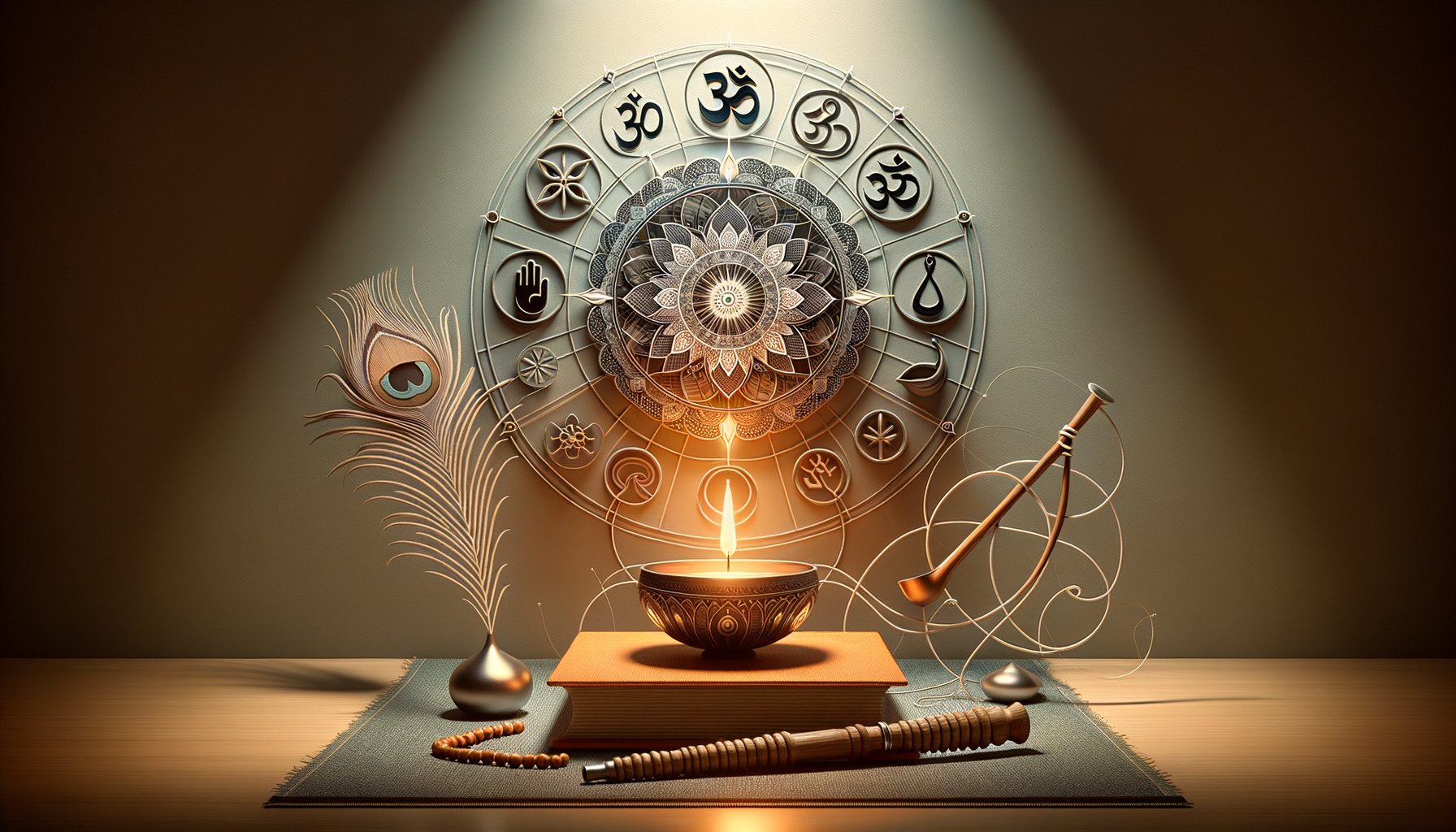
Across many Hindu homes, an altar often holds multiple sacred images, each radiating a distinct facet of the divine. The question naturally arises: whom to worship, and why focus on one form at all? Within Hindu Dharma and the wider dharmic familyincluding Buddhism, Jainism, and Sikhismunity coexists with diversity. The traditions affirm a shared ethical core and ultimate reality, while recognizing that individuals may approach that reality through different deities, practices, and philosophies. This view sustains unity in spiritual diversity without erasing meaningful distinctions.
In Ishta in Hinduism, choosing a personal deity (Ishta) is not an act of exclusion but a method for deepening commitment, concentration, and love within the Bhakti Tradition. Just as a musician may specialize in one instrument without diminishing the orchestra, a devotee focuses on one form while respecting all manifestations of the sacred. Hindu philosophy holds space for both the nondual ground of being and the devotional path of relational lovetwo lenses that clarify how multiplicity can harmonize with oneness.
A simple analogy illustrates the need for context. Imagine a large team photograph that includes a founder and various specialists; without background knowledge, the roles can seem indistinguishable. Sacred iconography works similarly: diverse forms signal distinct relationships, functions, and theological nuances. Proper understanding requires entering the field of knowledge and studying it carefully rather than relying on surface impressions.
Accordingly, Hindu Dharma encourages informed engagement rather than a layperson’s glance. Scriptures such as the Bhagavad-Gita and Srimad-Bhagavatam, studied within the Guru-Shishya Tradition, invite rigorous inquiry and lived practice. In this spirit, clarity arises not from quick equivalences“everything is the same”but from discerning how unity and difference interrelate across practice, experience, and doctrine. Such study nurtures humility, nuance, and mutual respect.
Why do many choose Krishna? Within Gaudiya bhakti and communities such as ISKCON (International Society For Krishna Consciousness), Krishna is embraced as the supreme object of love, the center toward which devotion can be wholly directed. For these practitioners, sustained focus on Krishna simplifies sadhana, intensifies remembrance, and deepens loving service. Yet this focused devotion does not negate reverence for other deities or traditions; rather, it mirrors academic specializationdeep expertise in one area while honoring the breadth of the whole field.
Practically, seekers often find that selecting an Ishta brings steadiness to daily disciplinejapa, kirtan, seva, and studywhile still engaging respectfully with other sacred paths. Households report that a clear devotional center makes festivals more meaningful, rituals more consistent, and values more accessible to children. At the same time, visits to diverse shrines and participation in varied community observances cultivate gratitude and reinforce inter-tradition harmony.
This balanced approach advances Unity in spiritual diversity: devotion can be one-pointed, and respect can be expansive. The goal is neither to flatten profound differences nor to fracture communal bonds, but to integrate knowledge and love. Through disciplined study, thoughtful practice, and courteous dialogue, communities strengthen cohesion while allowing each person’s spiritual temperament to flourish.
In sum, the question “Whom to worship?” becomes an invitation to make an informed, heartfelt choice of Ishta within a plural dharmic landscape. Choosing Krishnaor any Ishtacan refine attention and deepen relationship with the divine, provided the choice is paired with humility, scriptural understanding, and reverence for fellow travelers across Hinduism, Buddhism, Jainism, and Sikhism. Such an approach maintains accuracy, enhances clarity, and affirms the shared ethical vision at the heart of the dharmic traditions.
Inspired by this post on Dandavats.










