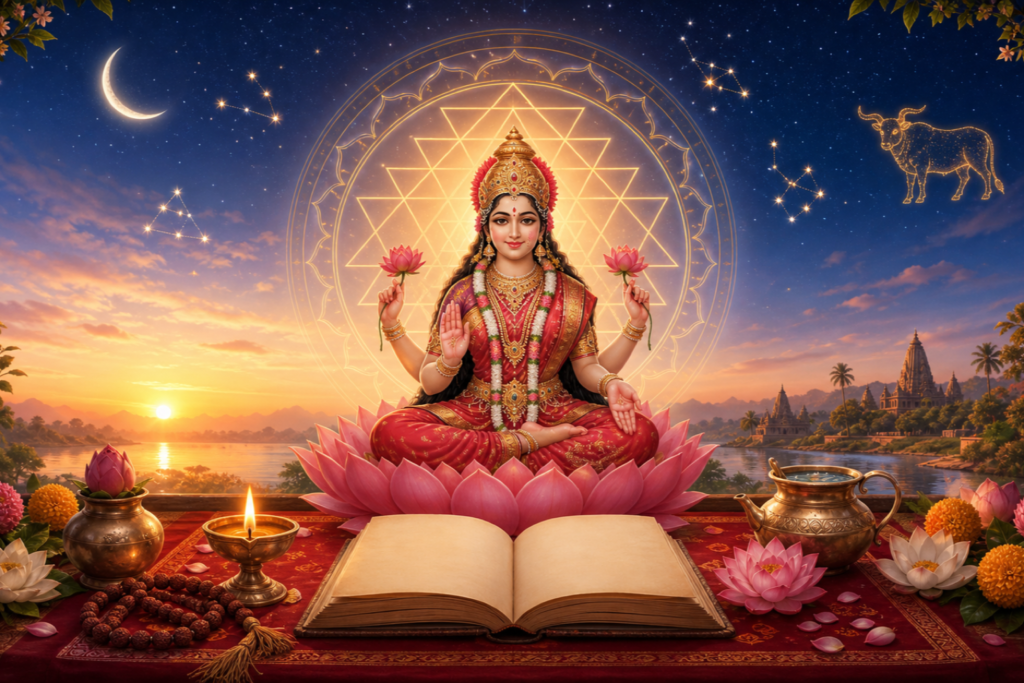
Vikarinian evocative epithet of Mother Goddess Shaktinames the Divine as the transforming force that fashions the cosmos from subtle potential into living form. Within Hindu philosophy and Shakta traditions, Vikarini denotes “she who brings forth change,” honoring Shakti as the creative architect of cosmic manifestation and the sustaining pulse of evolution.
Etymologically, vikarini is rooted in vikāra, meaning transformation, modification, or unfolding. As Vikarini, Shakti is not an abstract idea but the dynamic principle by which unmanifest reality becomes nāma-rūpaname and form. This perspective illuminates the cosmos as a living process: Prakriti moves, māyā reveals, and the play of Shakti discloses time, space, and causality as intelligible orders.
In this light, Vikarini may be understood as the Divine Transformer who mediates between the subtle and the gross, between sukshma and sthula. From the primordial vibration (spanda) hinted at in Kashmir Shaivism to the evolution of the five elements in classical cosmology, Shakti as Vikarini signifies the passage from possibility to actuality. Creation is thus neither random nor mechanistic; it is the intelligible artistry of Devi.
For many practitioners, contemplating Shakti as Vikarini evokes a deeply personal recognition: inner growth mirrors cosmic becoming. Rituals, mantras, and meditative practice in the Shakta path help cultivate this recognition, allowing qualities such as clarity, courage, and compassion to arise as natural “transformations” of awareness. The devotional heart finds solace in the sense that change itself is sanctifiedguided by the compassionate intelligence of the Mother.
Philosophically, the name Vikarini bridges several Indian darśanas. In Advaita Vedanta, Shakti is inseparable from Brahman; manifestation is the luminous play of the nondual Absolute. In Sāṃkhya, the Purusha–Prakriti framework can be read as highlighting Shakti’s role in the evolution of tattvas. In Shakta Tantra, the worship of Devi foregrounds the sacred power that moves through all levels of reality, uniting metaphysics and practice in a single, experiential vision.
Vikarini also invites a unifying reading across dharmic traditions. Buddhist insights on dependent origination and śūnyatā portray form as dynamic and interdependentan elegant resonance with Shakti’s transformative flow. Jain perspectives on paryāya (modal change) and the many-sidedness of reality (Anekantavada) mirror the nuanced, ever-unfolding nature of existence. Sikh teachings on Kudrat and Hukam affirm a creative order in which the One manifests as the many. These convergences underscore a shared civilizational ethos: transformation is sacred, reality is interwoven, and diversity of paths enriches collective spiritual understanding.
Ethically, honoring Vikarini offers a framework for responsible living. If all change is the Mother’s artistry, then ecological care, social harmony, and interfaith respect become spiritual imperatives. Reverence for the Sacred Feminine deepens a commitment to protect life, uphold dignity, and nurture communitiesaligning personal conduct with cosmic order.
Contemplative practice can translate this vision into lived experience. Reflecting on the rhythms of breath (prāṇa), observing shifting thoughts with steadiness, and engaging in mindful action reveal how transformation unfolds moment to moment. Such practice does not reject change; it befriends it, discerning Shakti’s guidance within growth, loss, renewal, and insight.
Devotion to Vikarini also reframes adversity. Challenges become fields of sacred metamorphosis, calling forth resilience and wisdom. In this way, spiritual life is not an escape from the world but an intimate participation in its continual becomingan affirmation that the same Shakti who births galaxies also softens the heart and illumines understanding.
Seen through the lens of Vikarini, Hindu spirituality presents a coherent synthesis: metaphysics, ritual, ethics, and contemplative insight converge in the recognition of Shakti as the Divine Transformer. This synthesis harmonizes with the broader unity of dharmic traditions, encouraging mutual learning and shared reverence for the many ways the One expresses as the many. To remember Vikarini is to honor the creative power that shapes the cosmosand to live responsibly within its sacred design.
Inspired by this post on Hindu Blog.