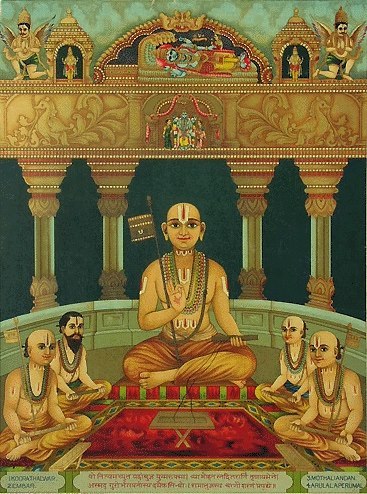
Observed as a sacred time of remembrance, the Disappearance Day of Sri Ramanujacharya invites reflection on a life dedicated to devotion, scholarship, and compassionate leadership within the Sri sampradaya. Commemorating this day honors a legacy that shaped Vaishnavism, deepened understanding of Vedanta, and encouraged unity across dharmic traditions.
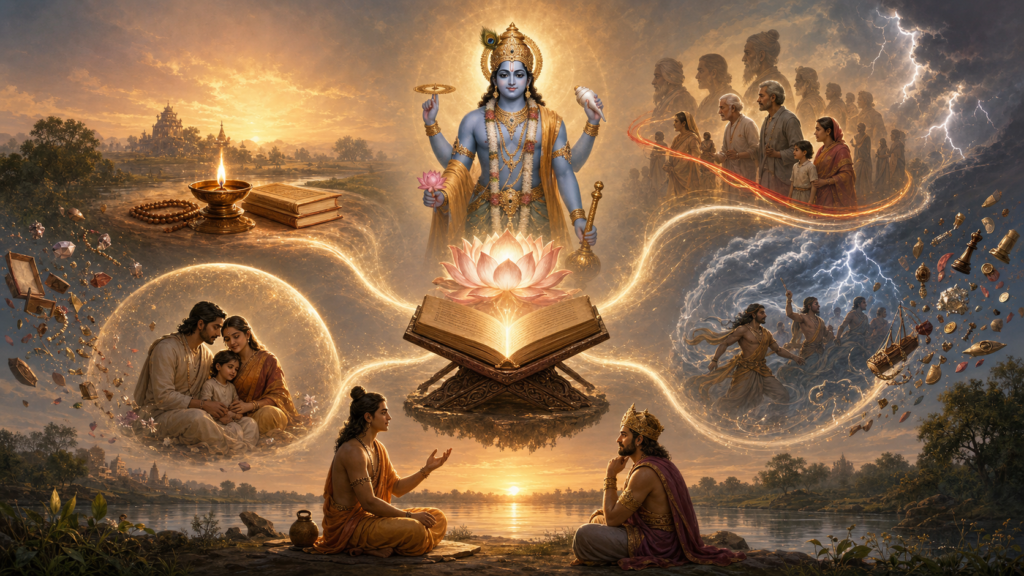
Sri Ramanujacharya (1017–1137) stands as the principal acharya of the Sri sampradaya and a formative voice in Hindu philosophy. His commentary on the Vedanta-sutra, Sri-bhasya, established Vishishtadvaita, or “qualified nondualism,” a framework that affirms oneness while recognizing distinction. In this personalist vision, the Supreme Lord and individual souls are qualitatively one yet distinctan understanding that preserves transcendence and intimacy, infinity and intimacy, within the living relationship between the divine and the devotee.
As a teacher of personalism, Ramanujacharya emphasized Bhakti grounded in knowledge, ethical conduct, and service. By articulating a path that unites devotion and reason, he offered a bridge between the heart and the intellect in Vedanta. This synthesis resonates with shared values across dharmic traditionscompassion, self-discipline, nonviolence, and the transformative power of spiritual practiceencouraging mutual respect among Hindu, Buddhist, Jain, and Sikh communities.
Ramanujacharya traveled extensively across India, engaging leading scholars, clarifying doctrine, and offering a constructive alternative to monistic readings that negate personal relationship with the divine. His organizational leadership was equally remarkable: he founded seventy-four centers of Sri Vaishnavism and initiated seven hundred sannyasis, twelve thousand brahmacharis, and thousands of householders, including kings and community leaders. These institutions nurtured living traditions of study, devotion, and community servicestrengthening spiritual life at every level of society.
The Disappearance Day also highlights the enduring relevance of Vishishtadvaita Vedanta. By affirming both unity and real difference, it supports a vision of spiritual plurality that honors many authentic approaches to the ultimate truth. In this spirit, dharmic unity is not uniformity but harmony: diverse practicesjapa, seva, study, kirtan, meditation, and ethical livingconverge in shared aspirations for wisdom, compassion, and collective well-being.
Remembered as a sage who harmonized philosophy and practice, Sri Ramanujacharya continues to inspire seekers to cultivate humility, devotion, and service. Marking this day becomes an opportunity to renew commitment to unity in spiritual diversity, to deepen engagement with Hindu philosophy, and to embody Bhakti as a living, inclusive force for personal transformation and communal harmony.
Inspired by this post on Dandavats.