
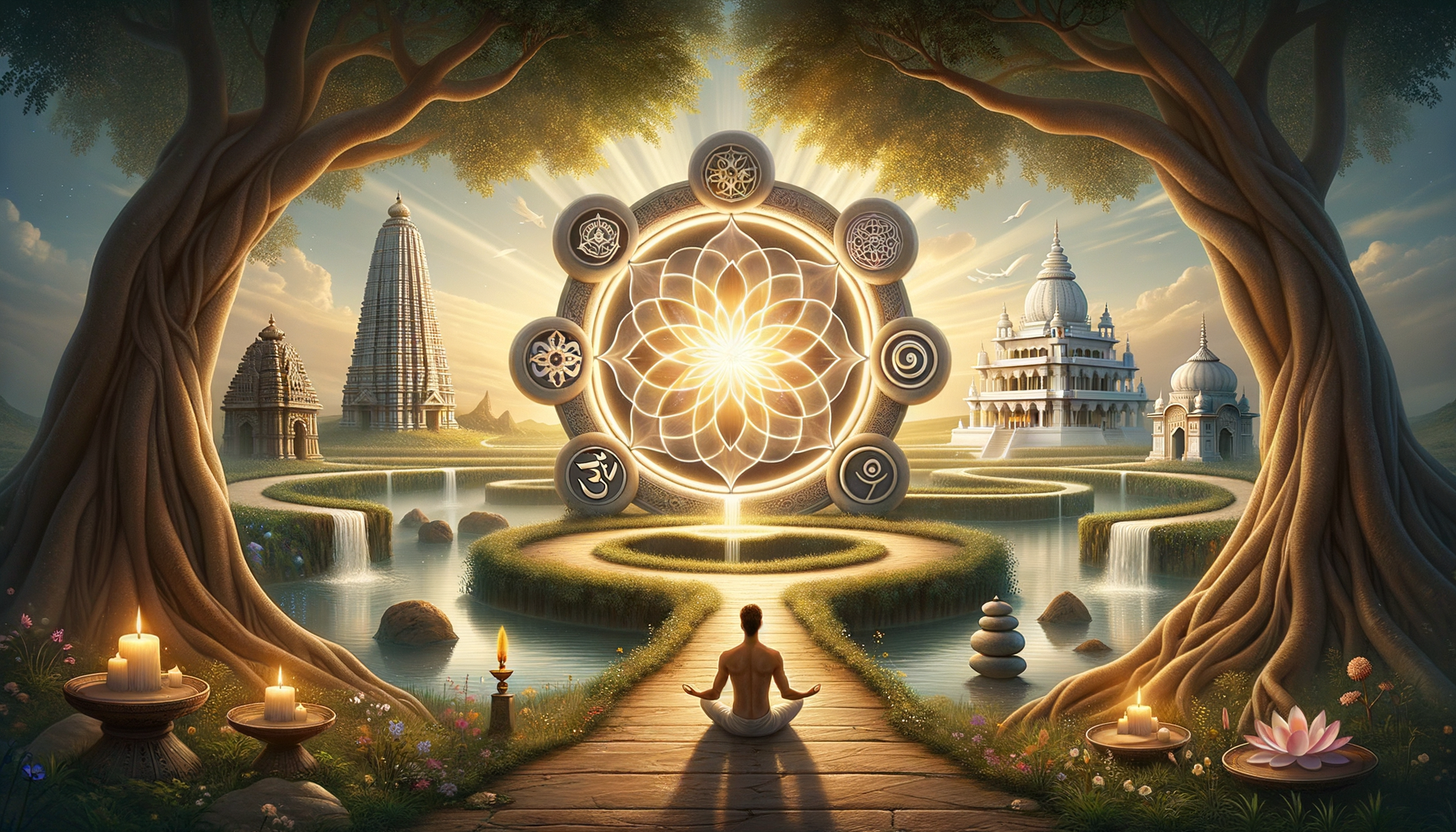
Hinduism, among the world’s oldest living traditions, is best understood as a flexible and evolving civilizational framework rather than a rigid system of dogma. Its openness to diverse ideas, philosophies, and practices has sustained a rich spectrum of belief and ritual across millennia. This wide spectrumrooted in Sanatana Dharmaenables religious pluralism, unity in diversity, and spiritual inclusivity within India and across the global diaspora.
Flexibility in Hinduism functions as a structural principle. Multiple darśanas (philosophical schools), regional customs, temple traditions, and contemplative disciplines coexist under shared ethical anchors such as dharma, ahimsa, and satya. The civilizational habit of adapting to deśa-kāla-pātra (place, time, and context) ensures continuity without rigidity, allowing communities to renew meaning while maintaining connection to Vedic knowledge, Puranic narratives, and living ritual culture.
A distinctive expression of this inclusivity is the concept of Ishtathe chosen ideal or form through which one relates to the Divine. Ishta supports personal spiritual agency while fostering respect for others’ paths. As articulated by modern interpreters within the tradition, the acceptance of many valid approaches does not weaken spiritual integrity; it strengthens it by encouraging sincerity, discipline, and humility alongside interfaith respect.
This plural ethos is shared across Dharmic traditions. Buddhism’s emphasis on the Middle Path, Jainism’s Anekantavada (the many-sidedness of truth), and Sikhism’s devotion to the One (Ik Onkar) united with seva (selfless service) all resonate with Hinduism’s embrace of multiplicity. Together they offer a model of unity in spiritual plurality, advancing interfaith harmony without erasing distinct identities.
Historically, Hinduism absorbed and dialogued with diverse influencesVedic sacrificial rites, Upanishadic inquiry, Bhakti movements, Tantric practices, and regional literaturesrefining outlooks while welcoming new forms of worship. This dialogical habit nurtured resilience, enabling communities to transmit core values and sacred texts while engaging evolving social realities, languages, and artistic expressions.
In everyday life, this pluralism feels tangible. A single community may celebrate different festivals, chant varied mantras, and honor distinct deities while sharing communal spaces and ethical commitments. Such lived diversity demonstrates how spiritual freedom and social cohesion can reinforce one another, turning cultural variety into a source of belonging rather than contention.
In philosophical terms, Dharmic pluralism avoids insisting on a singular salvific path. Instead, it recognizes multiple, context-sensitive routes to self-knowledge and liberationthrough devotion (bhakti), knowledge (jnana), action (karma), meditation (dhyana), and service. This approach affirms that seekers mature along different trajectories and benefit from different disciplines while remaining aligned to shared moral and contemplative foundations.
The benefits are both inner and societal. Inwardly, flexibility cultivates psychological safety, intellectual curiosity, and disciplined inquiry. Outwardly, it nurtures compassion, civic tolerance, and intercultural dialogue, offering a constructive response to modern pluralistic societies. Concepts such as neti-neti in Vedanta, Anekantavada in Jain philosophy, and the Sikh ethic of seva encourage humility before truth’s complexity and solidarity in service to others.
Viewed in this light, the wide spectrum of Hinduism is not a sign of fragmentation but an enduring strength. By celebrating difference within a shared dharmic horizon, Hinduismand its kin traditions of Buddhism, Jainism, and Sikhismmodels a principled inclusivity that supports inner freedom and social harmony. Nurturing this unity across Dharmic traditions can deepen interfaith understanding in India and beyond, offering a humane paradigm for peaceful coexistence.
Inspired by this post on Hindu Blog.
