Dharma is a Sanskrit concept without a precise equivalent in other languages; words such as “righteousness,” “virtue,” or “moral law” approach its meaning but do not capture its full scope. In the dharmic traditions, Dharma functions as living ethicsprinciples applied in daily life that guide conduct and enable spiritual elevation.
As a practical framework, Dharma regulates thought, speech, and action through context-sensitive principles, not rigid prescriptions. It harmonizes personal responsibility (svadharma) with the welfare of society (Lokasangraha), encouraging a life grounded in truth, compassion, and accountability. Through disciplined practice, Dharma becomes a compass that orients choices toward inner clarity and communal well-being.
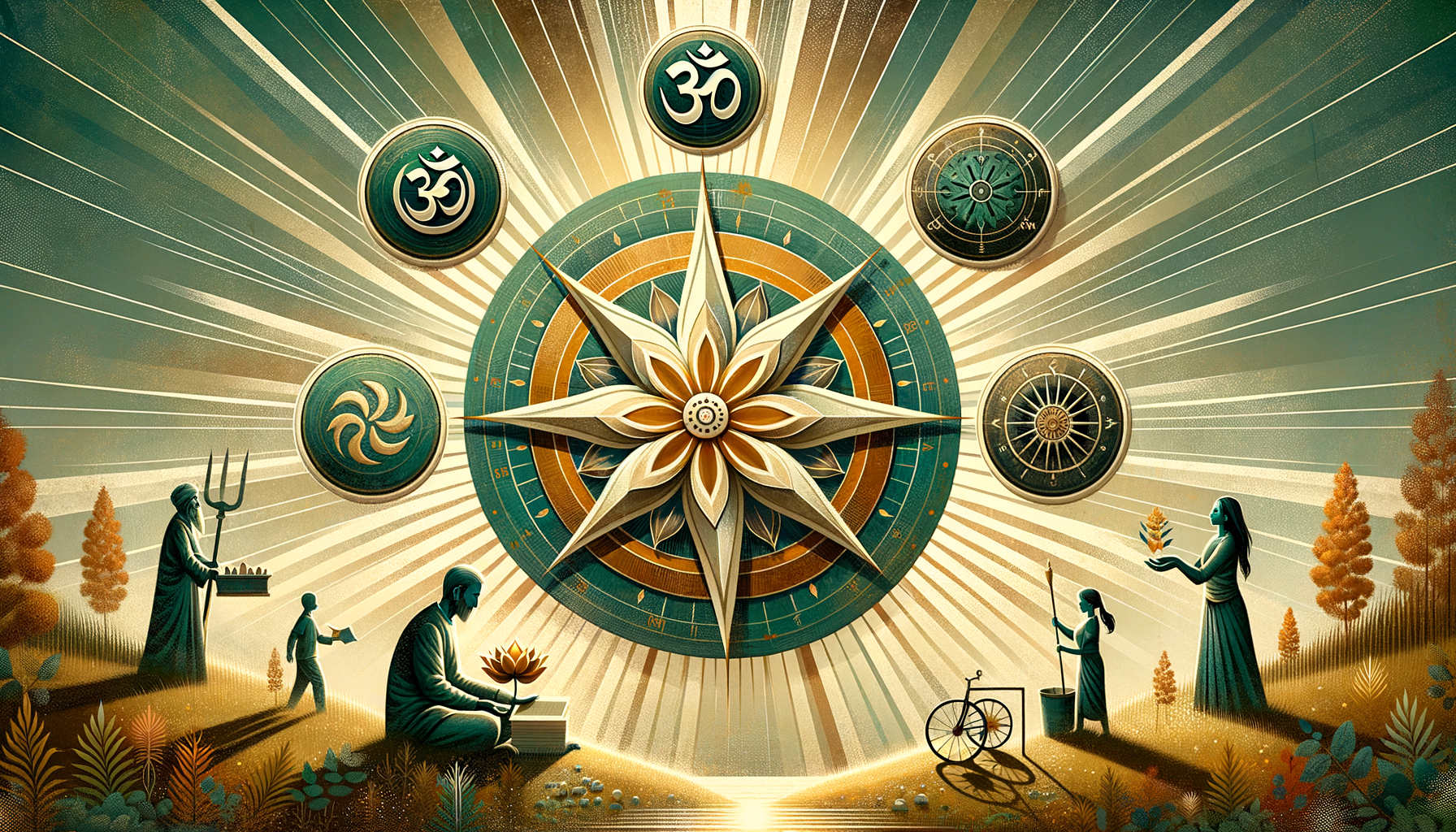
Across the dharmic family, this ideal is shared in complementary ways. In Hinduism, Dharma integrates ethical duty with spiritual realization. In Buddhism, Dhamma is expressed through the Noble Eightfold Path as a way of right understanding and conduct. In Jainism, Dharma emphasizes Ahimsa, Aparigraha, and Satya as nonviolent, truthful, and non-possessive living. In Sikhism, Dharma resonates through Naam, Kirat Karni, Vand Chhakna, and seva, aligning spiritual devotion with honest work, sharing, and justice. Despite different vocabularies and emphases, these traditions affirm Unity in spiritual diversity through a common commitment to compassionate, ethical life.
In everyday experience, Dharma is visible in ordinary yet transformative choices: a student practicing patience under pressure; a parent choosing honesty when it is inconvenient; a professional prioritizing integrity over expedience; a neighbor extending seva to someone in need. Practices such as Satya, daya (compassion), dana (generosity), and Ahimsa make ethics tangible and relational, turning ideals into sustained habits of character.
By aligning intention and action, Dharma fosters inner peace, resilience, and clarity of purpose. It also strengthens social trust, nurtures inclusive communities, and encourages responsible stewardship of the environment. Far from being confined to ritual, Dharma is applied wisdoman ethical architecture that elevates the individual while sustaining the common good.
Ultimately, Dharma is best understood as a living moral law that invites thoughtful discernment and compassionate action. It guides seekers across Hinduism, Buddhism, Jainism, and Sikhism toward spiritual growth through everyday choices, affirming that spiritual elevation is inseparable from ethical conduct and care for others.
Inspired by this post on Hindu Pad.