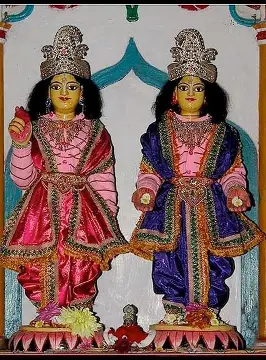
Sri Gadadhara Goswami is revered in Gaudiya Vaishnavism as a united manifestation of Chandrakanti gopian expansion of Radharani’s effulgenceand Purnanada, an expansion associated with Lord Balarama’s intimate circle. Within this devotional lineage, he is honored for embodying serene devotion, scriptural depth, and unwavering compassion that continue to guide seekers across Hindu spiritual traditions.
Classical texts position his life alongside the theological heart of Sri Chaitanya Mahaprabhu’s advent. Krishna Dasa Kaviraja describes Lord Chaitanya as radha-bahva-dyuti suvalita, “characterized by the emotions and bodily luster” of Srimati Radharani. In this luminous framework, Sri Gadadhara Goswami’s presence is understood as a gentle, complementary rayilluminating humility, non-ostentatious service, and steadfast remembrance of Sri Krishna.
Historical accounts further note that Gadadhara Dasa was an intimate associate of both Sri Chaitanya Mahaprabhu and Sri Nityananda Prabhu, reflecting the remarkable breadth of companionship within the early Gaudiya community. This dual association underscores a living bridge of bhakti that harmonized scholarship, sadhana, and community carevalues that later inspired institutions such as ISKCON (International Society For Krishna Consciousness) to preserve and share this heritage.
Commemorations of the Disappearance Day of Sri Gadadhara Goswami invite reflective observances rather than spectacle. Many practitioners describe a quiet uplift while engaging in kirtan, reading Gaudiya narratives, and performing simple seva. The mood is contemplativehonoring a saint whose strength lay in restraint, whose scholarship nourished tenderness, and whose devotion modeled a steady, inclusive path within Hindu Dharma.
For contemporary seekers navigating diverse spiritual landscapes, his legacy resonates as both scholarly and profoundly relatable. Devotees often share that contemplation on Sri Gadadhara Goswami’s life softens the heart, encourages patient dialogue, and strengthens a practice rooted in humility and kindnessqualities that speak across traditions and cultures.
Aligned with a dharmic ethos of unity, this remembrance highlights values cherished in Hinduism, Buddhism, Jainism, and Sikhism: compassion, truthful speech, and selfless service. Rather than asserting a single exclusive path, it celebrates a plural vision of spiritual excellencewhere personal sadhana deepens respect for many forms of worship while nurturing a shared commitment to societal harmony.
In practical terms, readers may mark this occasion by setting aside moments for japa, studying Gaudiya teachings, and engaging in acts of care within family and community. Such mindful observances translate lofty theology into daily lifestrengthening the inner resolve to serve, listen, and build bridges across the wider dharmic family.
Inspired by this post on Dandavats.