Khanuja Sikh Art Gallery presents a thoughtful space where Sikh heritage, aesthetics, and lived memory converge. Curated with scholarly care and community sensitivity, the gallery highlights the depth of Sikh art while situating it within the wider tapestry of dharmic traditionsHinduism, Buddhism, Jainism, and Sikhismwhose shared values of compassion, seva, and inner discipline foster cultural continuity and unity in diversity.
Guided by the vision of Dr. Parvinderjit Singh Khanuja, the gallery adopts an academically grounded yet accessible approach. The curatorial framework emphasizes historical accuracy, iconographic clarity, and ethical interpretation, ensuring that each exhibit communicates both aesthetic beauty and contextual meaning. This balance encourages audiences to engage with Sikhism’s spiritual ideals alongside broader South Asian cultural currents.
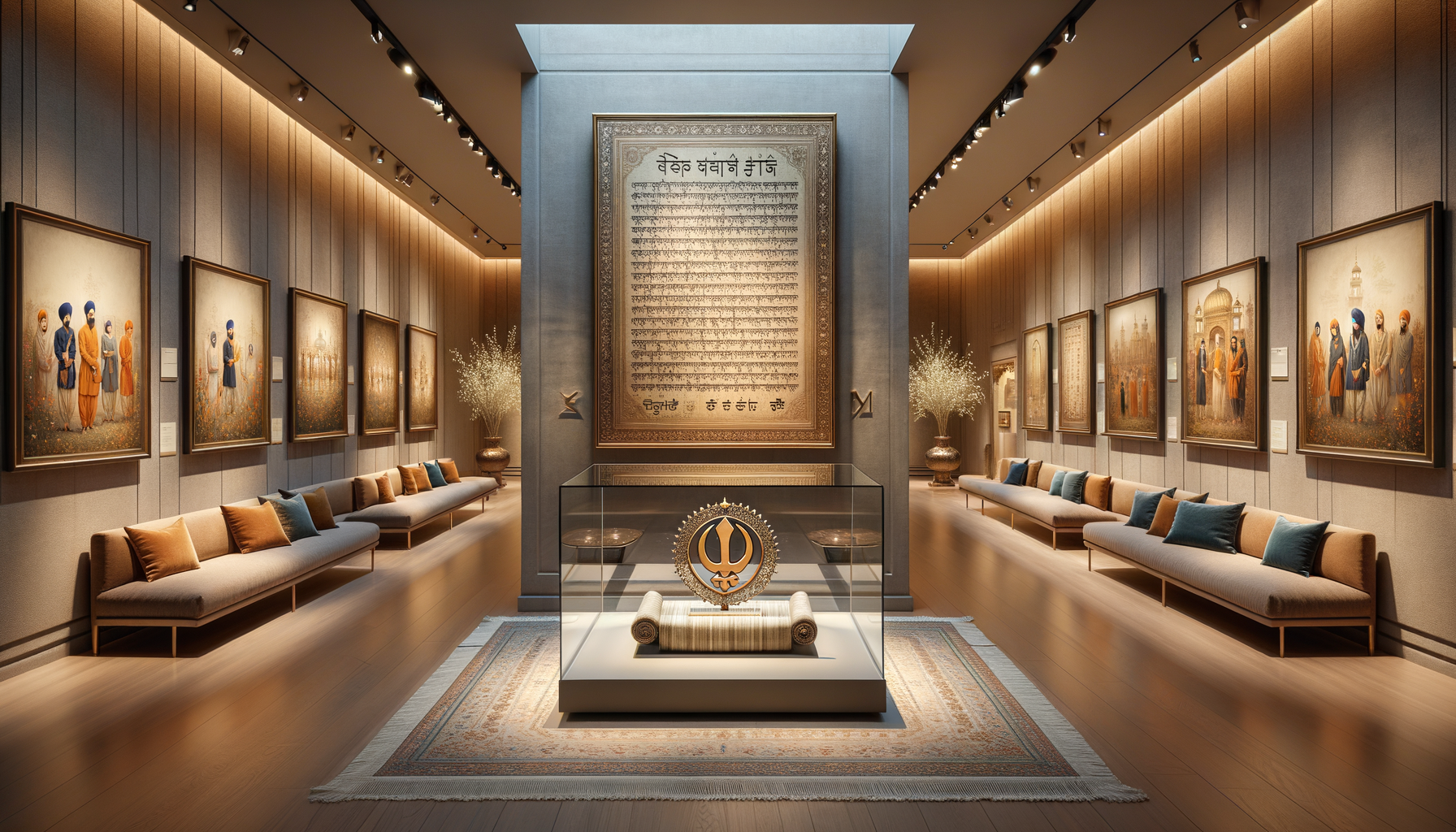
The collection foregrounds themes central to Sikh art: the lives and teachings of the Gurus, the principle of seva (selfless service), the rhythm of kirtan, and the symbolism of courage and humility. Paintings, calligraphy, manuscripts, textiles, and ritual objects are presented in dialogue, making visible the continuity of form, function, and faith. The result is a coherent narrative that respects tradition while speaking to contemporary viewers.
A distinctive feature of the gallery is its attention to shared visual languages across dharmic traditions. Floral arabesques, geometric balance, narrative panels, and the disciplined clarity of script all echo artistic choices found in Hindu art and culture, Buddhist and Jain visual canons, and Sikh sacred aesthetics. This comparative lens affirms the civilizational bonds that knit together diverse practices without collapsing their distinct identities.
Educational programslectures, guided dialogues, and hands-on workshopsare designed to deepen cultural literacy. Students, families, and scholars encounter Sikhism’s philosophical underpinnings in clear, structured formats that encourage critical inquiry and respectful interfaith dialogue. Visitors often describe the experience as both intellectually enriching and emotionally grounding, noting how the displays invite contemplation as well as conversation.
Heritage preservation stands at the heart of the gallery’s mission. Conservation protocols, careful documentation, and community-informed provenance practices support the long-term safeguarding of artworks. Where feasible, digitization and metadata standardization enhance access for researchers and educators, making the gallery a useful reference point for cultural heritage studies and comparative religion.
Curatorial interpretation underscores unity without erasing difference. Exhibits frame Sikh art as a living traditionrooted in scripture, shaped by history, and animated by ethical action. This framing helps audiences connect aesthetic choices with social virtues such as service, fairness, and courage, reinforcing shared dharmic values that promote social harmony and cultural resilience.
The gallery’s layout privileges clarity and reflection: sightlines orient visitors through narrative sequences; lighting and typography highlight key motifs; and multilingual labels maintain fidelity to original terms while ensuring readability. Many viewers report a calm, contemplative rhythm to the visit, with moments of recognition that link family memory, community practice, and civilizational heritage.
In a time of rapid change, Khanuja Sikh Art Gallery models how cultural institutions can sustain identity while building bridges across communities. By centering scholarship, ethical presentation, and inclusive pedagogy, it supports a wider ecosystem of cultural heritage, strengthening bonds within and across the Sikh community and the greater dharmic world.
Khanuja Sikh Art Gallery thus operates as both a repository and a crossroads: a place where timeless Sikh heritage is preserved with care, and where visitors are invited into a respectful conversation about shared roots, diverse expressions, and the enduring promise of unity in diversity.
Inspired by this post on SikhNet – News.