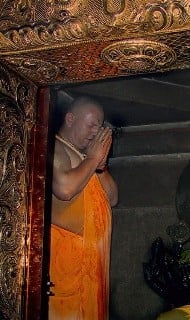
Arundai Sivachariar emerges from 13th century Tamil Nadu as a luminous figure of Shaiva bhakti, remembered for steadfast devotion to Lord Shiva and a life rooted in temple-centered practice. Together with the evocative name Marai Jnanasambandar, this pairing invites reflection on Tamil spiritual heritage, where devotion, scholarship, and community worship interweave within the broader Bhakti Tradition.
Accounts situate Arundai Sivachariar in a village setting, where devotion began early in life. Regular visits to Shiva temples, reverent worship, and consistent participation in sacred rhythms formed the axis of daily discipline. This pattern—simple, sincere, and sustained—speaks to the heart of Hindu temples as living centers of learning, service, and shared remembrance.
His education, said to have been completed without difficulty, underscores a disciplined commitment to knowledge. In the Shaiva milieu of Tamil Nadu, such learning typically harmonizes sacred study, temple observance, and ethical conduct. For many contemporary readers, this alignment resonates with everyday practices—lighting a lamp at dusk, reciting a simple mantra, or stepping into a neighborhood shrine—where devotion becomes both accessible and transformative.
Marai Jnanasambandar, remembered alongside Arundai Sivachariar, symbolizes the continuity of Shaiva devotion in the Tamil landscape. While details in the surviving note remain concise, the juxtaposition of these names highlights a lineage in which faith and learning reinforce one another. The emphasis falls less on biography alone and more on the enduring model of devotion they collectively represent.
Viewed within the larger dharmic horizon, their example reflects values cherished across Hinduism, Buddhism, Jainism, and Sikhism: compassion, discipline in study and practice, reverence for sacred spaces, and the pursuit of inner transformation. Such shared virtues encourage unity in diversity, affirming that different paths can cultivate common ethical strengths and social harmony.
For students of history and seekers alike, the memory of Arundai Sivachariar and Marai Jnanasambandar illuminates a vital lesson from 13th century Tamil Nadu: enduring devotion thrives in the steady cadence of daily worship and thoughtful learning. It is here—amid temple bells, sacred verses, and quiet offerings—that timeless wisdom becomes a living guide for contemporary life.
Inspired by this post on Hindu Pad.