
Vaikuṇṭha Samārādhana is often encountered at one of life’s most vulnerable thresholds: the days after a loved one has died, when a family is still learning how to speak, eat, sleep, and remember in a world that has suddenly changed. In many Hindu households, especially within Vaishnava and South Indian ritual contexts, it marks the formal completion of the initial mourning observances and offers a devotional frame for the departed soul’s onward journey. It is not merely a social gathering after bereavement. It is a carefully structured act of remembrance, gratitude, transition, and surrender.
The phrase itself carries theological weight. Vaikuṇṭha is the divine abode of Vishnu, understood in many Vaishnava traditions as a realm beyond sorrow, decay, and worldly limitation. Samārādhana suggests reverential worship, offering, and communal honoring. Taken together, Vaikuṇṭha Samārādhana becomes a ritual gesture through which grief is placed within a sacred map: the body has perished, the family is wounded, yet the atman is not reduced to death. The rite asks the mourners to hold two truths at once: loss is real, and so is continuity.
This is why such rituals can feel less like mechanical observances and more like poetry enacted through the body. A poem does not erase pain; it gives pain a form that can be held. In the same way, Hindu funeral rituals do not deny grief. They provide rhythm, language, gesture, sound, food, fire, water, and community at the very moment when a family may have no strength to create meaning on its own. The inherited structure becomes an act of compassion.
In many Hindu traditions, the period immediately after death is marked by a sequence of rites extending across several days, commonly culminating around the tenth, eleventh, twelfth, or thirteenth day depending on regional practice, family lineage, and sampradaya. The thirteen-day mourning period is especially familiar in many communities. During this time, the family performs prayers, offerings, acts of purification, remembrance, and charity. These rites help honor the deceased, ritually guide the departed, and gradually return the household from the condition of bereavement to ordinary social and religious life.
The technical vocabulary of Hindu death rites is significant. Antyeṣṭi, often translated as the final sacrifice or last rites, refers to the funeral rites associated with the body. Śrāddha, derived from śraddhā or faith, refers to offerings made with reverence for the departed and the ancestors. Tarpana involves libations, usually of water, offered in remembrance and satisfaction of the pitṛs, the ancestral beings. Piṇḍa offerings, often made with rice or other prescribed substances, symbolize nourishment and ritual support for the subtle journey of the departed. These terms are not interchangeable, yet they belong to a coherent ritual ecology.
The underlying worldview differs from a purely materialist account of death. Hindu traditions generally distinguish between the perishable body and the enduring atman, while also recognizing that death causes profound disruption in family, memory, and social order. The Bhagavad Gita famously teaches that the embodied self passes through childhood, youth, old age, and death, just as one changes worn-out garments. Yet this teaching is not meant to produce emotional hardness. Its purpose is to place sorrow within a larger metaphysical horizon, where grief is acknowledged but not allowed to become the final truth.
Vaikuṇṭha Samārādhana therefore functions at several levels. Theologically, it affirms trust in the Divine and invokes Vishnu’s grace for the departed. Ritually, it completes a period of mourning and reorders the household. Socially, it gathers relatives, friends, priests, and community members around the bereaved. Psychologically, it gives mourners repeated actions through which shock can become remembrance, remembrance can become gratitude, and gratitude can become a quieter acceptance. Its genius lies in refusing to separate these dimensions.
The rite also reveals the subtle intelligence of samskara, the Hindu understanding that human life is shaped through sacraments, impressions, and disciplined transitions. Birth, naming, first feeding, learning, marriage, renunciation, death, and ancestral remembrance are not treated as isolated events. They are woven into a continuum of dharma. A person is not merely an individual biological unit; one is born into family, lineage, language, memory, karma, and obligation. Death, therefore, must also be addressed in relation to these networks of meaning.
This is where the concept of Pitru Rina becomes important. Hindu thought often speaks of debts or obligations that human beings inherit: to the Divine, to sages and knowledge traditions, to parents and ancestors, to society, and to the natural world. The debt to ancestors is not a crude burden but a recognition of dependency. Every life is received. Bodies, names, customs, stories, food habits, prayers, and moral intuitions arrive through those who came before. Śrāddha and related rites become a disciplined way of saying that gratitude should not end at death.
For a grieving family, this matters deeply. When someone beloved dies, the mind often searches for one more conversation, one more apology, one more act of care. Ritual offers a form of care that remains possible after physical separation. A lamp can be lit. Water can be offered. Mantras can be recited. Food can be prepared and shared. Charity can be performed in the name of the departed. These acts do not pretend to reverse death; they give love a continuing discipline.
The memory of a grandfather, a Thatha, dying at sixty-one can illuminate this truth with particular force. For a thirteen-year-old grandchild, such a loss may seem unintelligible. The beloved elder who once carried authority, tenderness, humor, and family continuity is suddenly absent. Childhood assumptions about permanence collapse. In that moment, the ritual space can become a shelter. It does not answer every philosophical question, but it places the child within a community that knows what to do when the child does not.
This is one of the most humane features of Hindu rituals. They do not demand that the grieving person become eloquent. They do not require an original speech, a perfect emotional performance, or a private philosophy of death assembled under pressure. Instead, they offer inherited words and actions. The bereaved may be numb, confused, angry, or exhausted, yet the ritual continues to hold them. In a time of inner fragmentation, the sequence of offerings creates an outer order that the heart can slowly inhabit.
To call ritual poetic is not to call it decorative. Poetry is disciplined compression. It carries meanings that cannot always be explained discursively. A mantra, a handful of water, a simple meal, a priest’s instruction, a family sitting together in white or subdued clothing, the silence after a name is spoken: these are not random gestures. They are symbolic forms that work on memory, emotion, and theology simultaneously. Their power lies in repetition across generations.
Modern observers sometimes misunderstand such practices because they approach ritual only through the categories of efficiency or belief. If a rite cannot be reduced to a single practical outcome, it may be dismissed as unnecessary. But human beings do not grieve efficiently. Grief is embodied, social, linguistic, and often irrational in its movements. Ritual meets grief at that level. It gives the mourners something to do with their hands, something to hear with their ears, something to offer with their hearts, and something to share with others.
The Vaikuṇṭha Samārādhana also demonstrates the communal nature of Hindu mourning. Death is not treated as a private emotional event alone. Relatives gather, neighbors assist, priests guide, and food becomes a medium of restoration. In many households, the bereaved are relieved from ordinary hosting obligations during the early mourning period. Others bring support. Later, when the concluding rites are performed, the family begins to re-enter the community through worship, feeding, and remembrance. The movement is from rupture toward reintegration.
Acts of charity and feeding are especially important. Dāna in memory of the departed links grief with ethical action. Food offered to guests, priests, devotees, or those in need becomes more than hospitality. It transforms personal sorrow into shared merit and public care. In this sense, ritual prevents grief from collapsing into isolation. The departed is remembered not only through tears but through nourishment given to others.
There is also a sophisticated psychological rhythm in the thirteen-day structure. The first days after death are often dominated by shock and logistical necessity. The family must attend to the body, the funeral, relatives, documents, travel, and immediate rites. As days pass, the reality of absence becomes clearer. The ritual calendar gives the family a way to move through this unstable period without pretending that healing is immediate. The concluding observance does not mean grief is finished. It means the first formal passage through grief has been completed.
Such distinctions are important. Hindu ritual does not claim that mourning can be closed like an account. Rather, it recognizes different kinds of time. There is the urgent time of death, the transitional time of the first days, the commemorative time of monthly or annual rites, and the ancestral time of continuing remembrance. The Vaikuṇṭha Samārādhana belongs to this layered understanding of time. It marks a threshold, not an erasure.
Regional diversity must be acknowledged with care. Not every Hindu family uses the term Vaikuṇṭha Samārādhana. Not every community follows the same sequence or timing. Practices vary among Smarta, Sri Vaishnava, Madhva, Shaiva, Shakta, and other traditions, as well as by region, caste, family custom, and diaspora conditions. Some households emphasize Vedic mantras; others include Purāṇic recitations, nāma saṅkīrtana, bhajans, temple worship, or simplified home rituals. This diversity is not a weakness. It is characteristic of Hindu Dharma’s civilizational breadth.
At the same time, the shared themes are recognizable. The departed is honored. The family is supported. The ancestors are remembered. The Divine is invoked. The household is ritually restored. Dharma is reaffirmed in the face of impermanence. These themes allow different Hindu communities to recognize one another’s practices even when the forms differ. They also create bridges of understanding with other Dharmic traditions.
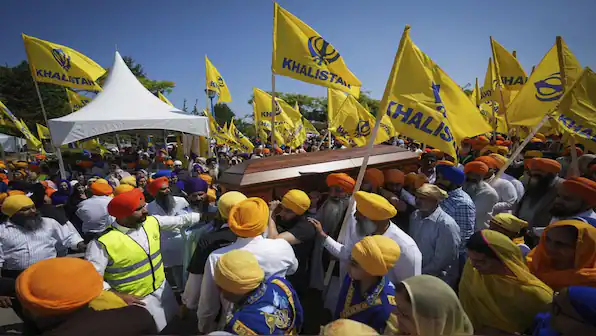
Buddhist, Jain, and Sikh traditions each approach death through their own distinct theological and philosophical frameworks, yet they too preserve disciplined ways of remembering, praying, reciting, serving, and gathering after death. Across Dharmic traditions, one finds a shared refusal to treat death as mere annihilation or grief as merely private emotion. There is attention to karma, ethical conduct, remembrance, community, and liberation from ignorance or bondage. The details differ, but the civilizational intuition is related: the human being is more than the body, and mourning must be held within wisdom.
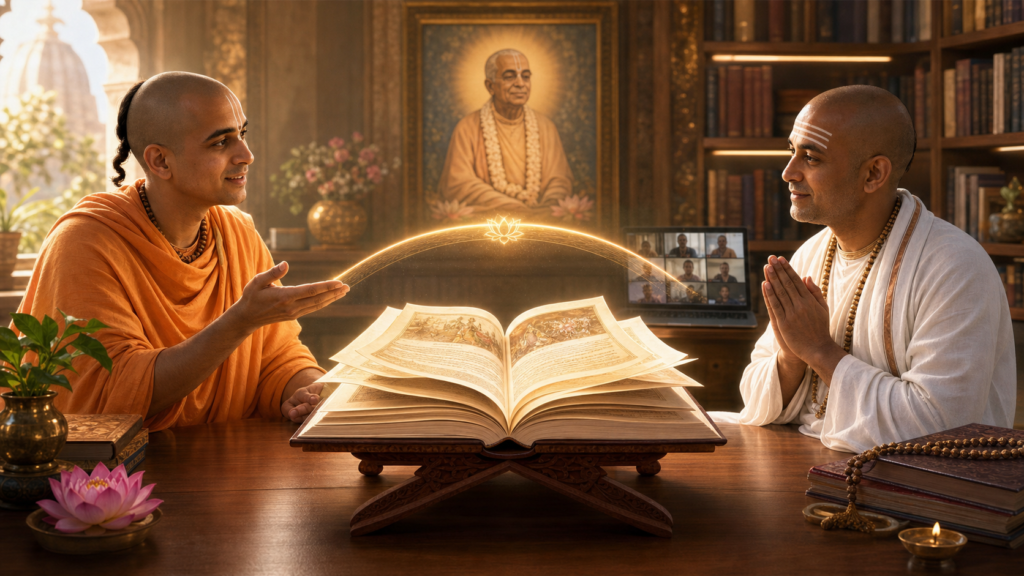
In contemporary life, this wisdom has become newly relevant. Many families now live across continents. Grandchildren may know ancestral practices only partially. Priests may guide rituals over video calls. Relatives may join through Zoom from different time zones, as happened for many families during and after the pandemic. Some may wonder whether a virtual ritual can carry the same depth as a traditional in-person gathering. The answer is not simple, but the experience can still be meaningful when reverence, attention, and sincerity are present.
A Vaikuṇṭha Samārādhana attended on Zoom can reveal both loss and continuity. The digital screen is obviously not a temple hall or ancestral home. It cannot reproduce the smell of incense, the warmth of bodies gathered together, or the quiet labor of relatives in the kitchen. Yet it can still gather dispersed family members into a shared field of remembrance. It can allow a grandchild in one country, a sibling in another, and elders elsewhere to hear the same mantras and remember the same life. In diaspora, even mediated ritual may become a lifeline.
This development should not be romanticized or dismissed. Digital participation is an adaptation, not a replacement for the full embodied richness of ritual life. Still, Hindu traditions have always shown a capacity to preserve core meanings while adjusting outer forms under changing conditions. The deeper question is not whether every external condition is ideal, but whether the ritual continues to cultivate śraddhā, humility, remembrance, and dharmic responsibility.
The presence of priests and ritual specialists also deserves a balanced understanding. In some modern settings, priestly ritual is caricatured as empty formalism. Yet at moments of death, trained ritual guidance can be profoundly stabilizing. A knowledgeable priest does more than recite mantras. He or she helps the family navigate sequence, timing, offerings, purity rules, and symbolic meaning. When the mourners are overwhelmed, the priest becomes a custodian of inherited memory.
However, ritual knowledge should not remain opaque. Families benefit when the meaning of actions is explained in accessible language. A rite becomes more powerful when participants understand why water is offered, why names are recited, why food is shared, why the thirteenth day matters, and why remembrance continues annually. Technical precision and emotional intelligibility need not oppose one another. The strongest ritual cultures preserve both.
Vaikuṇṭha Samārādhana also speaks to the Hindu understanding of the home as a sacred institution. The household is not merely a private residence. It is a site of worship, food, lineage, education, and ethical formation. When death enters the home, it affects not only individuals but the ritual life of the household itself. The concluding rites help restore the home’s rhythm. The shrine may be cleaned, lamps may be lit again, and daily worship may resume. The family does not return to exactly what it was, but it returns to dharma with the departed now held in memory.
This restoration is not emotional denial. It is a disciplined affirmation that life must continue with reverence. A family may still cry after the thirteenth day. A chair may still feel empty. A familiar voice may still be missed at festivals. But the ritual teaches that grief can coexist with duty, devotion, and gratitude. In this sense, Hindu mourning is neither sentimental nor cold. It is structured tenderness.
The symbolism of Vaikuṇṭha is central to this tenderness. To invoke Vaikuṇṭha is to invoke a realm where the soul rests in nearness to the Divine, beyond the anxieties that govern ordinary worldly existence. Whether understood literally, devotionally, symbolically, or philosophically, Vaikuṇṭha offers the mourners a language of hope. It allows the family to imagine the departed not merely as gone, but as entrusted to divine grace.
The rite also teaches humility before mystery. Death exposes the limits of human control. Even sophisticated societies, advanced medical systems, and modern psychologies cannot remove mortality. Hindu ritual does not solve death as a problem. It responds to death as a sacred threshold. It acknowledges that some realities must be approached through reverence rather than mastery.
This is why ritual should not be reduced to superstition. Certainly, practices can become mechanical when severed from understanding. Any tradition can suffer from inertia. But the existence of shallow performance does not invalidate the depth of the form. A language may be spoken poorly and still remain a language. Similarly, a ritual may be performed without full awareness, yet its grammar may still contain centuries of philosophical, emotional, and communal intelligence.
For younger Hindus, especially those raised in urban or diaspora environments, the first serious encounter with death rituals can be transformative. Practices that once seemed distant or old-fashioned may suddenly appear necessary. When grief strips away intellectual vanity, inherited forms can reveal their purpose. The ritual that looked complex from the outside may feel merciful from within. It gives the mourner a place to stand.
There is a broader cultural lesson here. Modern life often asks individuals to invent meaning privately, even in moments of crisis. This can be emotionally exhausting. Hindu traditions instead offer shared forms refined over generations. The individual does not have to manufacture depth alone. One enters a river of practice already flowing. This is not a loss of authenticity; it can be the very condition that makes authentic grief possible.
The beauty of Vaikuṇṭha Samārādhana lies in its combination of metaphysics and human care. It speaks of the soul’s journey, but it also feeds people. It invokes Vishnu, but it also steadies a grieving household. It remembers ancestors, but it also comforts grandchildren. It completes ritual obligations, but it also opens a space for love to continue in another form. Its meaning is not found in one doctrine alone, but in the integration of doctrine, gesture, memory, and community.
When viewed this way, Hindu ritual becomes a form of cultural and spiritual literacy. To understand it is to understand how a civilization has thought about embodiment, death, family, obligation, and transcendence. It is also to see why these practices have endured. They endure because they answer needs that every generation rediscovers: the need to mourn, the need to remember, the need to belong, and the need to trust that love is not meaningless simply because the body is mortal.
Vaikuṇṭha Samārādhana ultimately reveals that ritual is not the opposite of feeling. It is feeling disciplined by wisdom. It is grief given a sacred architecture. It is poetry performed through dharma. In the presence of death, when ordinary speech becomes inadequate, such ritual allows a family to say what the heart cannot fully articulate: the departed is loved, the ancestors are honored, the Divine is remembered, and life continues under the gaze of something eternal.
Inspired by this post on Hindu Post.


Leave a Reply
You must be logged in to post a comment.