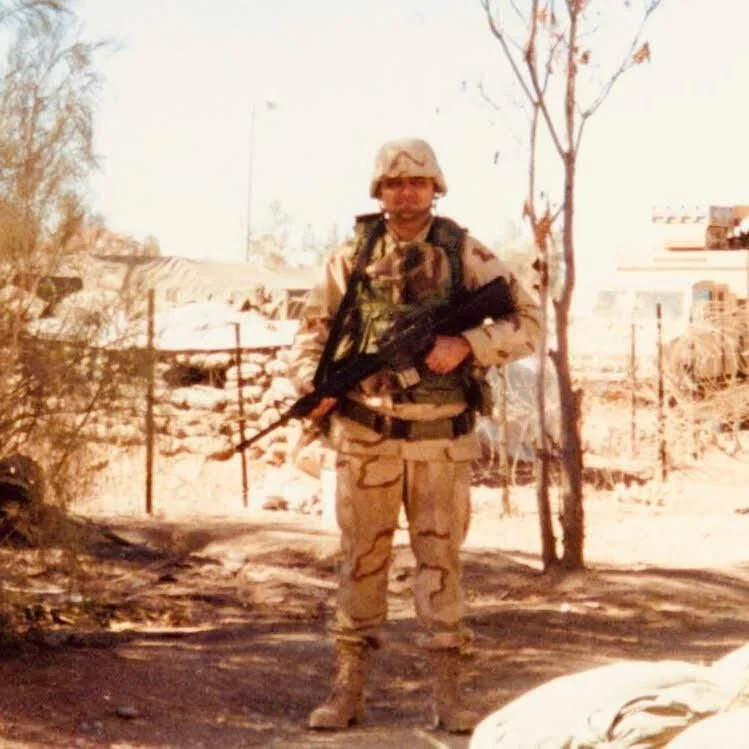
A wall of sand rose like a moving cliff, a haboob flattening canvas and coating teeth, uniform, and weapon. In that contracting world—when enemy fire from "Technicals" compressed time and space—Bhagavad Gita ceased to be theological abstraction. It operated as a field manual for cognition and conduct: a way to steady the body and align the Atman under pressure.
Raised in a Hindu home that revered the Gita, a lone Hindu in the U.S. Army found that scripture became lifeline. Under deployment, the text read like an after‑action report from antiquity. The setting was familiar: a battlefield, the shock of impending violence, and the paralysis of Dharma-Sankata. Arjuna’s Vishada mirrored the soldier’s moment of moral vertigo, when action and inaction both seem karmically irreversible. In that pause, the Gita restructured identity and clarified duty.
After 9/11, Svadharma emerged with new urgency. The visible rise of Adharma made passive expectation untenable. Crucially, Svadharma did not function as a static cage; it adapted through Apad-Dharma—duty calibrated to existential distress. That flexibility, far from license, produced ethical clarity and a paradoxical liberation: act firmly, without malice, for the protection of life and order.
Across missions from Kandahar to Baghdad, duty meant protecting noncombatants, upholding values, and becoming, when necessary, the sword that guards them. This was Karma Yoga in practice: fierce action without attachment to violence, undertaken to preserve Dharma rather than to conquer. The operational intent was containment—holding the line so that Dharma could prevail again.
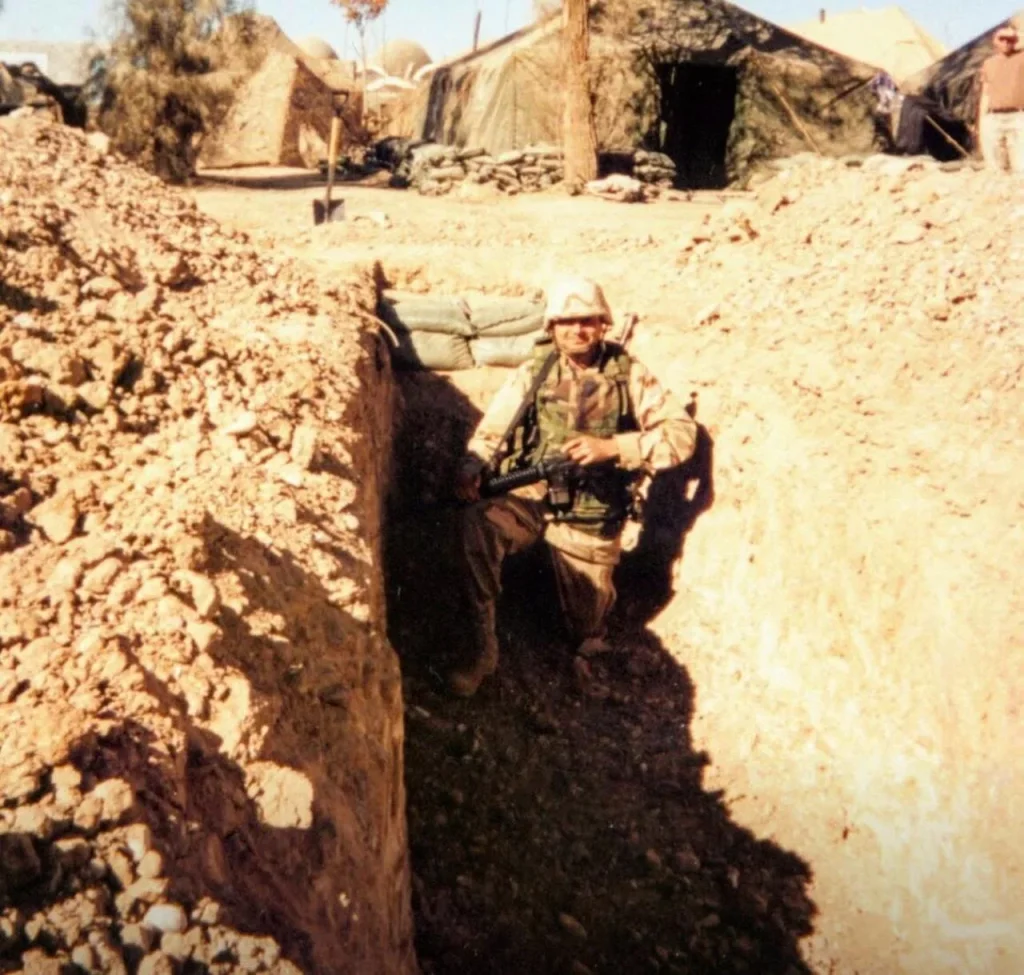
Upon return, the theater shifted. The external enemy gave way to the interior front: the mind. The Gita describes Manas as Chanchala—restless, turbulent, obstinate. For veterans, cognition can resemble a minefield of Samskaras: trauma imprints, hypervigilance, grief. Unmastered, the mind becomes the proximate adversary.
Clinical language called the pattern Post Traumatic Stress Disorder; spiritual language recognized Tamas—darkness, inertia, delusion—following the burn of a Rajasic adrenaline cycle. Here the Gita offered method, not mere consolation. It distinguished person from process: not the mind, not the trauma, but Sakshi—the Witness. Trauma belongs to the Kshetra, the field of body and mind; the Kshetrajna, the knower of the field, remains untouched. This shift in self‑location opens a path from symptom management to meaning reconstruction.
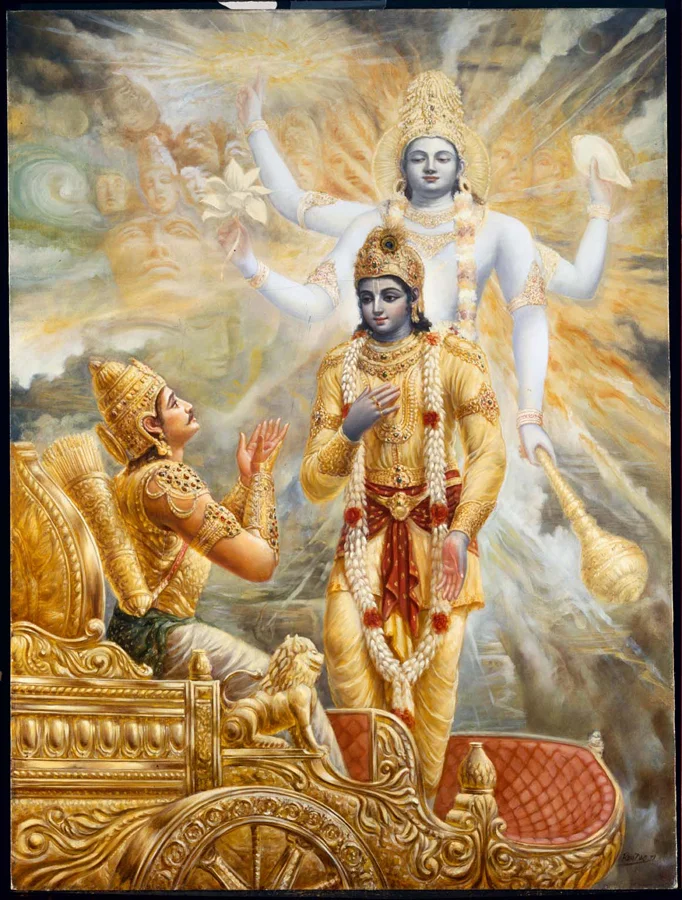
The Gita also frames recovery as Sharanagati—surrender to the Divine Will—embodied by Bhagavan Shri Krishna guiding a disoriented warrior from the chariot’s reins. Isolation often shadows veterans; the text counters with companionship in wisdom. Integrating soldierly discipline with the insight of a Rishi transforms post‑traumatic stress into post‑traumatic growth. Standing within the "City of Nine Gates" as ruler rather than captive of the senses, the practitioner learns that the deeper contest was never against insurgents, but against Avidya—ignorance of one’s true nature.
These insights resonate across dharmic traditions. Buddhist mindfulness and upekkha refine the same steady attention that the Gita praises as equanimity; Jain commitments to Ahimsa and disciplined Aparigraha align with Karma Yoga’s non‑grasping action; Sikh seva and the Sant‑Sipahi ideal harmonize courage with compassion. Shared anchors—Dharma, Karma, Shanti—offer a unifying grammar for ethical action and inner freedom across Hinduism, Buddhism, Jainism, and Sikhism.
Endurance owes much to military training; understanding owes much to Jnana. Decades beyond the physical battlefield, the Gita continues to orient a life of purpose, balance, and Shanti. Outcomes are accepted with fortitude; worth is measured not by victory or defeat, but by the sincerity and steadiness of effort. The call to duty remains, precise and unignorable—now aimed as much within as without.
Inspired by this post on CoHNA.