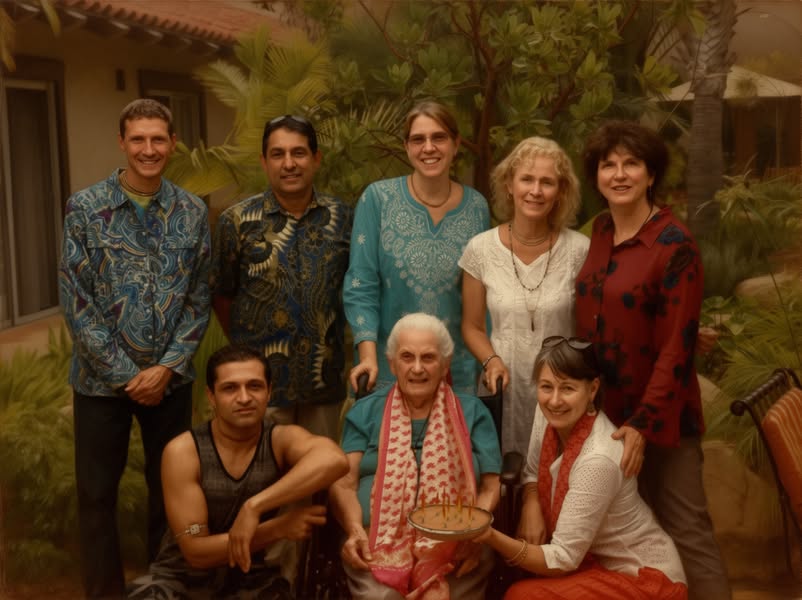
“Who Captured my Daughter? Rose Forkash: I came because it was Lila Shakti that was there. I don’t think she was initiated yet. I wanted to hear the man that was responsible for the movement, and I wanted to see what was going on. Who captured my daughter? Not that she didn’t need capturing. But
This striking testimony situates a parent’s apprehension within the unfamiliar terrain of a growing spiritual movement. The choice to attend because Lila Shakti was present, and the wish to hear the figure perceived as “responsible for the movement,” reflects a careful, protective posture that many families adopt when encountering new expressions of Hindu spirituality and bhakti. The word “captured” encapsulates the paradox parents often feel: a fear of lost agency contrasted with the visible, often sudden transformation that sincere devotional practice can bring.
Across the dharmic traditions of Hinduism, Buddhism, Jainism, and Sikhism, authentic paths emphasize autonomy, ethical conduct, and inquiry. In this light, the Guru–Shishya relationship and any initiation are ideally grounded in consent, study of scripture, satsang, and seva. Healthy communities model transparency, encourage questions, and nurture compassionqualities that reassure families and demonstrate that devotion is not coercion but a freely embraced discipline aimed at inner growth and communal harmony. Such principles affirm unity in spiritual diversity and help translate intense personal commitment into a shared, family-understandable vocabulary of values.
For families navigating a loved one’s turn toward a spiritual community (including ISKCON or similar bhakti movements), several practical steps support clarity and trust: visit gatherings together; ask about daily practices, scriptural sources, and service (seva); discuss balance between spiritual commitments and education, work, and family; and observe whether leaders model humility, non-harm (ahimsa), truthful conduct (satya), and respect for multiple paths. These indicatorspresent across dharmic lineageshelp distinguish genuine guidance from undue pressure and foster open, respectful dialogue within households.
Seen through this integrative lens, the question “Who captured my daughter?” gradually reshapes into “What meaning, community, and virtues are drawing her?” When devotion is anchored in freedom, ethics, study, and love and tolerance, it strengthens both personal integrity and family bonds. In honoring unity across dharmic traditions while respecting individual agency, families can move from fear to understanding, finding reassurance in practices that cultivate wisdom, compassion, and shared purpose.
Inspired by this post on Dandavats.