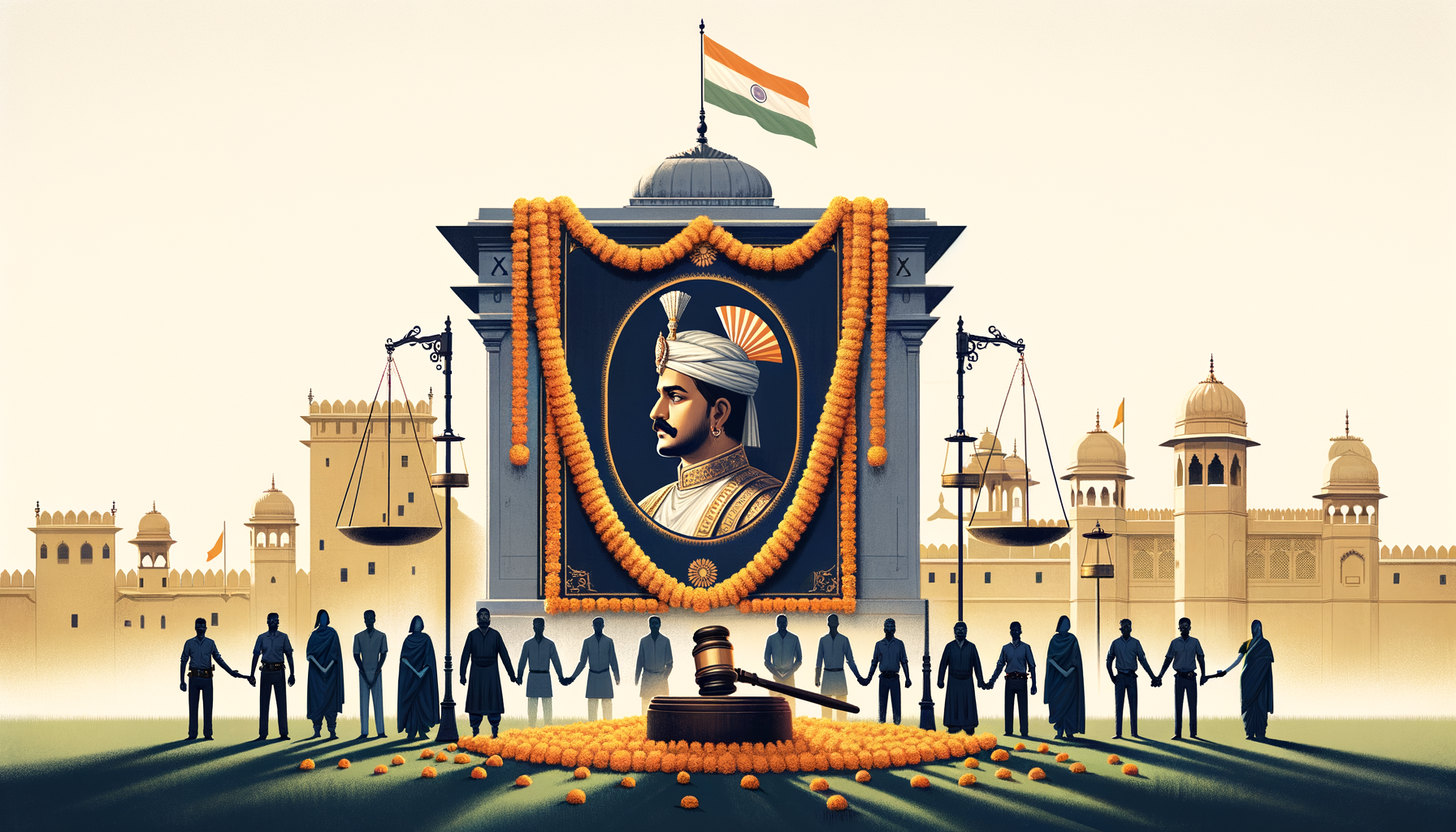
Police in Kumbhoj, Maharashtra, have registered a case against two individuals, identified as Imam and Zakir Mujawar, following allegations of desecration of a Chhatrapati Shivaji Maharaj banner and the use of disparaging language about his reverence. The incident has prompted a sharp community response, with calls for calm, due process, and a reaffirmation of shared civic values grounded in the rule of law in India.
Chhatrapati Shivaji Maharaj occupies an enduring place in the collective memory of the subcontinent as a symbol of courage, ethical governance, and justice. Across dharmic communitiesHindus, Buddhists, Jains, and Sikhshis legacy is widely regarded as a unifying thread that inspires social responsibility and dignity in public life. This shared reverence underscores why alleged acts of banner desecration carry both legal and moral implications for social harmony.
Community members in Kumbhoj and beyond have voiced concern through peaceful expressionspetitions, representations to local authorities, and appeals for accountability. Alongside a demand for respect toward national icons, the public conversation has emphasized restraint, lawful conduct, and the importance of maintaining interfaith and community relations. The prevailing sentiment echoes a desire for unity in diversity and the avoidance of collective blame.
In the policy sphere, an emerging debate centers on the adequacy of current legal provisions addressing deliberate insults that may disturb public order or inflame communal tensions. Some groups have urged lawmakers to consider amending the law to allow stricter penaltiesincluding terms up to ten years of rigorous imprisonmentfor egregious, malicious acts targeting revered national icons. Any reform discussion, however, is framed by constitutional safeguards, due process, and the need for proportionality.
An academic and civic perspective stresses that accountability must remain individualfocused on the specific facts of the caserather than generalized across communities. This approach supports religious harmony and Hindu-Muslim relations by prioritizing lawful investigation, evidence-based adjudication, and measured public discourse. It also reinforces the principle that freedom of expression and public order must be balanced within a constitutional framework.
Constructive pathways highlighted by community leaders include civic education on the life and legacy of Chhatrapati Shivaji Maharaj, interfaith dialogue initiatives, and responsive institutional mechanisms for grievance redress. Such measures can reduce the likelihood of recurrence, enhance community relations, and promote respectful engagement with national icons. They also align with the broader objective of strengthening social cohesion across dharmic traditions.
As the Kumbhoj case proceeds, the emphasis remains on the facts before the law, the dignity of all communities, and the shared responsibility to uphold public order. The episode serves as a reminder that safeguarding national icons and preserving social harmony are mutually reinforcing goalsand that India’s unity is best advanced through legal accountability, empathetic dialogue, and civic restraint.
Inspired by this post on Hindu Jagruti Samiti.