At a coordinated series of meetings in Ayodhya, Pratapgarh, and Prayagraj, the Rashtrabhakta Adhivakta Samiti urged pro-dharmic legal advocates to work in concert to strengthen lawful protections for communities grounded in Hinduism, Buddhism, Jainism, and Sikhism. The convenings emphasized constitutionalism, ethical advocacy, and community resilience as the pathway to durable religious freedom and social harmony in Uttar Pradesh and beyond.
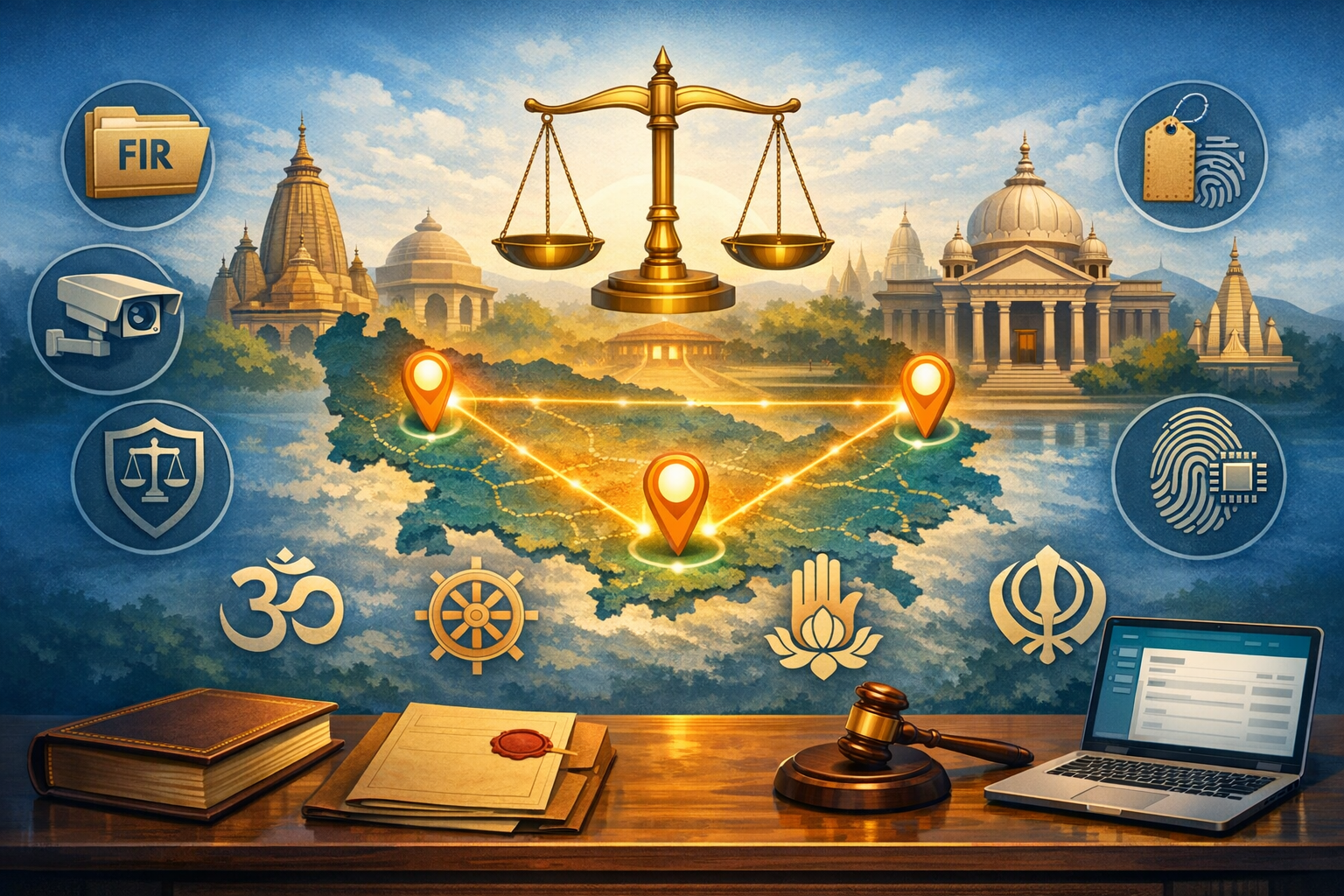
The choice of venues carried both strategic and symbolic weight. Ayodhya represents a living epicenter of civilizational memory and cultural stewardship; Prayagraj anchors appellate strategy through its proximity to the principal seat of the Allahabad High Court; and Pratapgarh provides a district-level vantage point that connects rural realities with formal legal systems. Together, this triad supports a pipeline from community-first legal aid to high-court-ready strategic litigation.
The central call was clear: build a disciplined, non-partisan, and service-oriented legal network to protect constitutional rights, deter unlawful intimidation, and ensure access to justice. Although immediate concerns focused on the legal defense of Hindus, the approach articulated was consciously dharmic and inclusivecommitted to the equal dignity and protection of Hindu, Buddhist, Jain, and Sikh communities, and to the preservation of India’s plural and peaceful public square.
Discussions across the summits converged on recurring field-level challenges that any community legal defense network must anticipate: timely First Information Report (FIR) registration, effective representation at the remand and bail stages, due process adherence in search and seizure, safeguarding of electronic evidence, and respectful engagement with law enforcement. The atmosphere, by all accounts, was one of resolvetranslating lived concerns into rigorous, rights-based solutions under the rule of law.
The constitutional architecture provides the foundation. Articles 14 and 15 enshrine equality and non-discrimination; Article 19 safeguards speech, association, and peaceful assembly; Article 21 protects life and personal liberty; and Articles 25 and 26 guarantee freedom of conscience and the right of religious denominations to manage their own affairs, subject to public order, morality, and health. Articles 29 and 30 further protect cultural and educational rights of minorities, while Articles 32 and 226 empower the Supreme Court and High Courts to enforce fundamental rights through writ jurisdiction. Any durable legal defense for dharmic traditions must operationalize these guaranteesprecisely, calmly, and without animus.
Substantive criminal-law protectionsearlier codified in the Indian Penal Code and now recodified under the Bharatiya Nyaya Sanhita (2023)address deliberate insults to religion, defilement of places of worship, and incitement that endangers public order. Likewise, prohibitions on promoting enmity between groups and criminalizing malicious misinformation are designed to safeguard communal harmony. The summits underscored two complementary duties: insist on fair and even-handed enforcement when communities are harmed, and categorically reject vigilantism, retaliation, or collective blame that erodes the very justice being sought.
Procedural lawpreviously the Code of Criminal Procedure and now reflected in the Bharatiya Nagarik Suraksha Sanhita (2023)remains the engine of due process. Advocates focused on fast, accurate FIRs; lawful detention standards; notice of appearance protocols; informed custody and medical examinations; anticipatory and regular bail strategy; and supervisory remedies when investigations stall. Because specific section numbers and timelines have evolved under the 2023 reforms, practitioners were urged to consult the latest state notifications applicable in Uttar Pradesh while applying enduring due-process principles.
Evidence managementformerly guided by the Indian Evidence Act and now carried forward by the Bharatiya Sakshya Adhiniyam (2023)is pivotal in contemporary disputes. The summits highlighted meticulous chain-of-custody practices, authenticated capture of digital material, and careful use of certified electronic records in line with the successor provisions to the earlier Section 65B regime. Properly recorded eyewitness statements, prompt medico-legal documentation, geo-tagged photography, and preserved call-data or CCTV can decisively strengthen lawful outcomes.
Strategic litigation was framed as a complement to grassroots legal aid. Where appropriate, Public Interest Litigation (PIL) under Articles 226 and 32 can address systemic failuressuch as chronic non-registration of cognizable offenses, threats to places of worship, or recurring permit-process bottlenecks for religious events. However, participants stressed disciplined case selection, robust fact-development, model pleadings, and vigilant compliance with court directions to ensure credibility and impact.
An institutional blueprint emerged that can be replicated statewide. District-level pro bono panels, rapid-response counsel rosters, and paralegal volunteer corps can triage matters from first contact to final appeal. Memoranda of understanding with law schools can power legal clinics and research cells; continuing legal education modules can keep practitioners current with the 2023 criminal-law reforms; and referral pathways to the Uttar Pradesh State Legal Services Authority and District Legal Services Authorities can extend reach and affordability.
Community engagement was positioned as preventive law. Legal-literacy workshops at temples, mathas, gurdwaras, viharas, and community centers can increase awareness of permissions for processions, route approvals, crowd-management plans, time-and-noise compliance, and emergency escalation protocols. Where disputes are primarily civil or administrative, early mediation, Lok Adalat channels, and Section 89 CPC avenues can de-escalate tension and conserve judicial resources.
Given the centrality of social media, the summits encouraged lawful rumor control, calibrated counter-speech, and platform reporting that aligns with Indian IT and intermediary rules. Digital teams can help communities document incidents responsibly, retain original files, capture metadata, and avoid amplifying unverified claims. The principle is straightforward: truth, timeliness, and legality must govern online conduct just as they do in court.
Ethical red lines were unequivocal. The network model rejects vigilantism, collective punishment, or derogatory generalizations about any community. It affirms gender-sensitive representation, witness safety, confidentiality, conflict-of-interest screening, and a zero-tolerance posture toward hate speech or intimidation. In a dharmic frame, means and ends must both be just; fidelity to the Constitution and compassion toward neighbors are inseparable.
Impact will be measured, not merely asserted. Suggested indicators included time-to-FIR, bail outcomes, charge-sheet quality, successful protection of religious processions or gatherings, resolution of endowment and property disputes, training-hours delivered, paralegals certified, and the number of matters diverted to mediation with durable settlements. Transparent metrics can transform goodwill into institutional trust.
For Uttar Pradesh, a pragmatic roadmap starts with the Ayodhya–Pratapgarh–Prayagraj corridor. District tasking can align with magistrate jurisdictions and police zones; appellate strategy can leverage the Allahabad High Court; and knowledge productsSOPs, checklists, bilingual quick-reference cardscan standardize quality across the network. As the model matures, adjacent districts can onboard, creating a cohesive, statewide legal defense lattice.
Above all, the convenings affirmed that dharmic unity is both a moral compass and a practical necessity. Shared constitutional rights and responsibilities bind Hindu, Buddhist, Jain, and Sikh communities to a common civic ethic: protect places of worship, uphold peaceful assembly, respect lawful authority, and meet hostility with lawful remedy. This ethos turns legal defense into social healing.
By situating Ayodhya’s cultural gravity alongside Prayagraj’s judicial access and Pratapgarh’s grassroots vantage, the Rashtrabhakta Adhivakta Samiti’s initiative signaled a shift from reactive casework to proactive, rights-based institution building. If sustained, this networked approach can fortify religious freedom under Article 25, protect denominational management under Article 26, and translate the promise of equal citizenship into everyday practicequietly, lawfully, and with unwavering dignity.
Inspired by this post on Hindu Jagruti Samiti.